Queer Utopias, Managed Landscapes: Cruising and Control in Amsterdam
Klik op de link om dit artikel in het Nederlands te lezen.
On a sunny afternoon in the woods of the Oeverlanden, a nature reserve just fifteen minutes from the center of Amsterdam, hundreds of men head into the park in search of pleasure and community. Since the 1980s, the Oeverlanden has been one of the most popular cruising sites for (primarily) male-male encounters in the Netherlands. With its secluded paths, natural cover, and easy access from the city and highway, the area has long offered fertile ground for socializing and anonymous sex.
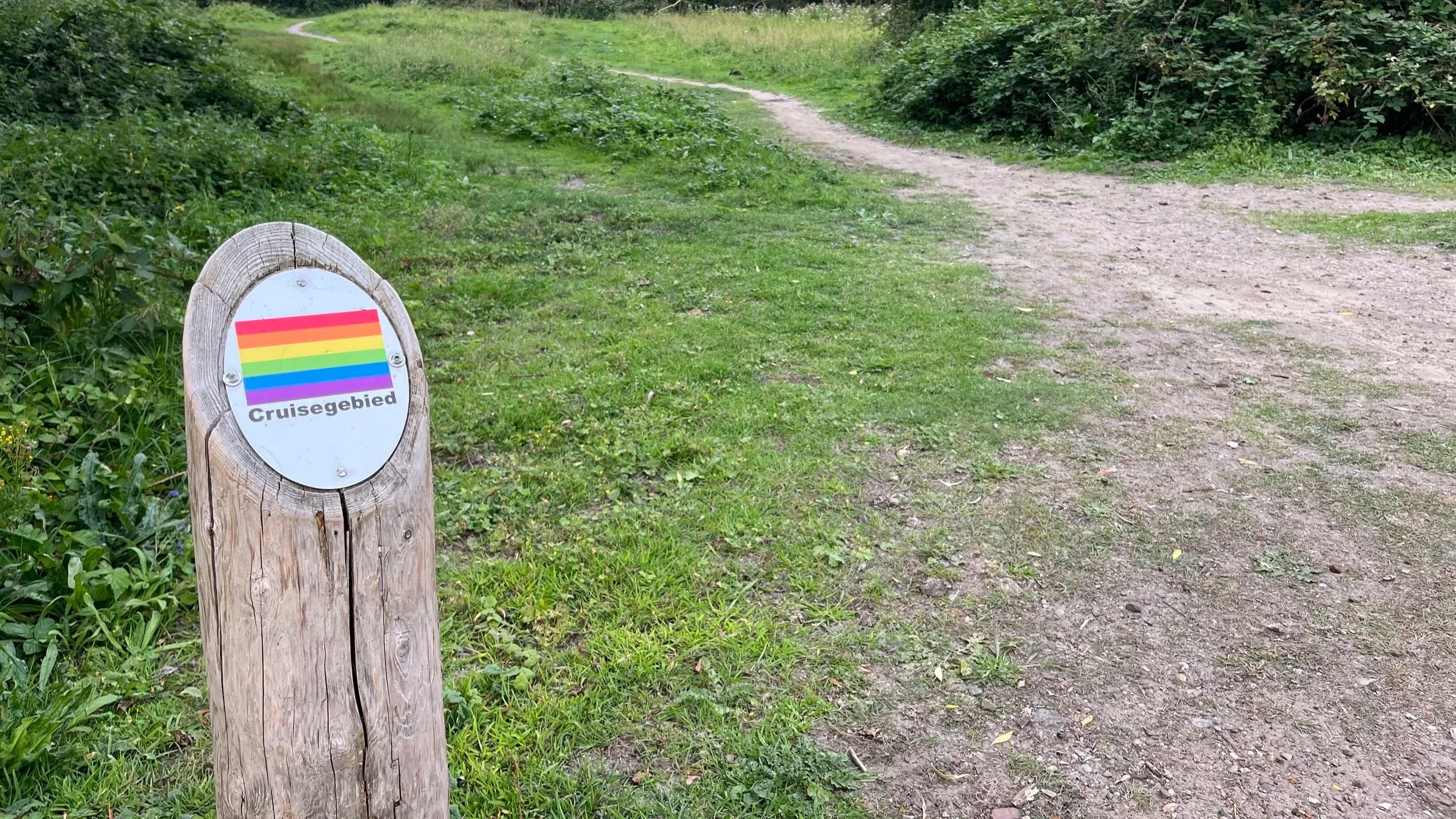
Figure 1. Entrance board at park the Oeverlanden Nieuwe Meer, Amsterdam, 2025. Photograph by Jasper Martens.
What makes the Oeverlanden unique is that, although public sex is illegal in the Netherlands, cruising here is gedoogd, tolerated by the city, and marked by official signage. At the park entrance, visitors encounter a large wooden board with a municipal map, where a section of forest is highlighted in a rainbow flag and labeled cruisegebied meaning cruising area (Figure 1 and 2). This public designation is placed throughout the park, and both acknowledges the practice and contains it, signaling that sexual encounters are permitted only within this zone.
Although the site has been used for cruising for decades, recent years have seen a rise in other forms of recreation. The nearby lake now attracts swimmers and sunbathers, while families often cycle to the park for picnics and games. These different uses bring different expectations and cater to distinct publics. Over the past few years, this growing diversity of use has led the municipality to increasingly intervene, seeking to regulate, control, and contain cruising.
Figure 2. detail of entrance board with marked cruising area at park the Oeverlanden Nieuwe Meer, Amsterdam, 2025. Photograph by Jasper Martens.
The first efforts began more than twenty years ago. In 2004, in a thinly veiled effort to banish cruising, the city placed a herd of Scottish Highlander cows within the cruising zone (Figure 3). Later, it added the signs. While these might sound friendly, in fact they fundamentally undermine the anonymity upon which cruising hangs. Not for nothing are cruising spots usually unmarked, repurposed spaces that offer partial privacy while remaining easily accessible, such as parking lots, forests, or public toilets. These spaces tend to be used differently at various times of the day or by different people allowing cruisers to blend in without explicit identification. By marking a cruising space, however, the cruiser becomes marked as well. The moment a person enters a designated cruising space they risk being recognized not as a park-goer but as a cruiser. The signage doesn’t simply inform, it functions as a warning and a mechanism of social exposure (Figure 4).
Figure 3. Scottish cow grazing in the cruising area, 2025. Photograph by Jasper Martens.
Figure 4. Signage of Cruising Area at Oeverlanden Nieuwe Meer, Amsterdam, 2025. Photograph by Jasper Martens.
The act of cruising is not about declaring sexual identity but about a fleeting encounter, often practiced by people who do not life openly as gay. One of the most effective tactics for regulating these users is making them visible whether by cutting back vegetation or through heightened policing. As Maartje Bulkens demonstrates, users of cruising sites often become targets of the disciplinary gaze, leading to confrontations with police, government authorities, or passersby. Such interventions do more than manage behavior; they reinforce perceived deviance. If visibility is associated with empowerment in broader LGBTQIA+ politics (Silence = Death) in cruising it does not liberate, it endangers.
Today, there is a new development plan for Oeverlanden that is expected to be implemented by 2040. While still tolerating cruising, it further disciplines it under the guise of safety and accessibility. Organizations advocating for the protection of cruising have been involved in the planning process and the plan’s introduction briefly acknowledges the site's cruising history as “historically important.” But public sex remains taboo and the proposal frames cruising mostly as a problem to be managed with surveillance cameras and regular policing. The plan also proposes significant spatial changes, with designated cruising zone reduced and shifted west to an open area bordered by bike and pedestrian paths.
This new zone is hardly suitable. As David Levi Benjamin writes, cruising at Oeverlanden unfolds across distinct stages and zones. Encounters typically begin with eye contact, flirtation, and subtle bodily gestures, followed by one person discreetly following another toward a more secluded space for the eventual sexual encounter. Each phase tends to unfold in different spot, in a spatial choreography that supports anonymity, pacing, and choice. At Oeverlanden, this human ballet has shaped a unique landscape, with thick bushes forming a maze of paths, inviting visitors to lose themselves in more ways than one (Figure 5).
Figure 5. Paths created by cruisers in the cruising area of park the Oeverlanden Nieuwe Meer, Amsterdam, 2025. Photograph by Jasper Martens.
The redesign rejects all this. In fact, rather than preserve discretion or enable safe encounters, it appears intended to remove cruisers from public view and penn them in. The plan speaks of borders and markers (for which a large amount of money is budgeted) and offers little to no privacy, evoking images of a fenced off area like a schoolyard. Or a dog run. Visibility is also a huge problem within the new bounds; cruiser in an open field, even if only visible to other cruisers, is deprived of the protective anonymity that has long characterized the practice.
And so, however much the city government insists that it’s (still) cruiser-friendly, its plans for Oeverlanden tell a different story, marked more by resignation than acceptance and control than erotic sovereignty. The process of containment imposed upon it echoes Michel Foucault’s theory of disciplinary power, wherein visibility becomes a tool of control.
““However much the city government insists that it’s (still) cruiser-friendly, its plans for Oeverlanden tell a different story.””
Oscar Wilde famously wrote that “a map of the world that does not include Utopia is not even worth glancing at.” For Wilde and later queer theorist José Esteban Muñoz in Cruising Utopia, mapping is not merely a representational act but a political and imaginative one. Muñoz builds on Wilde’s idea to suggest that “queer world-making hinges on the possibility to map a world where one is allowed to cast pictures of utopia and to include such pictures in any map of the social.” In this formulation, mapping becomes a dual force: a tool of regulation as well as a site of speculative potential: a way to envision alternative futures, socialities, and temporalities.
In Wilde’s terms, is the cruising zone at the Oeverlanden so clearly demarcated in park maps a utopia? Certainly not in any perfected or idealized sense. But in Muñoz’s terms it might be read as a queer utopia: a fleeting, fragile world made possible through community, desire, risk, and shared codes of recognition. The rainbow area on the map becomes a paradox, both a biopolitical tool of discipline and what Muñoz calls a “critical spot” or a space that resists erasure. As Muñoz reminds, “without this critical spot on the map, we ourselves become the pained and imprisoned subjects in the fast-moving [straight time].” In this light, the cruising zone does not simply designate territory, it marks a rupture in the logic of heteronormative spatiality. It is a zone of exposure and a trace of utopian possibility.
While still highly contested, this sort of mapping might be seen not only as a form of control but also as a reluctant acknowledgment of endurance. Much like queer identity, the map is a sign of persistence and a gesture toward ideal formations that if not fully present hover just ahead. For Muñoz, queerness is not a stable location but a horizon: a way of being oriented toward a future that remains possible even if not fully graspable yet.
Although I am hesitant to frame cruising as inherently queer it is undeniably spatial and temporal. It unfolds in fleeting moments and marginal places, passed down historically through oral traditions. The municipality’s plan to relocate the cruising zone to a fenced-off open field reveals not an interest in preserving the privacy of cruisers but a will to remove them from public view. What is framed as accommodation is erasure, creating a place where bodies are surveilled, bounded, and rendered manageable.
In this sense the park plan subordinates autonomy. And yet, drawing on Muñoz, the new zone, however constrained, remains a space of possibility. Not because it fulfills the utopian promise but because it insists on a different way of occupying space, one that gestures toward the not-yet.
Citation:
Jasper Martens, “Queer Utopias, Managed Landscapes: Cruising and Control in Amsterdam,” Platform, February 16, 2026.