The Home Front: Campus, Control, and Tent Protests
In the spring of 2024, tent camps were set up at approximately 120 to 140 universities in the United States and 25 public universities in Canada. These encampments were set up in solidarity with Palestinians under Israel’s military assault and in response to civilian casualties, displacement, the systematic destruction of educational infrastructure, and starvation in the Gaza strip. Organized by students, they combined protest with forms of collective study, mutual aid, and political education. They made specific demands from their universities and transformed campuses into highly visible sites of contestation over university investments, institutional partnerships, and academic complicity in war. Described by protesters as the “popular university,” this wave joined a longer history of campus occupations, sit-ins, and divestment campaigns, while distinguishing itself through the widespread use of encampments as infrastructures.
The tent camp at McGill University serves as a representative example of this broader-scale process. Although campus occupations are hardly new—from the student movements of 1968 and anti-apartheid mobilizations of the 1980s to more recent fossil-fuel divestment campaigns— the McGill encampment was notable for the scale and duration of the occupation and the intensity of the institutional response it provoked. In this article, I examine the McGill encampment as both a spatial intervention and a pedagogical event. Drawing on observations of the encampment and work developed in my graduate seminar Knowledge Institutions, I argue that the encampment rendered visible the university's political entanglements while simultaneously opening alternative forms of collective learning, care, and governance.
From Protest to Spatial Intervention
The relationship between campus space and political contestation was already a topic of inquiry in my seminar, but Palestine surfaced only after the recent cycle of violence on Gaza. I have offered this seminar every other year since 2014 and organized it around the study of universities as knowledge institutions and spatial infrastructures of power. Through readings on colonialism, Indigenous dispossession, race, land, and access, we examine how universities produce and naturalize particular forms of knowledge while obscuring others.
Following October 2023, however, questions of protest, occupation, and the right to campus acquired a new urgency as weekly demonstrations in solidarity with Palestine became a visible feature of everyday life at McGill. These events prompted students to interrogate the histories of activism embedded in the campus itself. One student project in Winter 2024 mapped sites of student protest across McGill, tracing how successive movements—including anti-apartheid organizing, Indigenous activism, fossil-fuel divestment campaigns, and Palestine solidarity actions—had repeatedly transformed ordinary campus spaces into sites of political assembly and contestation. Seen from this perspective, the encampment appeared not as an isolated event but as part of a longer history through which students have redefined the meaning of university space.
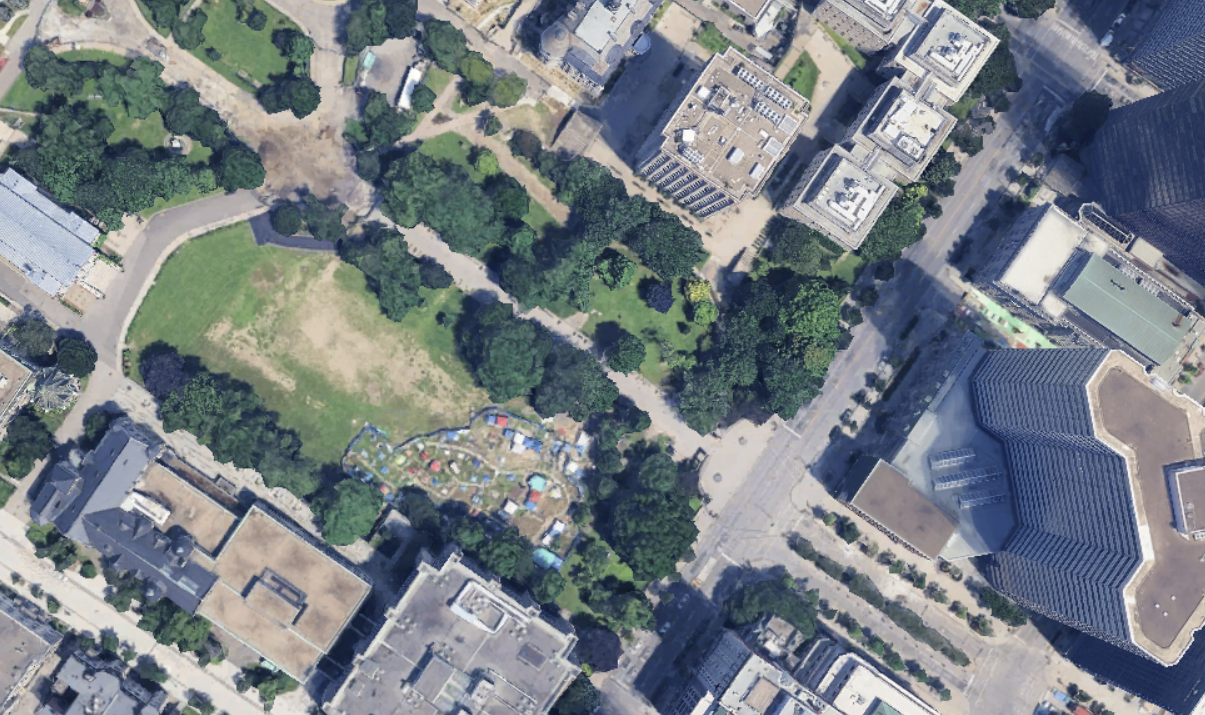
Figure 1. “Popular University of Montreal” still visible in aerial view on Google Earth. Screenshot, May 1, 2026.
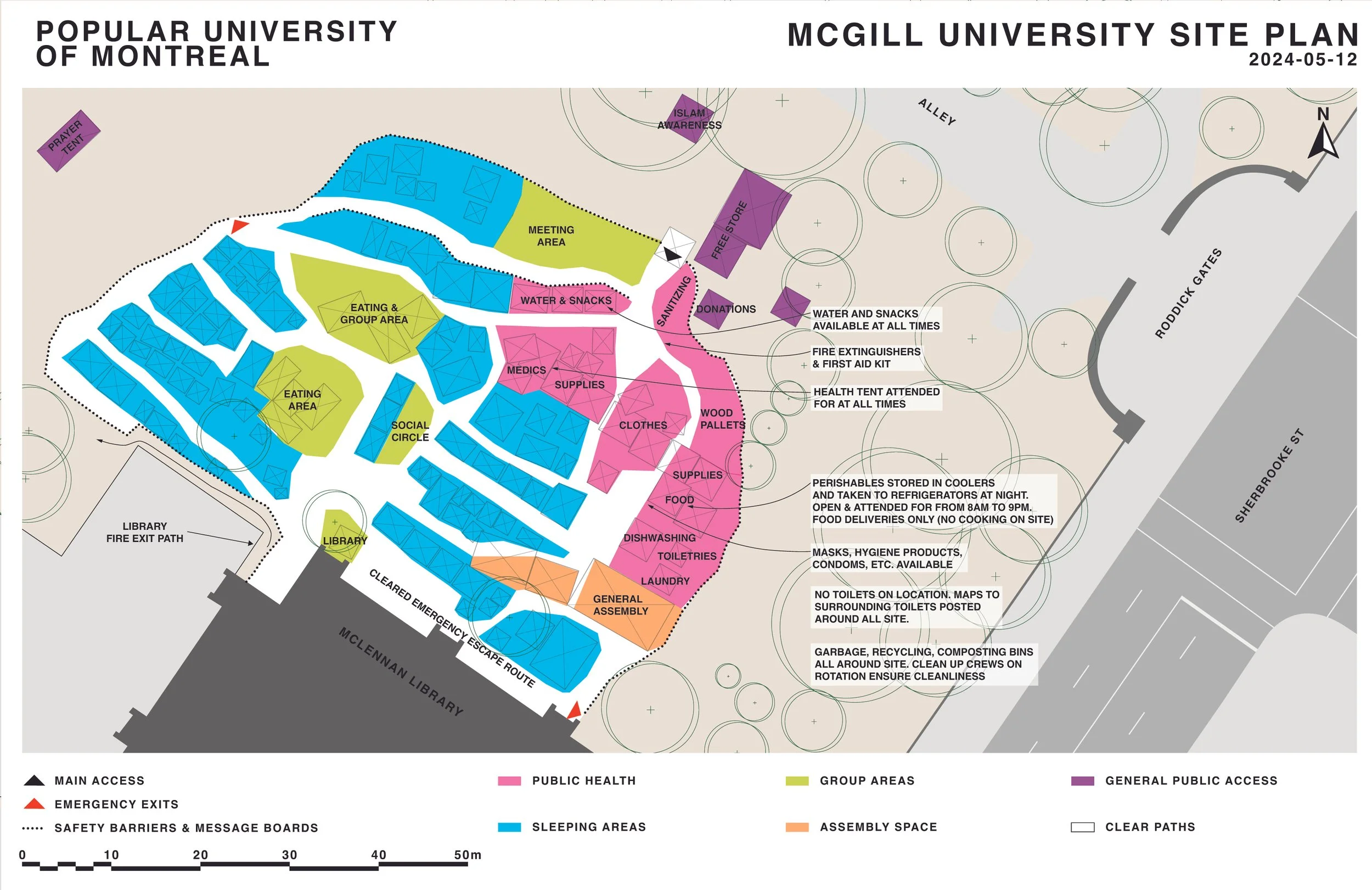
Figure 2. “Popular University of Montreal” McGill University Encampment annotated sketch plan. Drawing by the author’s research group, 2024.
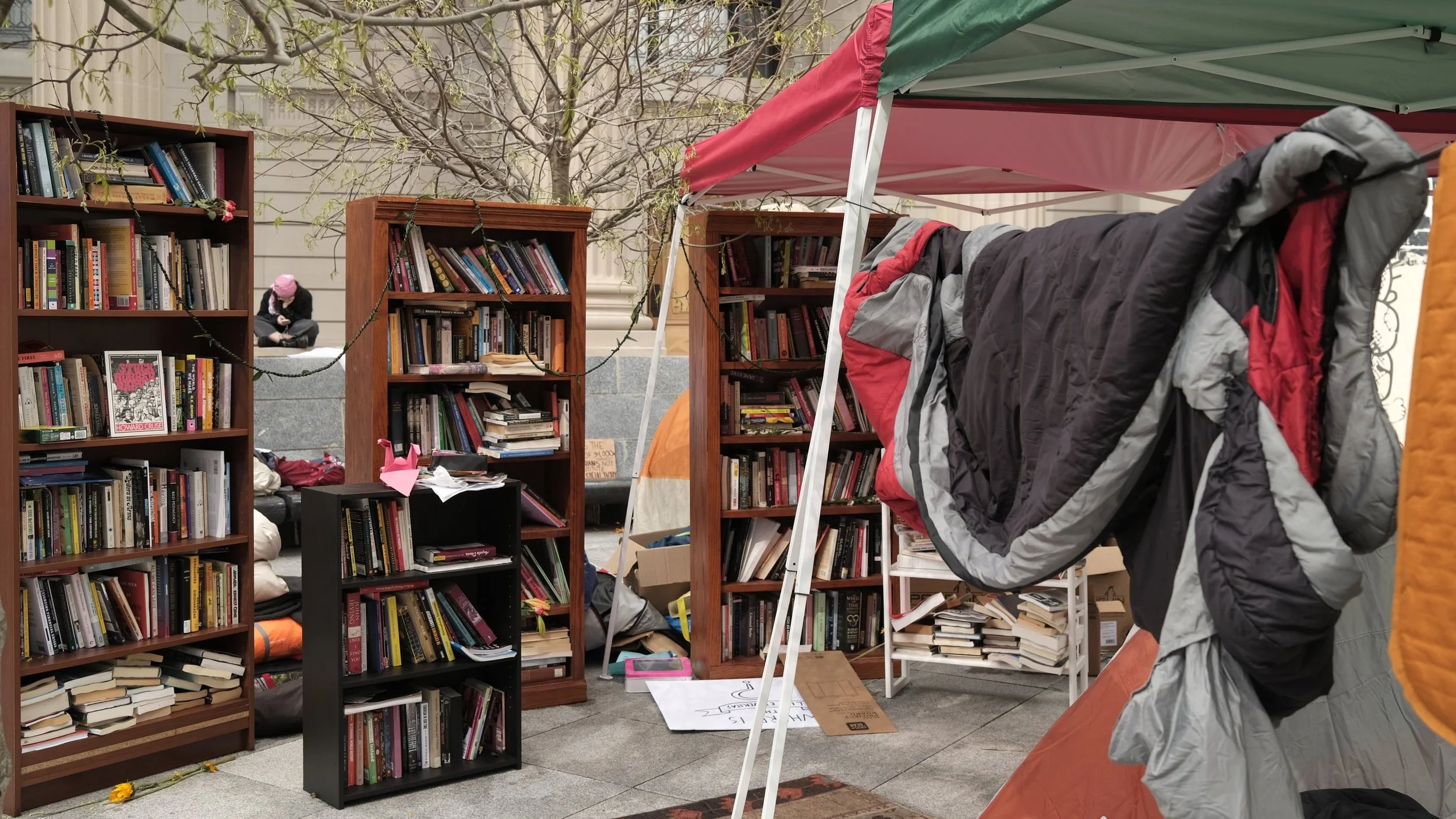
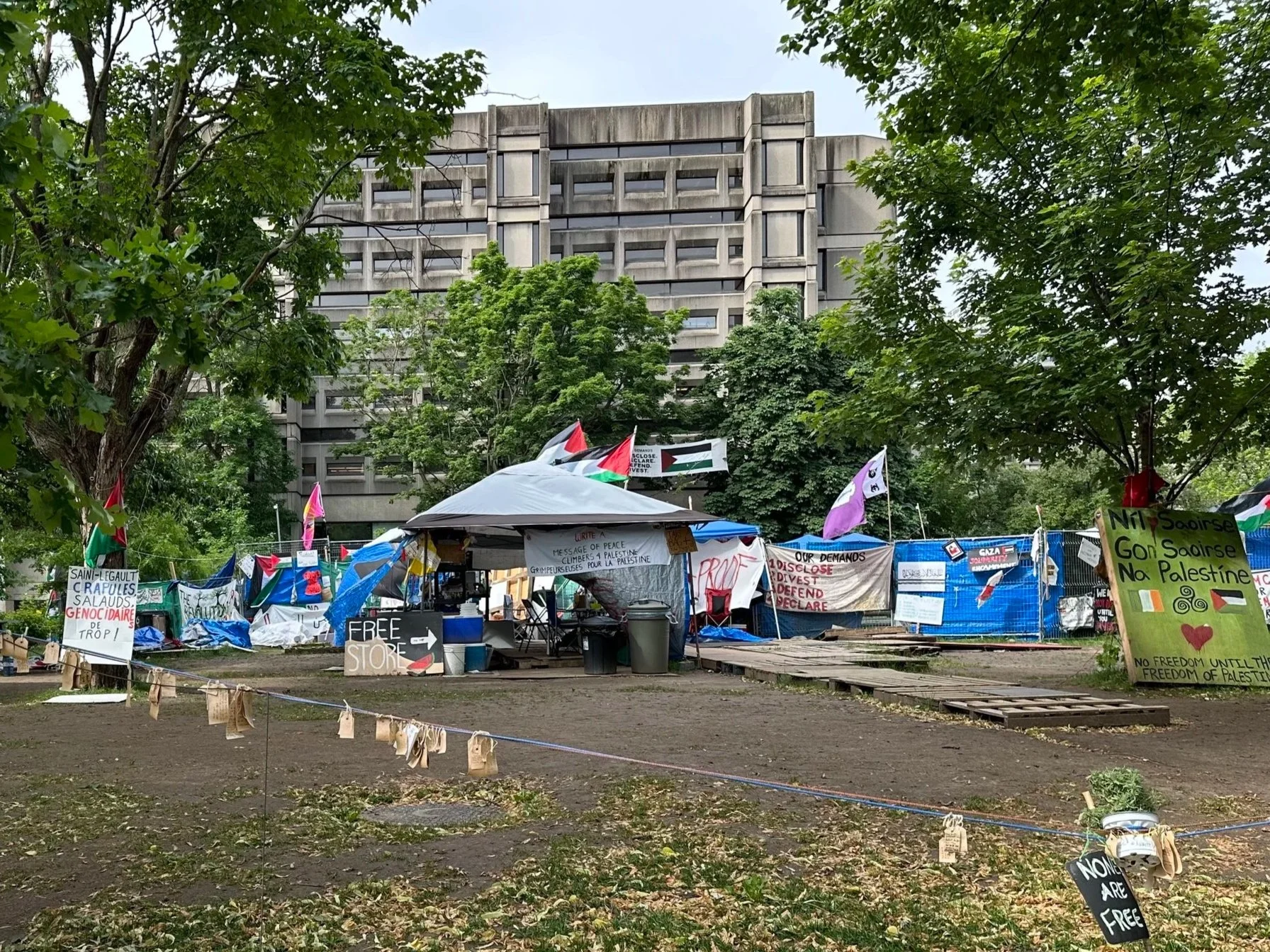
The tent camp at McGill University lasted exactly 75 days, from April 27 to July 10, 2024 (Timeline of the McGill camp). It was divided into separate yet interconnected areas designed to support daily life and group activities of the protestors (Figures 1 and 2). These included a kitchen where meals were prepared and shared; a medical tent providing first aid and healthcare support; a library housing hundreds of donated books; sleeping areas with tents arranged for overnight stays; and common areas for meetings, workshops, and cultural events. Additional tents served functions related to hygiene, waste disposal, and protection from the elements including drainage management during heavy rain. Thanks to donations from the community, a steady supply of food and essential items flowed into the camp. These materials often arrived in quantities exceeding immediate needs and were distributed to visitors and nearby shelters (Figure 3). The layout of the space reflected practical necessities rather than aesthetic consistency and evolved according to usage, weather conditions, and the growing number of participants (Figure 4).
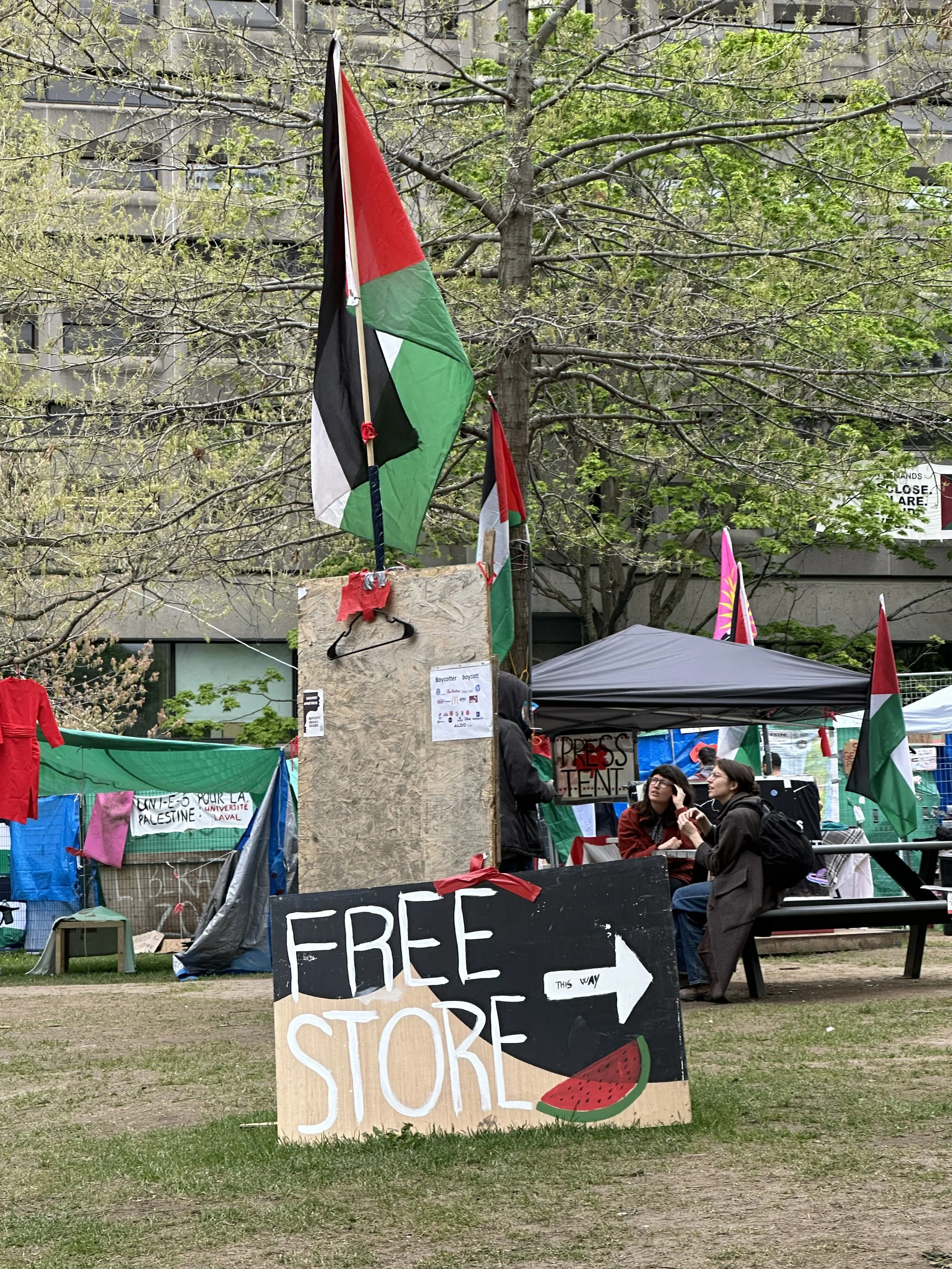
Figure 3. Directional sign indicating the way to the Free Store in front of the encampment enclosure to share extra donations with guests and visitors who are not part of the encampment. Photograph by the author, May 13, 2024.
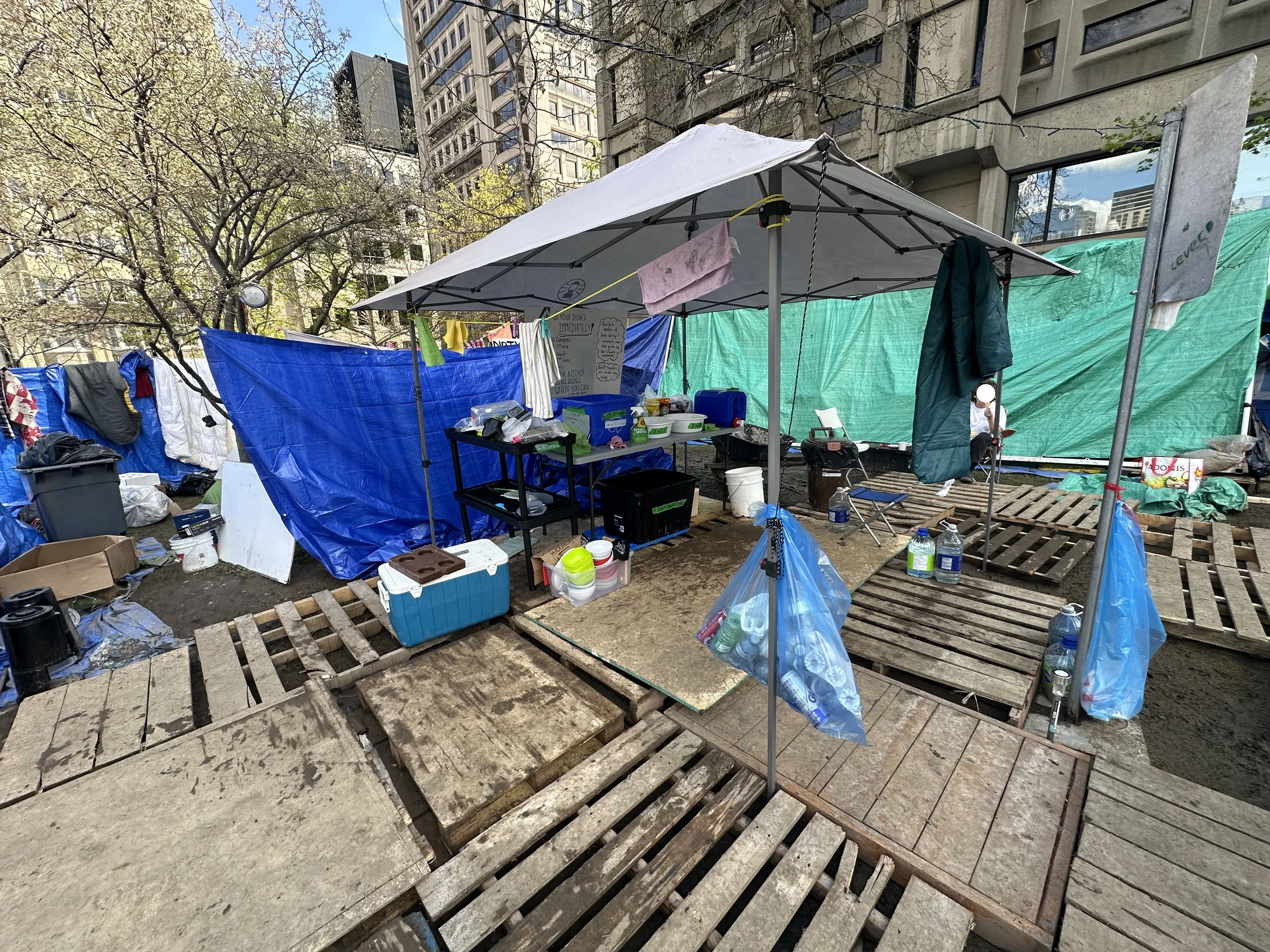
Figure 4. Central kitchen and dishwashing station. An ad-hoc network of wooden shipping pallets and plywood sheets elevates food preparation infrastructure above the muddy ground underneath a white pop-up canopy, illustrating how the encampment’s physical footprint evolved through practical necessity, weatherproofing, and self-governance. Photograph by the author, June 11, 2024.
The encampment functioned through collective governance, contrary to administrative portrayals of disorder. Decisionmaking took place in regular general assemblies, where participants discussed strategy, established community care guidelines, and addressed internal conflicts. These assemblies were also the mechanism through which boundaries were set—for example, determining who could remain in the camp and under what conditions, and responding to groups whose actions were deemed incompatible with agreed principles. The regulation of daily life, involving laundry schedules, food distribution, sanitation, security, and maintenance, was collectively organized and adjusted as conditions changed. In this sense, the encampment did not represent a breakdown of governance but rather the emergence of an alternative, noninstitutional form of organizing and distributing resources. It was rooted in shared responsibility and mutual accountability rather than administrative authority. This horizontal form of decision-making stood in sharp contrast to the hierarchical governance structures of the university itself, where authority is concentrated in administrative offices, boards, and formal chains of command. While the encampment relied on assemblies, consensus-building, and collective responsibility, the institution responded through centralized administrative and legal mechanisms. The conflict between the university administration and the protesting students was therefore not only over Gaza or divestment but also over competing models of governance and participation.
The encampment's visibility was inseparable from its location (Figure 5). Unlike campuses organized around enclosed precincts, McGill occupies a prominent position in downtown Montreal where campus grounds overlap with civic space and daily urban life. The Lower Field is one of the institution's most public and symbolically charged landscapes. The encampment also unfolded on unceded Kanien'kehá:ka territory, raising questions about longer histories of occupation, land claims, and belonging. Activists and land defenders explicitly linked the plight of Palestinians to the historical and ongoing dispossession, land displacement, and state-sanctioned violence faced by Indigenous Peoples. Statements issued under Haudenosaunee framework—such as the April 28 letter from the Kanien'kehá:ka Traditional Council grounding support in the Two Row Wampum Peace Treaty—redefined the occupation. Prominent activists, including Kanien'kehá:ka leader Katsi'tsakwas Ellen Gabriel, visited the site and explicitly granted student occupiers permission to be on unceded Mohawk territory.
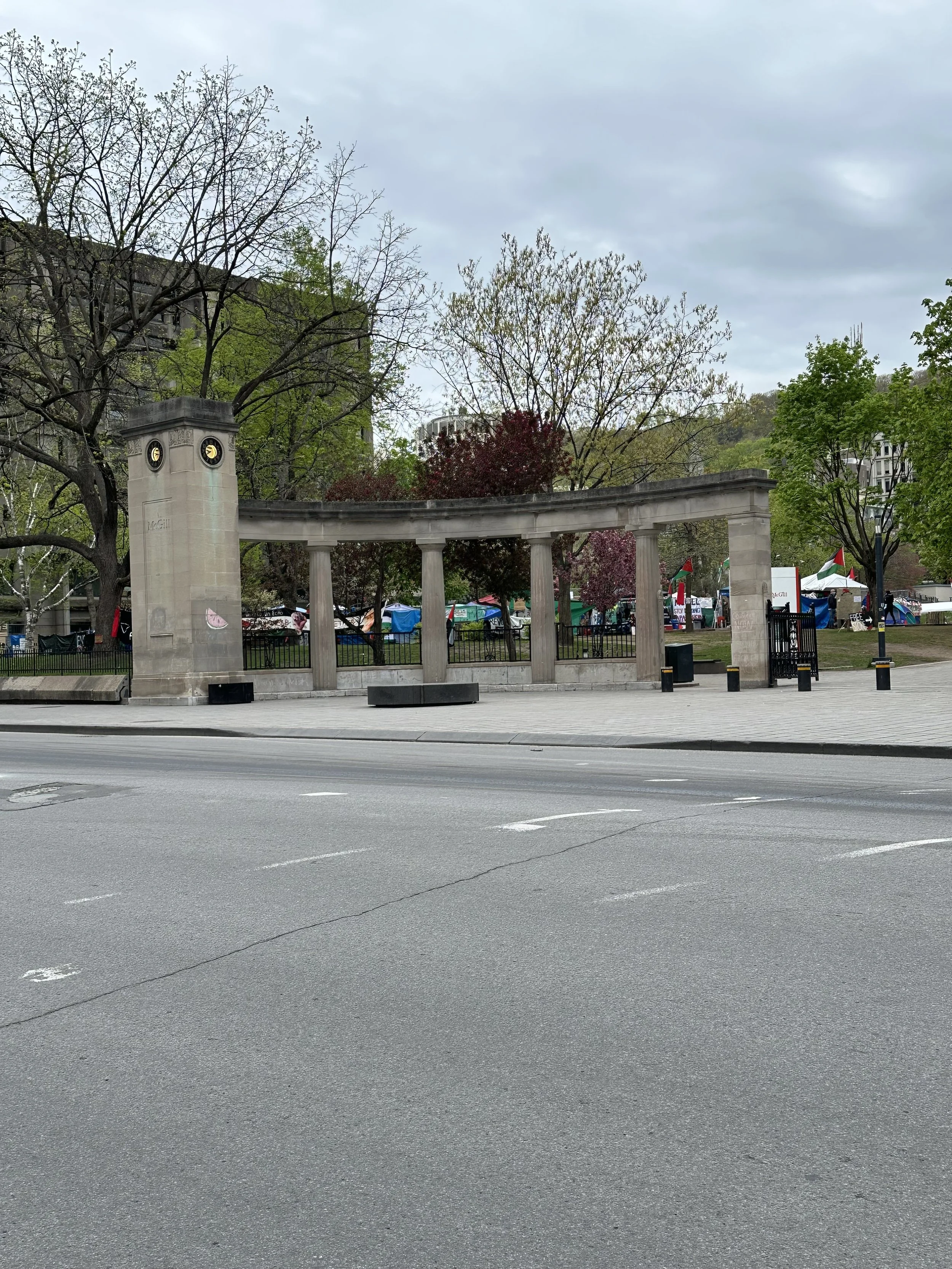
Figure 5. View of the encampment framed directly through the neoclassical stone portico of the Roddick Gates. The low-rise sprawl of tents and banners stands in stark visual contrast to the rigid, vertical architecture of institutional authority. Photograph by the author, May 13, 2024.
While mass demonstrations for Palestine had taken place weekly in downtown Montreal for months with limited media attention, the pitching of tents on McGill’s Lower Field immediately drew sustained local and national media coverage. This attention was not generated by the students’ demands themselves—which were already widely articulated—but by the fact that they were articulated from within the grounds of an elite institution. The encampment leveraged the symbolic and spatial authority of the university to force recognition, revealing how public visibility in contemporary protests remains tethered to institutional land. By transforming campus space into a site of continuous assembly, learning, and care, the encampment functioned as a counterinstitution that appropriated the university’s legitimacy without its authorization (Figures 6a-c). In this sense, the encampment did not wait to be recognized as political through negotiation or dialogue; it spatially enacted political recognition.
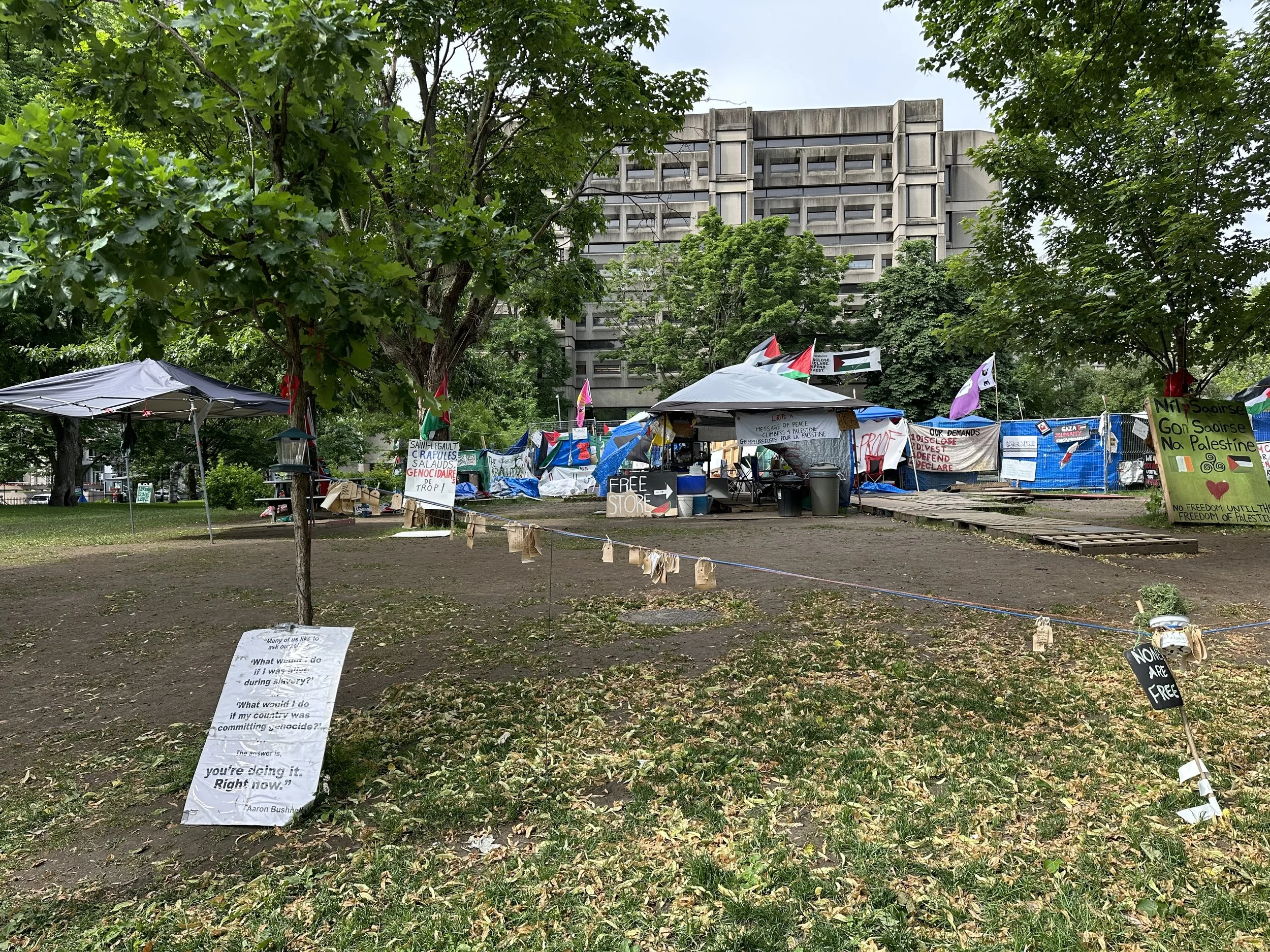
Figure 6a–c. Interactive “Messages of Peace” memorial installation along the encampment perimeter. Handwritten visitor tags strung along cords record personal expressions of grief, political critique, and solidarity. Photographs by the author, June 11, 2024.
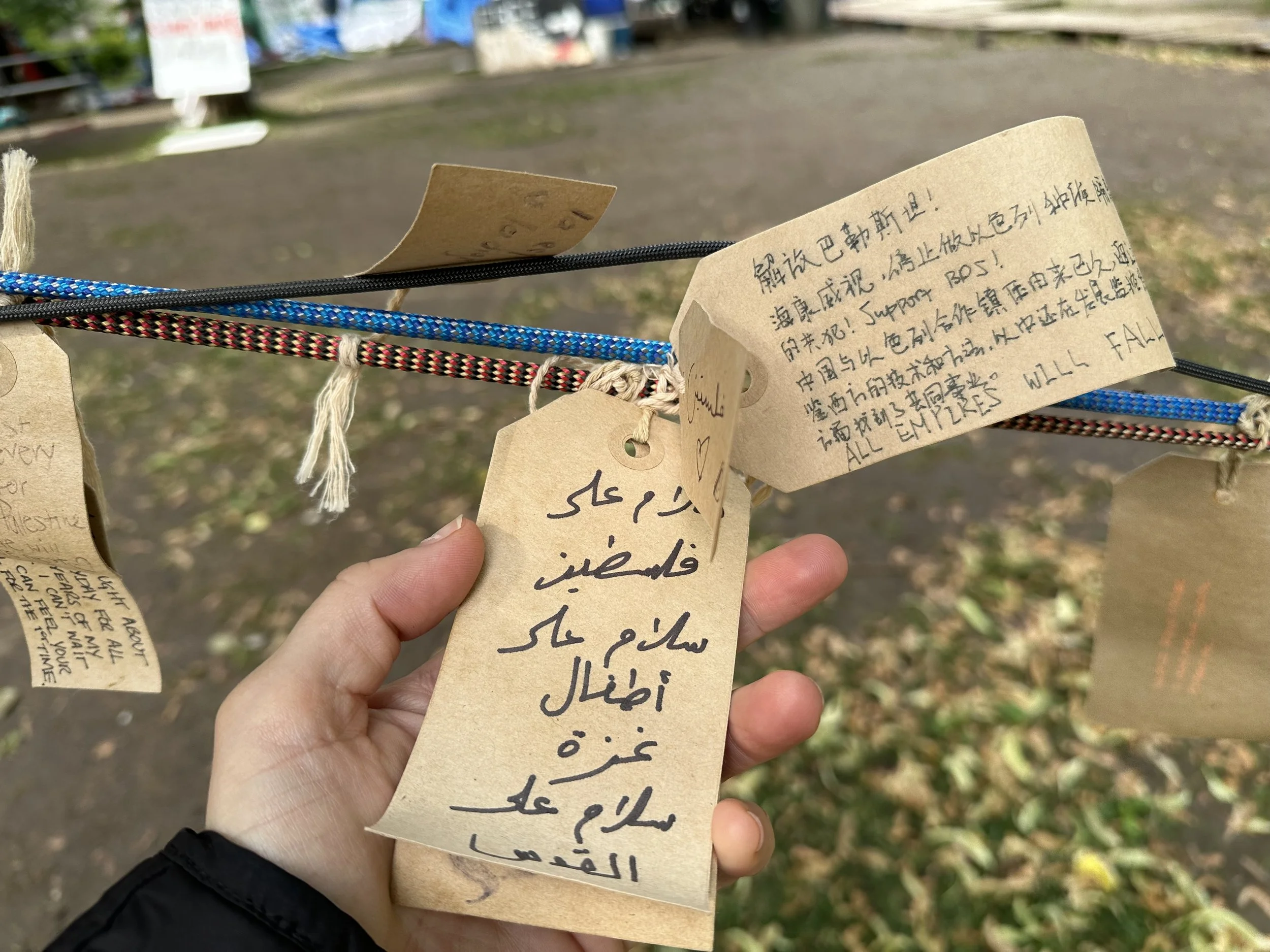
Figure 6a–c. Interactive “Messages of Peace” memorial installation along the encampment perimeter. Handwritten visitor tags strung along cords record personal expressions of grief, political critique, and solidarity. Photographs by the author, June 11, 2024.
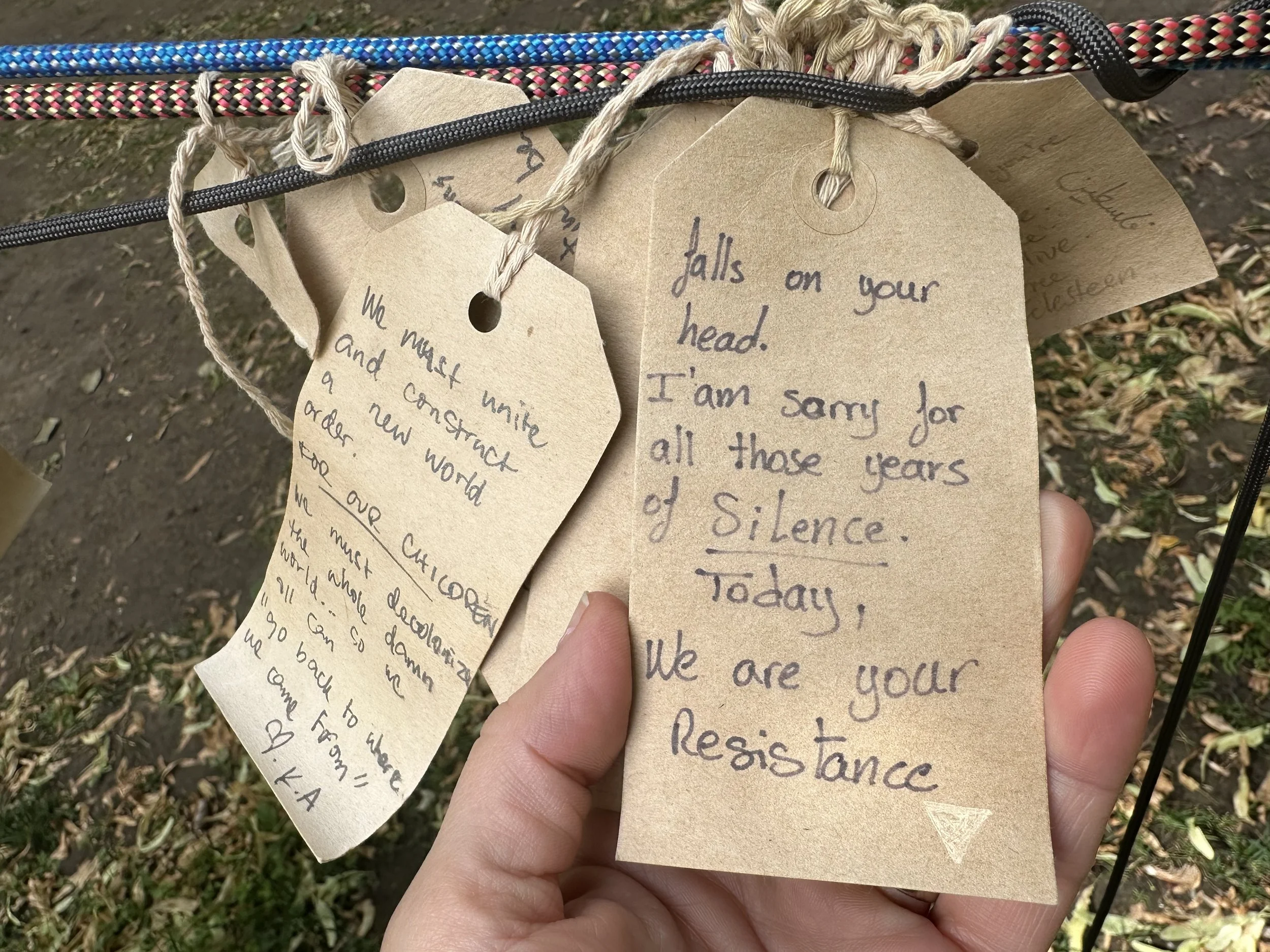
Figure 6a–c. Interactive “Messages of Peace” memorial installation along the encampment perimeter. Handwritten visitor tags strung along cords record personal expressions of grief, political critique, and solidarity. Photographs by the author, June 11, 2024.
Lawfare and Spatial Militarization
The university’s response to the encampment followed a clear shift in institutional framing: what initially appeared as political protest was rapidly redefined as risk, and then as a security problem. Rather than engaging the encampment as a form of collective speech or assembly, the administration turned to legal and procedural mechanisms to manage it as a spatial violation. This process unfolded through what has come to be known as lawfare: the use of injunctions, court filings, and legal threats not to resolve conflict but to restrict presence, movement, and duration. At McGill, repeated attempts to obtain injunctions signaled an early effort to discipline protest through juridical means, recasting occupation of campus land as unlawful trespass and preparing the ground for more forceful forms of intervention. Lawfare thus functioned as an initial technology of spatial control, establishing the encampment as an object to be removed rather than a political interlocutor to be addressed. When these legal mechanisms proved insufficient to end the occupation, they were accompanied by increasingly direct forms of spatial control, including surveillance, restricted access, private security, and the physical reconfiguration of campus space. It is in this broader sense that the university's response can be understood as a process of militarization. Here militarization describes the institutional choice to treat the encampment primarily as a problem of security and territory rather than one of politics and dissent (Figure 7).
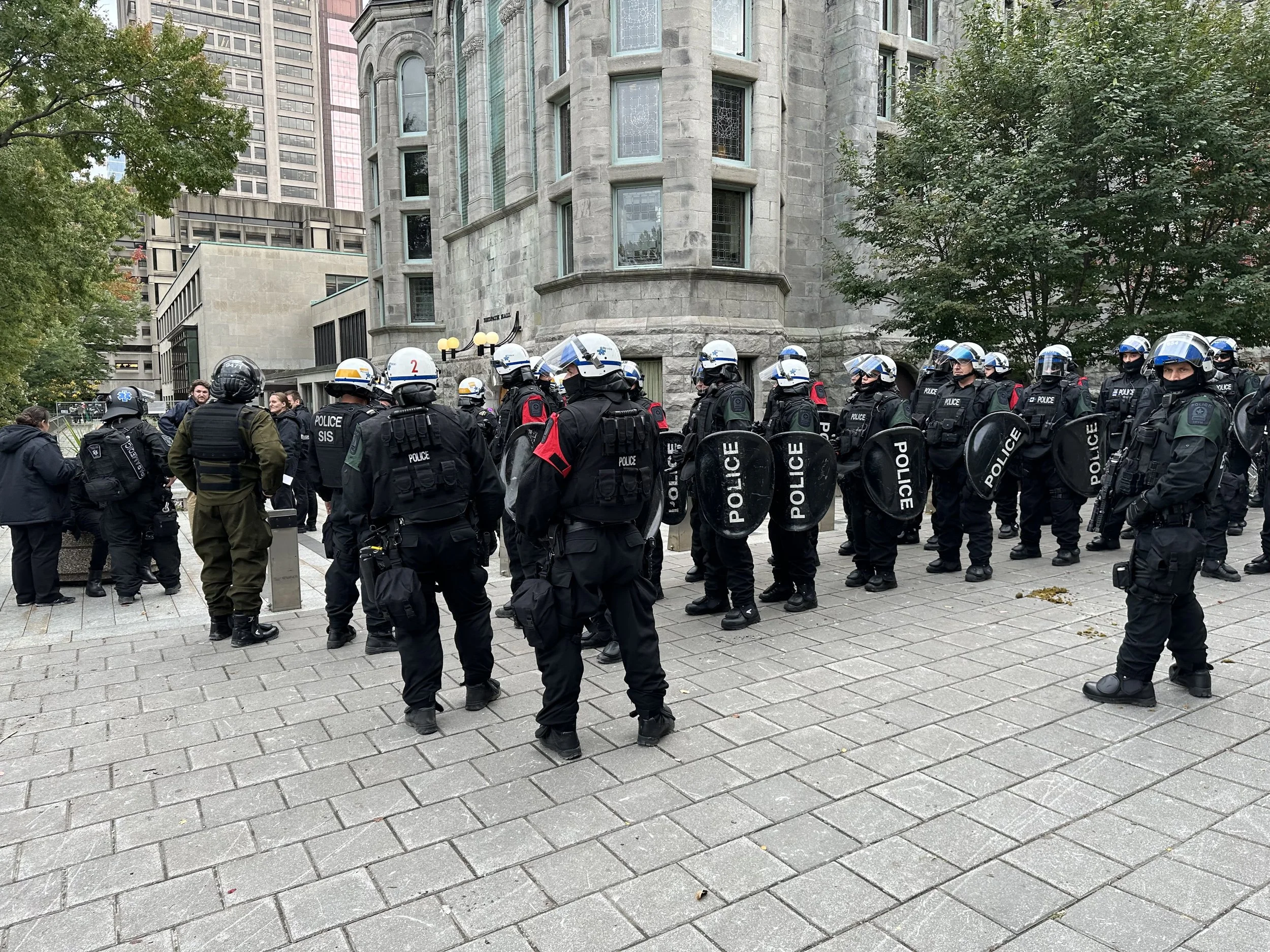
Figure 7. Tactical police presence on campus. Riot police equipped with body armor, helmets, and shields assemble in formation near university buildings, illustrating the transition from administrative lawfare to direct physical enforcement and militarized spatial control. Photograph by the author, October 7, 2024.
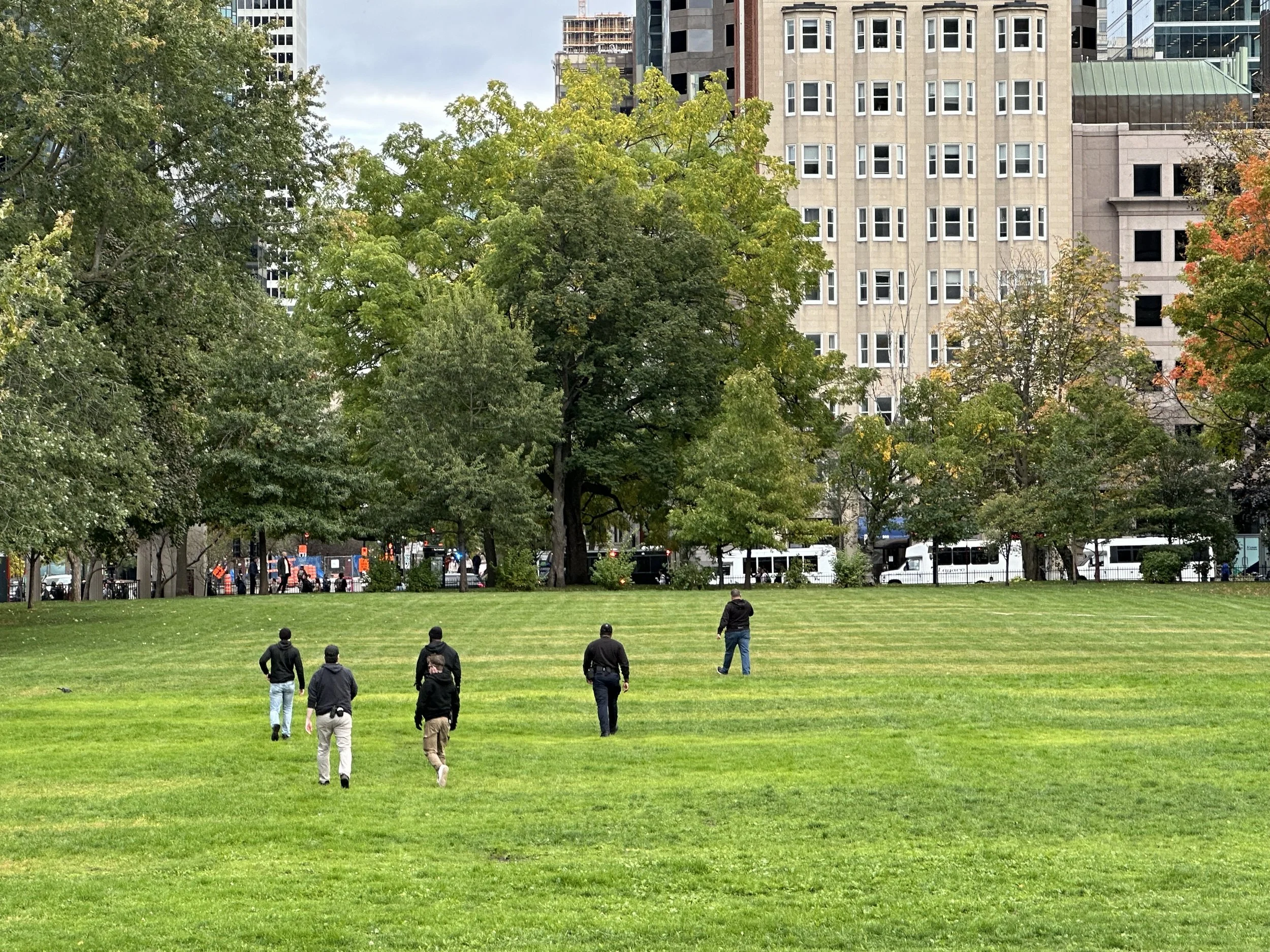
Figure 8. Ununiformed private security personnel roaming campus greens, demonstrating the subtle expansion of non-state surveillance infrastructure used to monitor student presence and movement. Photograph by the author, October 7, 2024.
The university administration increased the visible presence of security personnel including plainclothed ones, and established contracts with external security firms (GardaWord and Groupe Sirco for the dismantlement) (Figure 8). Political activity was now governed through surveillance, enclosure, territorial control, and ultimately by force rather than dialogue. Once protest is framed as a threat to order, the management of space overtakes the content of demands. The presence of tents, assemblies, and care infrastructures prompted a response through which the university asserted authority via legal action, surveillance, and eventually physical intervention.
Prior to the encampment, McGill functioned as a relatively open campus, although this openness has historically contracted during periods of sustained labour and student mobilization. Although some buildings required controlled access, movement across the grounds—especially the Lower Field—was largely unrestricted for students, staff, and members of the broader public. This changed rapidly as the institutional reframing of the encampment as a security problem became materially visible in the landscape. Areas that had long functioned as open, publicly accessible grounds were enclosed with fencing and gates (Figure 9). Access to campus was rerouted through controlled entry points, monitored by private security personnel. After the encampment’s removal, the Lower Field remained under heightened surveillance, with security patrols and restricted circulation continuing well beyond the event itself. Heavy machinery, including CAT equipment, were brought in to excavate portions of the ground, replace soil, level and lay new sod—an extraordinary intervention for what had previously been lawn and common ground. Through these measures, academic space was reorganized as controlled territory, governed by checkpoints, security patrols and physical barriers rather than by norms of openness associated with this university (Figure 10). Although many of these measures were subsequently scaled back, their implementation marked a significant reconfiguration of campus governance and access.
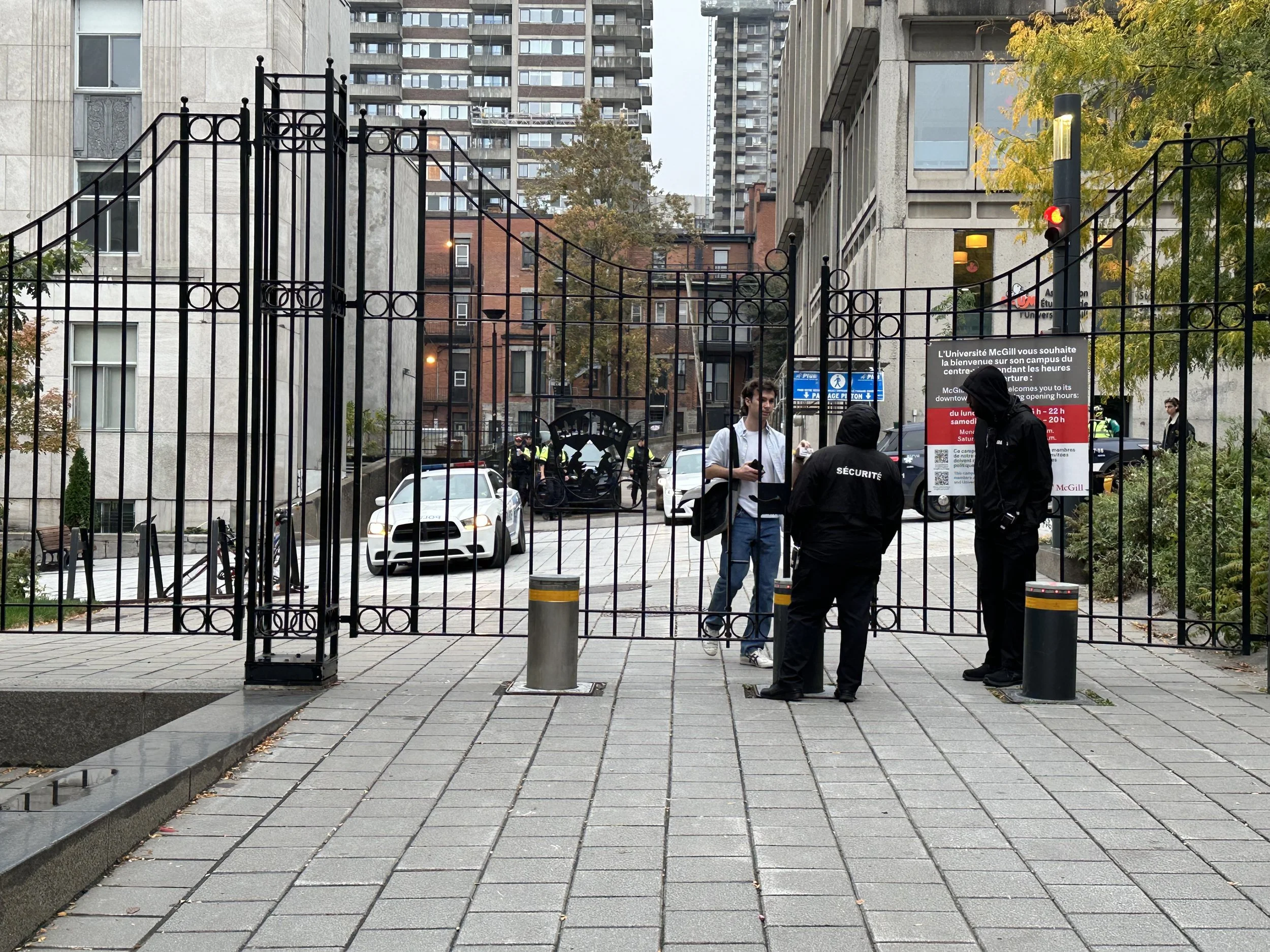
Figure 9. Restricted campus entry point. Contracted security guards control physical entry points at the perimeter gates, transforming open university thoroughfares into vetted checkpoints. Photograph by the author, October 7, 2024.
Figure 10. Vehicular security patrols on internal pathways. A continuous convoy of municipal police cruisers drives through campus pedestrian zones, materializing institutional authority and reconfiguring academic grounds as a heavily patrolled security space. Video footage by the author, October 7, 2024.
The removal of the encampment involved the destruction of books, art supplies, hand-painted banners, and a collectively maintained garden—objects that materialized the encampment’s alternative order of study and care. This act of cleansing was both symbolic and infrastructural: it sought to restore the appearance of neutrality by physically eliminating evidence of an alternative spatial arrangement. The remade lawn did not simply mark the end of the encampment; it functioned as a declaration that unauthorized forms of dwelling, learning, and governance would leave no residue on institutional land.
Globalizing Gaza
The spatial response to the encampment can be more clearly understood through the framework of “Globalizing Gaza,” a term coined to describe the export and circulation of techniques developed in sites of military occupation into other contexts of governance. As Jeff Halper has argued, Gaza has functioned not only as a zone of confinement but as a testing ground for spatial technologies of control—closures, checkpoints, surveillance regimes, and population management—that are subsequently normalized and redeployed elsewhere. Invoking “Gaza” here is not meant as an analogy between vastly unequal sites, but as an analytical lens that traces how logics of occupation travel. What moves is not equivalence of violence or scale of suffering, but shared techniques for governing space, mobility, and legitimacy. Viewed through this framework, the university’s response to the encampment appears as a localized manifestation of these circulating governance practices. The temporary imposition of ID-controlled access during periods of heightened tension, the enclosure of previously open areas, the deployment of surveillance, and the outsourcing of control to private security firms mirror a broader repertoire of spatial domination in which territory is fragmented, access is regulated, and public presence is conditional. These measures did not reproduce the material conditions of Gaza, nor should they be read as doing so. Rather, they reproduced the same logics of control: the transformation of space into securitized zones; the treatment of collective presence as a threat; and the reassertion of authority through restriction of movement and visibility. The relevance of Globalizing Gaza lies precisely in this displacement of technique across contexts that are otherwise presented as incomparable.
The normalization of these practices on campus was not lost on those who inhabited the university daily. Faculty members observed the rapid securitization of academic space and remarked on the dissonance between official communications and the lived reality of fenced grounds, controlled entry points, and private guards. Although legal scholars question the treatment of Canadian university campuses as simply private property and emphasize their public and expressive functions, the university increasingly emphasized its status as a private property owner in legal filings and public communications surrounding the encampment and cast itself (the administration) as the property owner.
This declaration marked a critical threshold: it aligned the governance of the university with broader architectures of enclosure and exclusion, rendering exceptional measures ordinary and defense of space administrative rather than political. In this way, the encampment revealed how easily global war logics can be domesticated within institutions that continue to frame themselves as spaces of openness, dialogue, and learning (Figures 11 and 12).
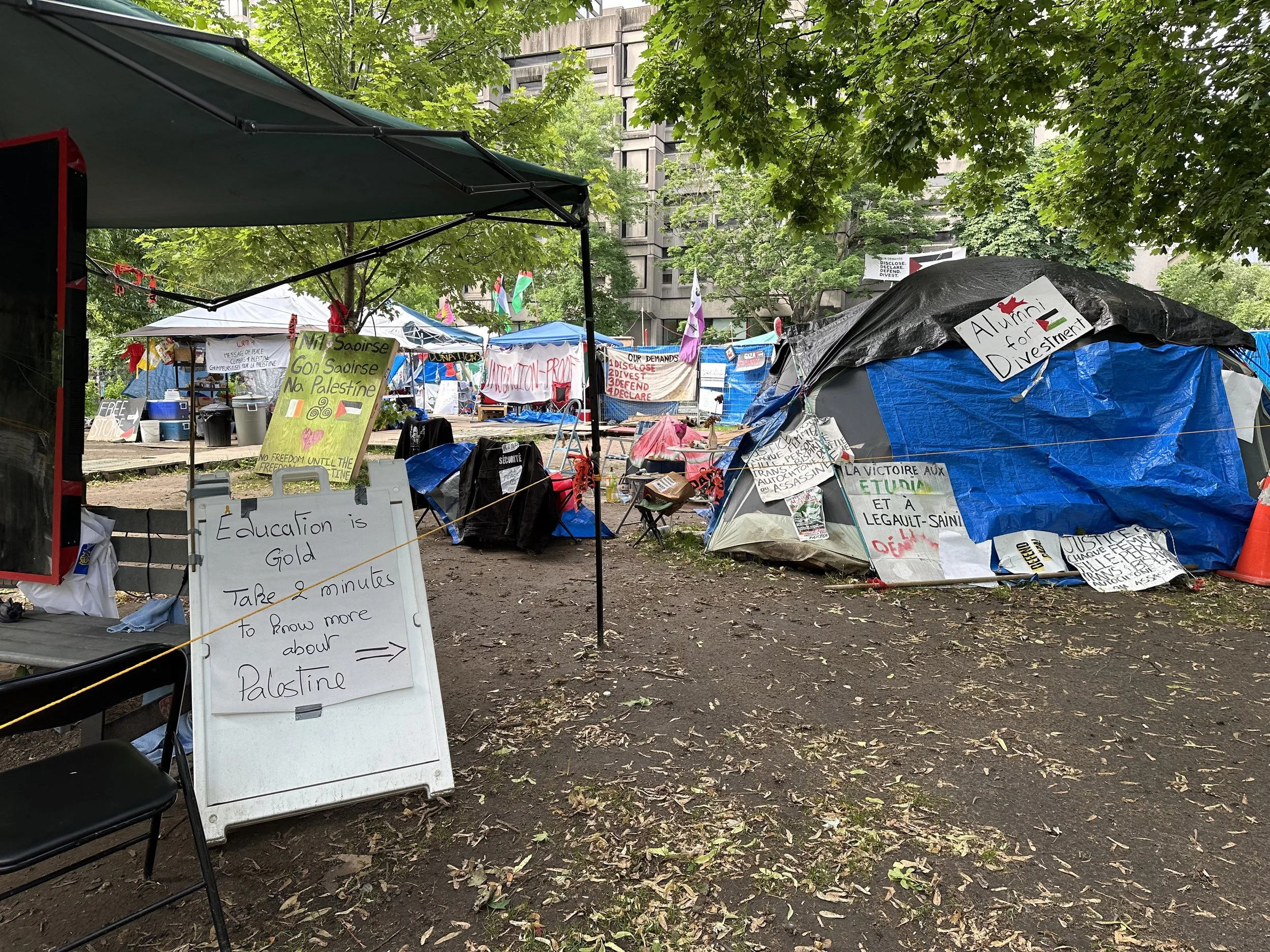
Figure 11. Educational outreach and core political demands in front of the encampment. A prominent A-frame sign reading “Education is Gold” invites public engagement, while background banners outline the movement's primary demands: Disclose, Divest, Defend, and Declare. Photograph by the author, June 11, 2024.
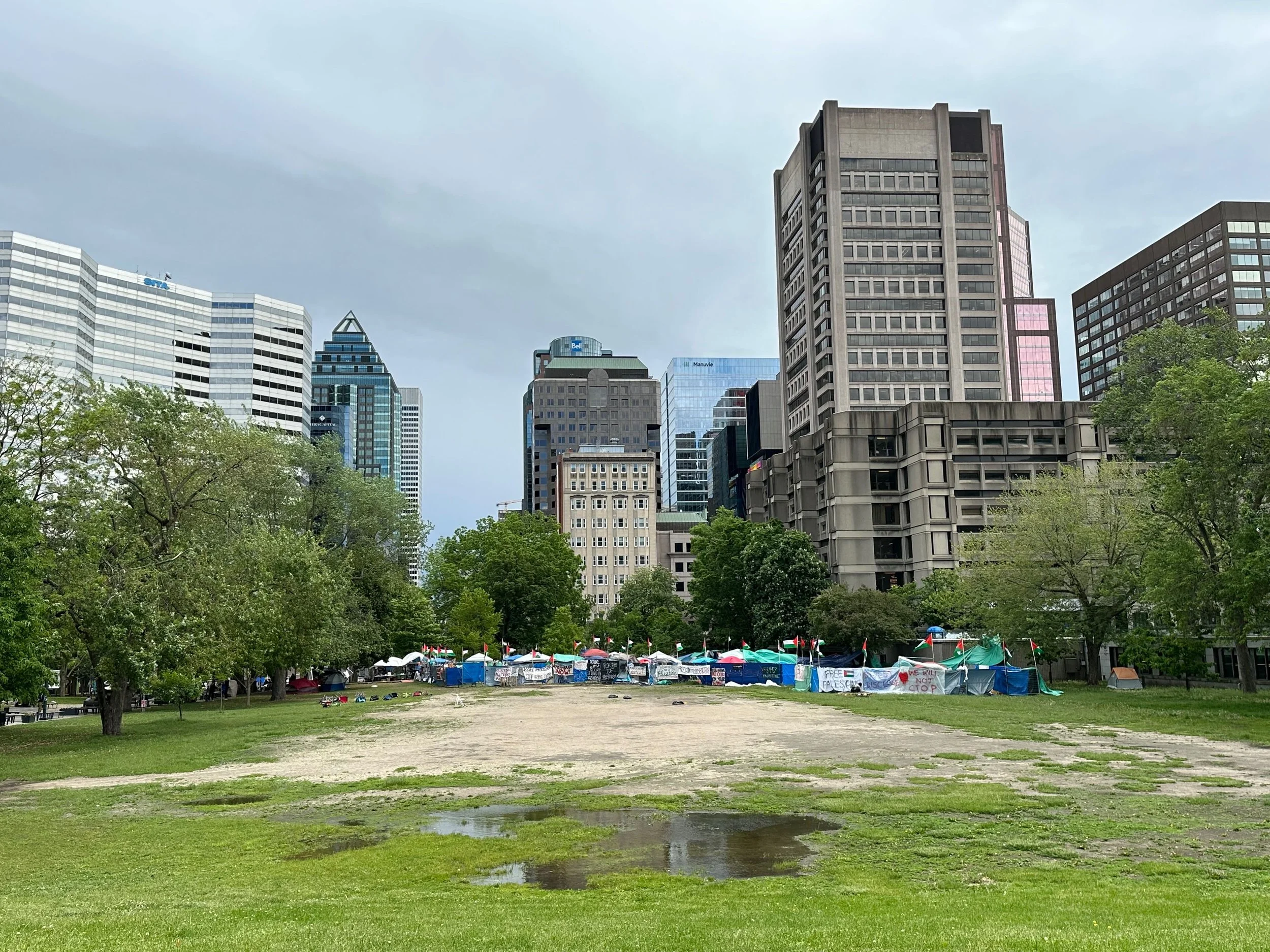
Figure 12. The encampment perimeter as a visual counter-territory. Handmade political banners lining the fence confront the university’s institutional pretense of neutrality, creating a persistent visual after-image of spatial reclamation. Photograph by the author, May 28, 2024.
University as Home Front
Universities matter to states not primarily as sites of free inquiry but as institutions that produce legitimacy, expertise, and narrative authority. They credential knowledge, validate research agendas, cultivate political and administrative elites, and participate in transnational circuits of recognition that extend far beyond the classroom. As Maya Wind argues in Towers of Ivory and Steel, Israeli universities are deeply embedded in state projects while simultaneously presenting themselves as politically neutral institutions. This contradiction is not unique to Israel. North American universities offer one example of a broader phenomenon whereby universities, across a range of political contexts, function as nodes where state power, academic legitimacy, and global reputational economies intersect. It is precisely this positioning that makes universities strategic terrain.
Universities have become important arenas in contemporary geopolitical conflicts because they shape legitimacy, expertise, and public narratives. Encampments trigger escalation not because they introduce politics into the university, but because they expose the university as an already politicized terrain—one that must be secured and controlled when its role as home front becomes visible.
The scale and intensity of the university's response raise a question that cannot be answered by reference to protest management alone: why did this form of student action provoke such forceful repression? One useful way of understanding the encampment is through la paperson's notion of the “Third University,” which describes forms of study and collective life that emerge within, yet exceed, institutional control. The encampment enacted this mode of study in concrete, spatial terms. Functioning explicitly as a people's university, it drew on the material and symbolic resources of the institution—campus land, donated books, electrical power, visibility, and media attention—to create a space of learning, care, and governance without permission. Kitchens, libraries, medical tents, assemblies, and workshops materialized forms of study that were inseparable from collective living. These activities unfolded on unceded Kanien'kehá:ka territory, drawing attention to the layered histories of occupation and dispossession that predate both the university and the encampment itself. The encampment did not ask to be included within the university; it acted as though the space could already be otherwise.
““Encampments trigger escalation not because they introduce politics into the university, but because they expose the university as an already politicized terrain—one that must be secured and controlled when its role as home front becomes visible.””
Afterlives and Recurrence: The Third University as Ongoing Practice
The encampment did not persist as an uninterrupted form, nor did it seek institutional afterlife through preservation or commemoration. For a long time, I lamented the absence of a formal archive of the 2024 encampment. Yet when I taught Knowledge Institutions seminar again in Winter 2026, I came to understand that institutional memory need not depend on archival preservation alone. What followed was not continuity, but recurrence: the reappearance, under altered conditions, of questions about study, care, institutional authority, and the uses of space that the encampment had brought to the surface. The Third University, as la paperson insists, is not an event bound to a moment of exceptional unrest, but a practice that re-emerges wherever study exceeds institutional control. Its presence is episodic rather than permanent, surfacing when the limits of authorized knowledge and sanctioned space are encountered and refused. In this sense, the significance of the encampment lies less in its duration than in its capacity to generate forms of inquiry that continue to surface elsewhere. What recurs is not the encampment itself, but the questions it had made visible.
The encampment is the clearest example of the Third University. My seminar, by contrast, was credit-bearing, institutionally sanctioned, instructor-led, assessed, and housed within a university curriculum—all characteristics of what la paperson would identify as the Second University, where critique is accommodated through teaching and research. The seminar itself did not recreate the Third University. Instead, it revealed how questions that had emerged through the encampment migrated back into the Second University, becoming objects of inquiry, research, and critical reflection.
The semester culminated in a collaborative assignment titled “Counter-Narrating the Campus,” in which groups of four students selected a campus site and investigated its hidden histories through archival research, site observation, mapping, visual analysis, and critical writing. Drawing inspiration from urban projection practices, students transformed their research into temporary public interventions designed to reveal histories and relationships that remain invisible in official campus narratives. The project was developed in collaboration with Alanna Thain (McGill, English) through the SSHRC Partnership-funded project Nighttime Design for/with Marginalized Communities, with technical consultation and support provided by media artist Philippe Léonard.
““Drawing inspiration from urban projection practices, students transformed their research into temporary public interventions designed to reveal histories and relationships that remain invisible in official campus narratives.””
After the seminar concluded, we were able to realize the projections on campus as a temporary event. The projections did not recreate the encampment's alternative infrastructure of study and governance. Rather, they emerged from a more conventional pedagogical setting that nevertheless took the encampment's spatial and political questions as its point of departure. One project, “Celebrating the Gates for Heard Voices: Education, Land, and Resistance,” focuses on the Roddick Gates, McGill's symbolic entrance (Figure 13). The students traced the site's long history as a space of political assembly, connecting recent Palestine solidarity demonstrations to earlier mobilizations around McGill français, labour activism, and other campus struggles. They combined archival images, media analysis, site observations, and architectural interpretation to argue that the gates occupy a unique position between the university and the city, where institutional authority and public dissent repeatedly confront one another. Rather than treating the 2024 encampment as an exceptional event, the project revealed it to be part of a much longer geography of campus protest.
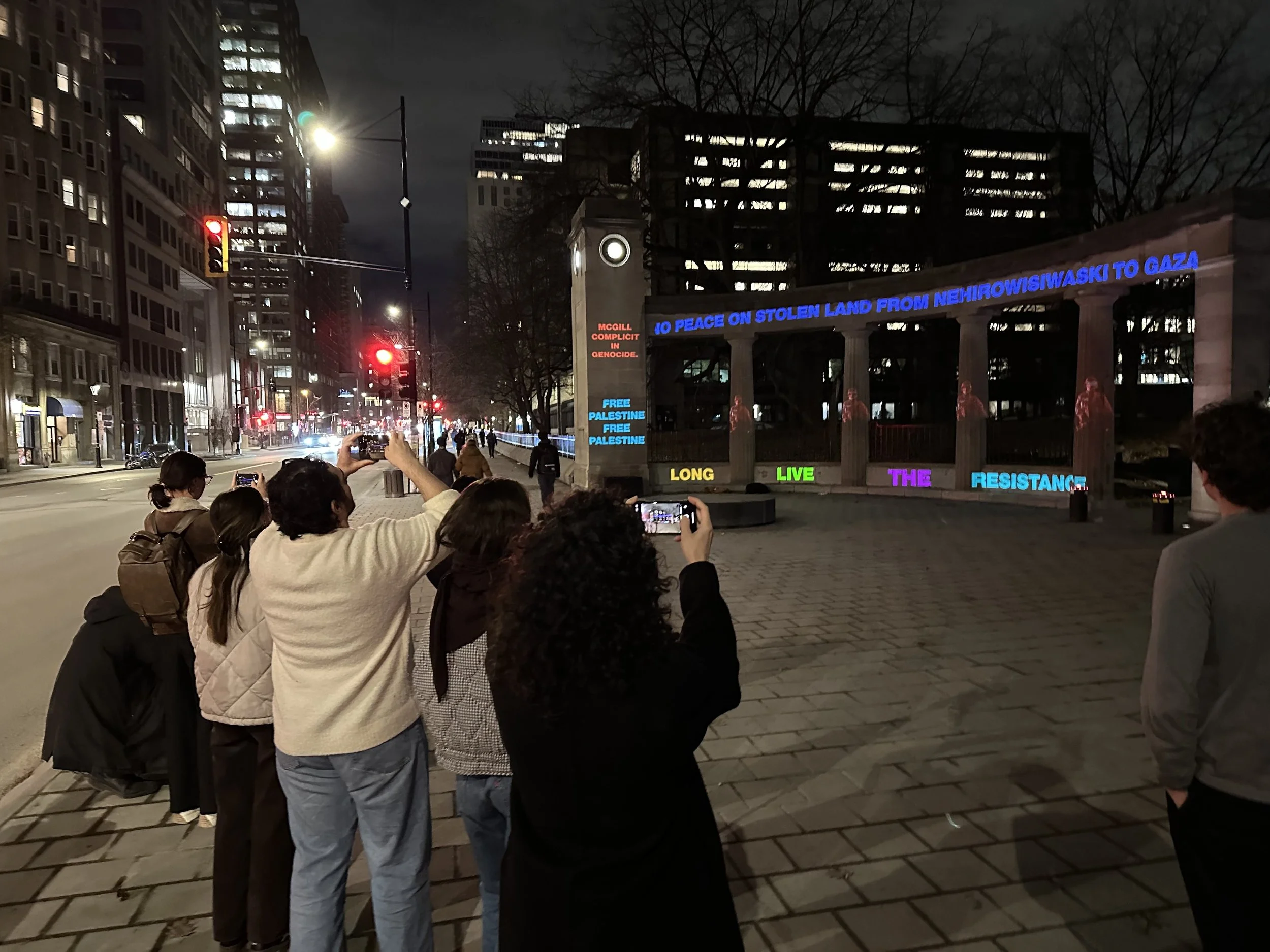
Figure 13. Student projection intervention entitled “Celebrating the Gates for Heard Voices: Education, Land, and Resistance,” re-projecting protest slogans from earlier campus struggles onto the university’s main gate. Photograph by the author, April 9, 2026.
Participation in the public projection event after the course concluded was explicitly optional, reflecting a pedagogical approach that sought to distinguish collective inquiry from compulsory performance. In this setting, the classroom did not function as a recuperative space for the encampment. Rather, it became another terrain through which students examined the university's histories, spatial logics, and exclusions. The projections were temporary interventions that left no durable institutional trace. Appearing briefly on surfaces not intended to host them, they nevertheless echoed the forms of occupation, visibility, and collective study that had characterized the encampment itself. Together, student contributions suggest that the encampment's most enduring legacy may be the way it reshaped how students learned to read, inhabit, and contest the university. The seminar revealed how questions of the Third University migrated back into the Second University.
If the encampment revealed the university as the home front of a distant war—one in which questions of knowledge, legitimacy, and political allegiance were actively contested—its afterlives demonstrated that this terrain of struggle extended beyond the camp itself. It persists in classrooms, research projects, public interventions, and renewed debates over who has the authority to narrate the campus and its histories.
Note:
An earlier version of this opinion piece was published in the Turkish-language architecture journal YAPI in June 2026.
Citation:
Ipek Türeli, “The Home Front: Campus, Control, and Tent Protests,” Platform, September 14, 2026.