Decommissioned Routes on the Alaska Highway: A New Life for an Old Bridge?
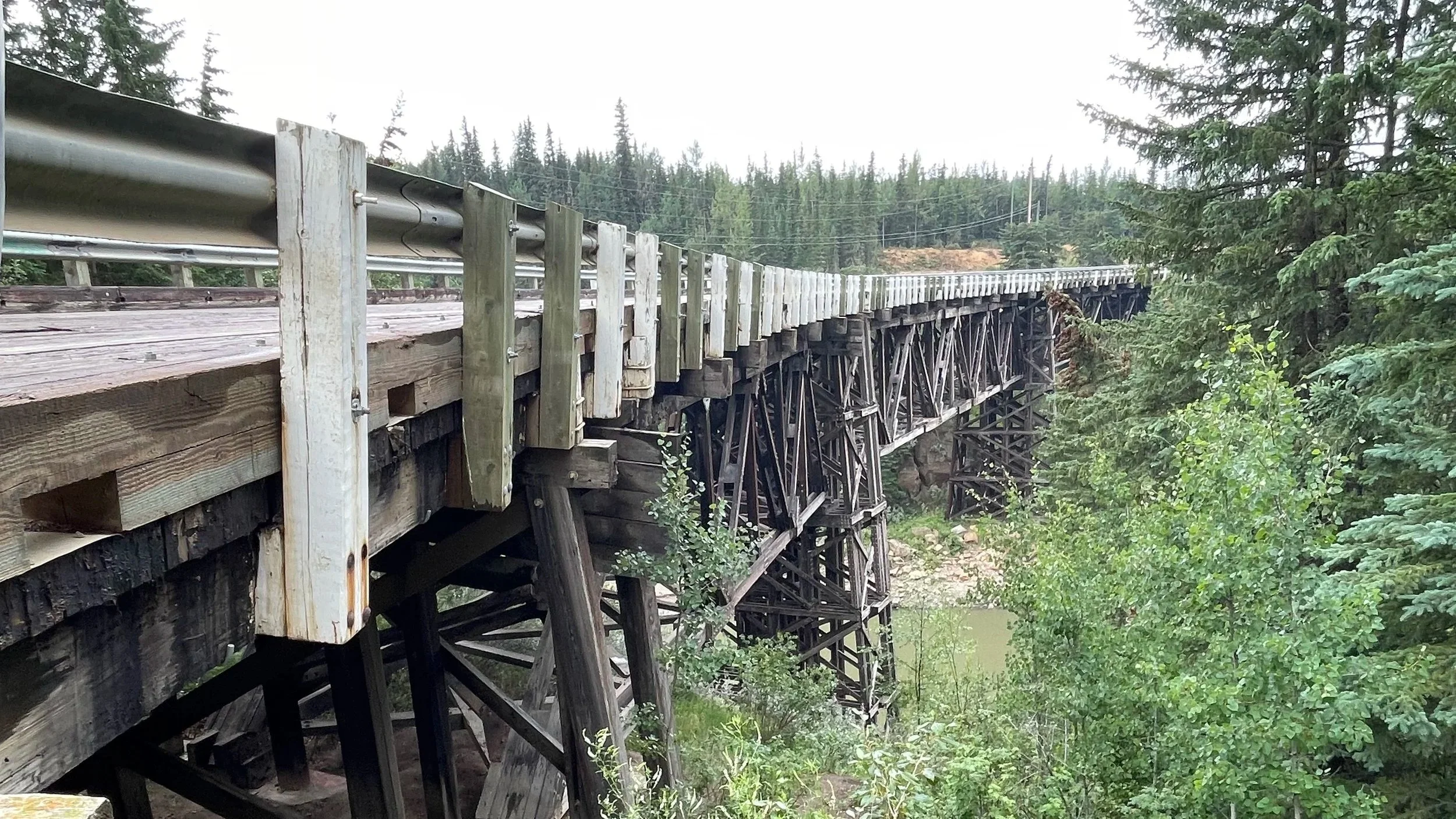
Weakened by rot and discolored by rust, this photo essay explores the weathered remains of the Old Kiskatinaw Bridge in British Columbia. A vestige of the original ALCAN or Alaska Highway, conceived as a military route, this nine-degree curved bridge was built in 1942 and 1943 by Canadian contractors hired by the U.S. Public Roads Administration (now the Federal Highway Administration) following a first phase of construction operations by the U.S. Army Corps of Engineers.
Located north of Dawson Creek, British Columbia or the official Mile 0, the Kiskatinaw Bridge was a vital connector until 1978, when road realignment and rerouting operations modernized the Alaska Highway to suit changing transportation, tourism, and industry needs. These upgrades began as early as 1943 and after 1946 when the highway was officially transferred back to Canada prior to its opening for civilian use in 1949. Over the years, road realignment operations significantly shortened and streamlined the original ALCAN route.
After heavy industrial vehicles and transport trucks was diverted to a new route, the bridge and its old winding road were renamed with the prefix “Old” following naming conventions for deaccessioned portions of the Alaska Highway. This route remained in use by locals and tourists alike. Today, the bridge’s metal guardrails are spraypainted with pink hearts while lovers’ initials are etched into deteriorating wood and warped metal. A large tag declaratively states “I was here.”
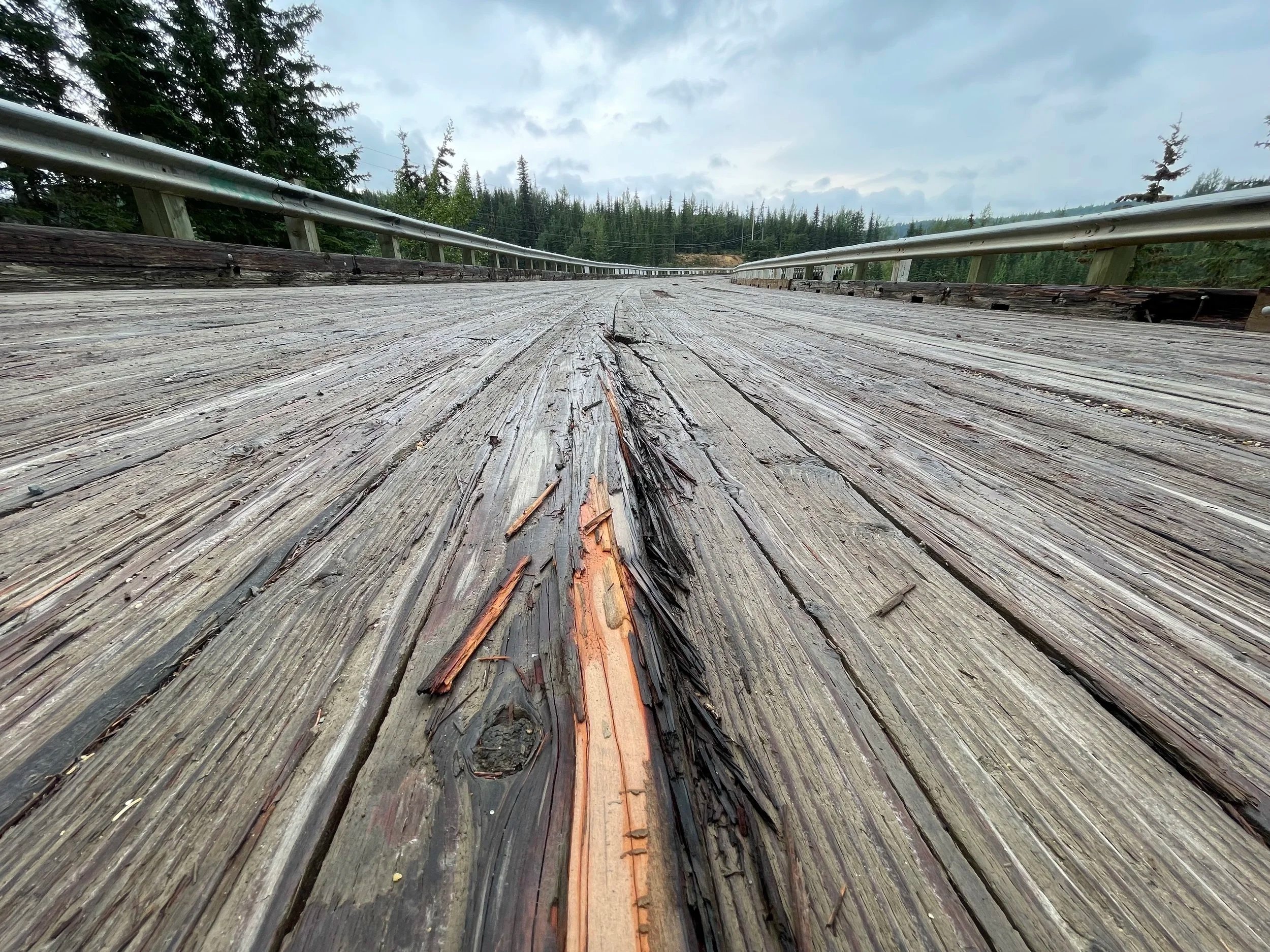
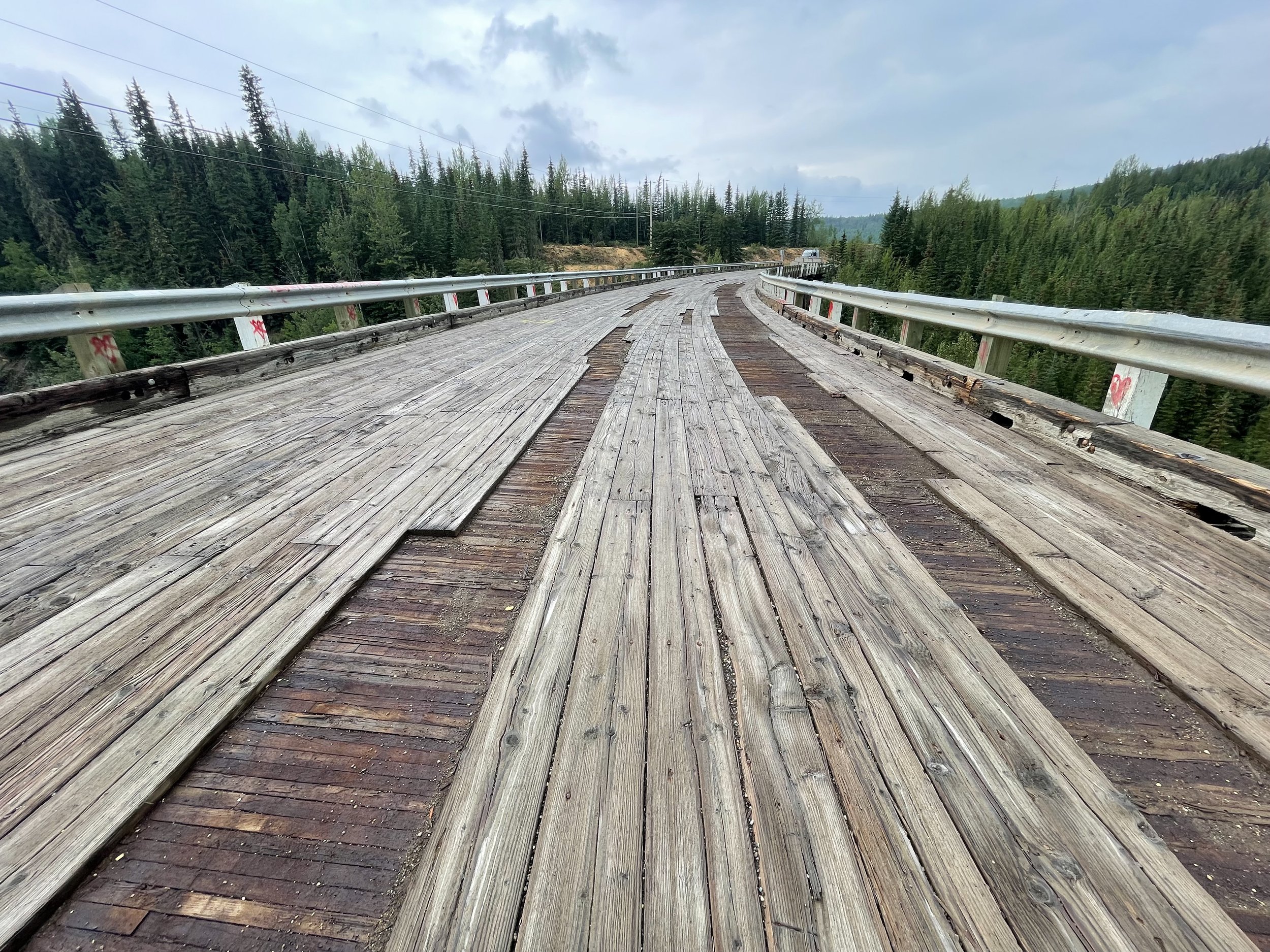
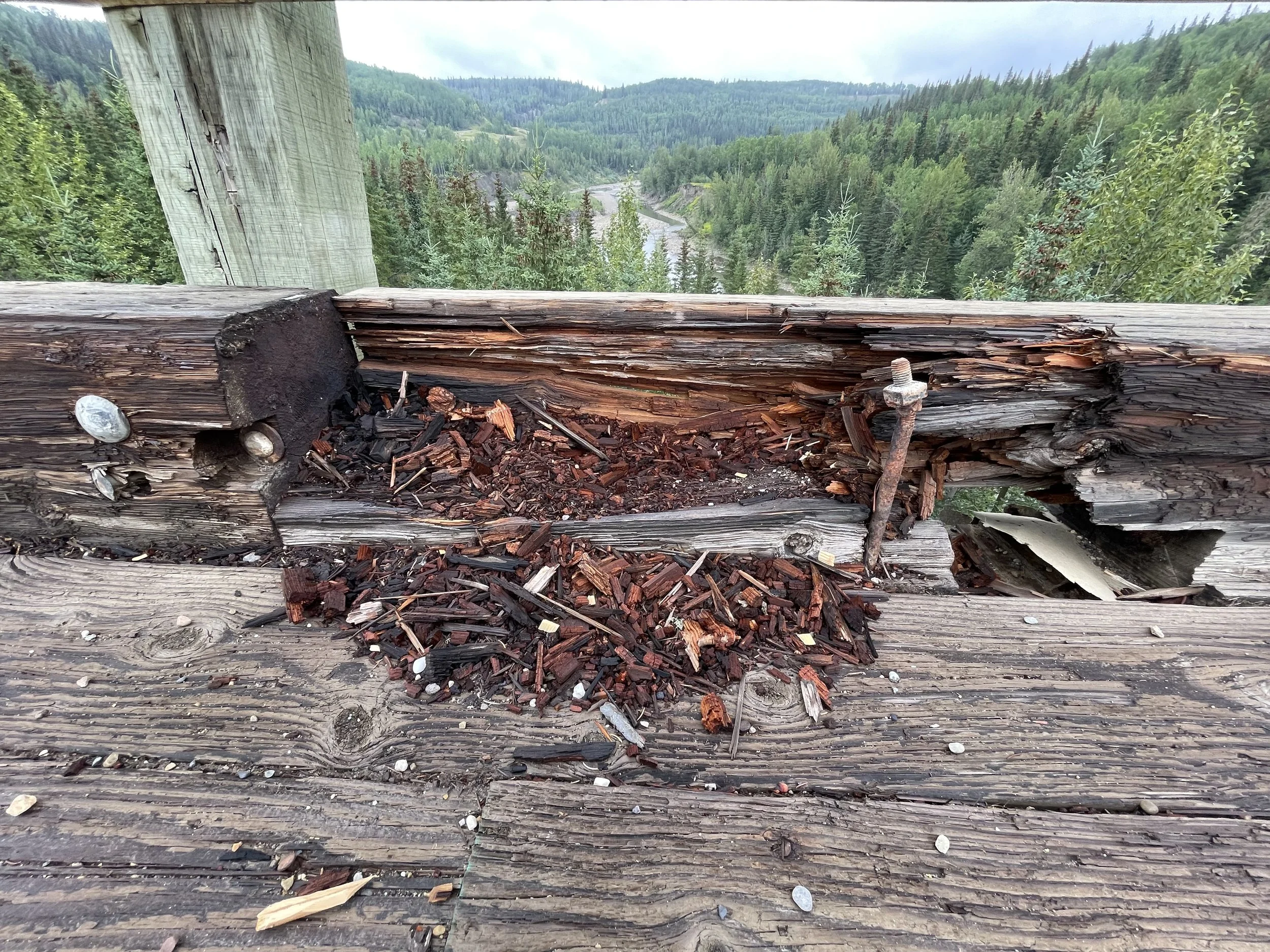
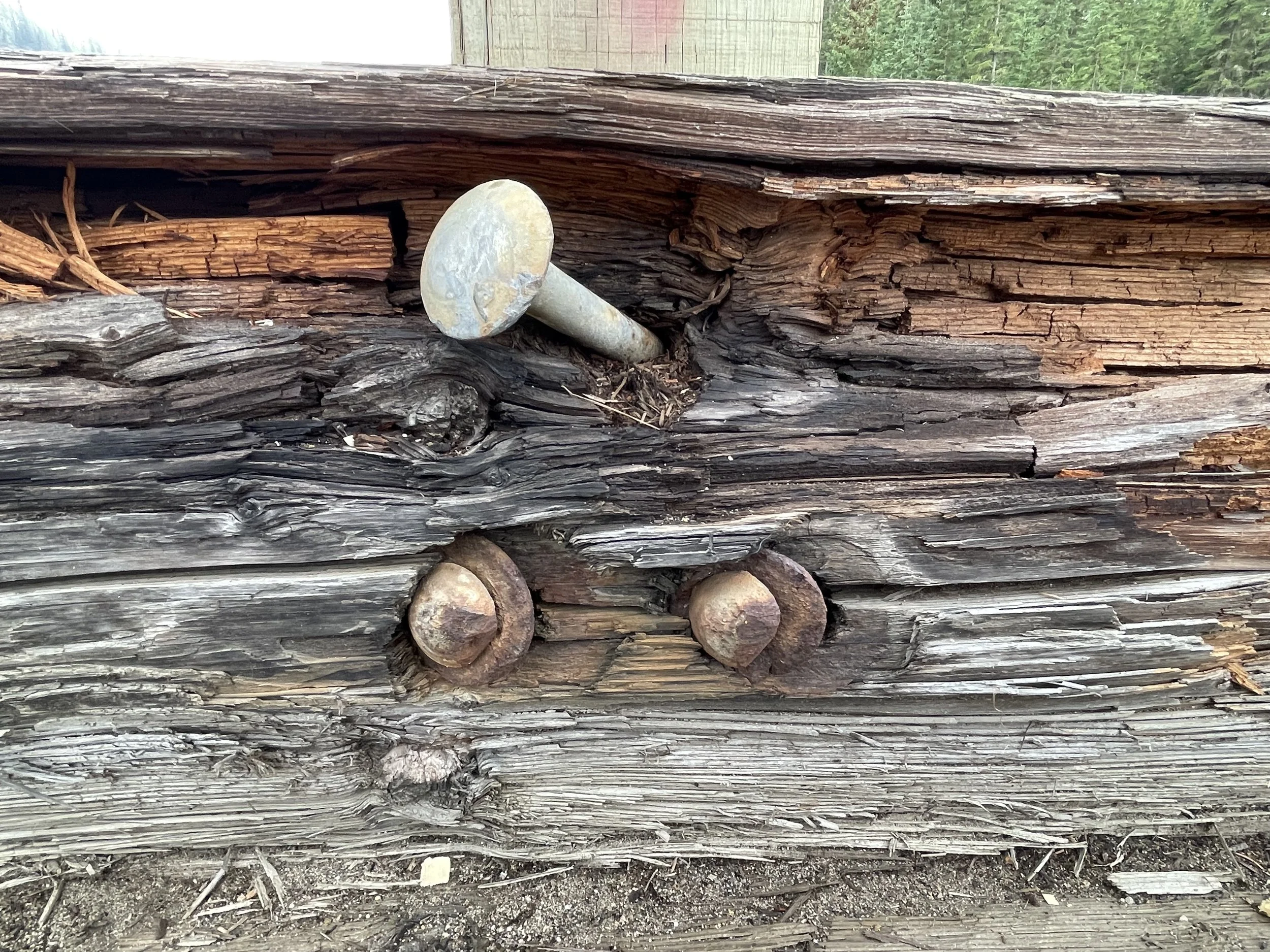
I was “here” on a detour. I was driving the Alaska Highway during record-breaking wildfires in Alberta and British Columbia in the summer of 2023, including the Donnie Creek wildfire. Seeking refuge and reprieve, I left the highway and travelled along deaccessioned and realigned portions of the original ALCAN route. Some remained in use as residential roads. Others were abandoned, naturalized into trails or simply vanished into alluvial fans. Yet other segments were dead ends or service roads to nowhere. At one location, an “Old” road led to a local fishing spot. Another three-kilometer decommissioned section served as a detour during a 2022 washout caused by a “broken beaver dam.”
Like other “Old” routes, the Old Kiskatinaw Bridge was in transition. Although deaccessioned in 1978, it had remained in operation as a local road until 2021. That year, a landslide impacted the tall structural piers that hoist the bridge high above the Kiskatinaw River, a tributary of the Peace River. Deemed a public hazard, the British Columbia Ministry of Transportation and Transit closed the Old Kiskatinaw Bridge to vehicular traffic and barricaded it with concrete blocks. Yet the bridge retained significance for locals and tourists alike. During my 2023 visit, some still strolled hand-in-hand along its curved path. Fellow Alaska Highway travelers made a pitstop to this landmark, thanks in part to The Milepost (a mile-by-mile travel guide published annually since 1949), interpretive signs, and historic markers indicating the “Kiskatinaw Curved Bridge.”
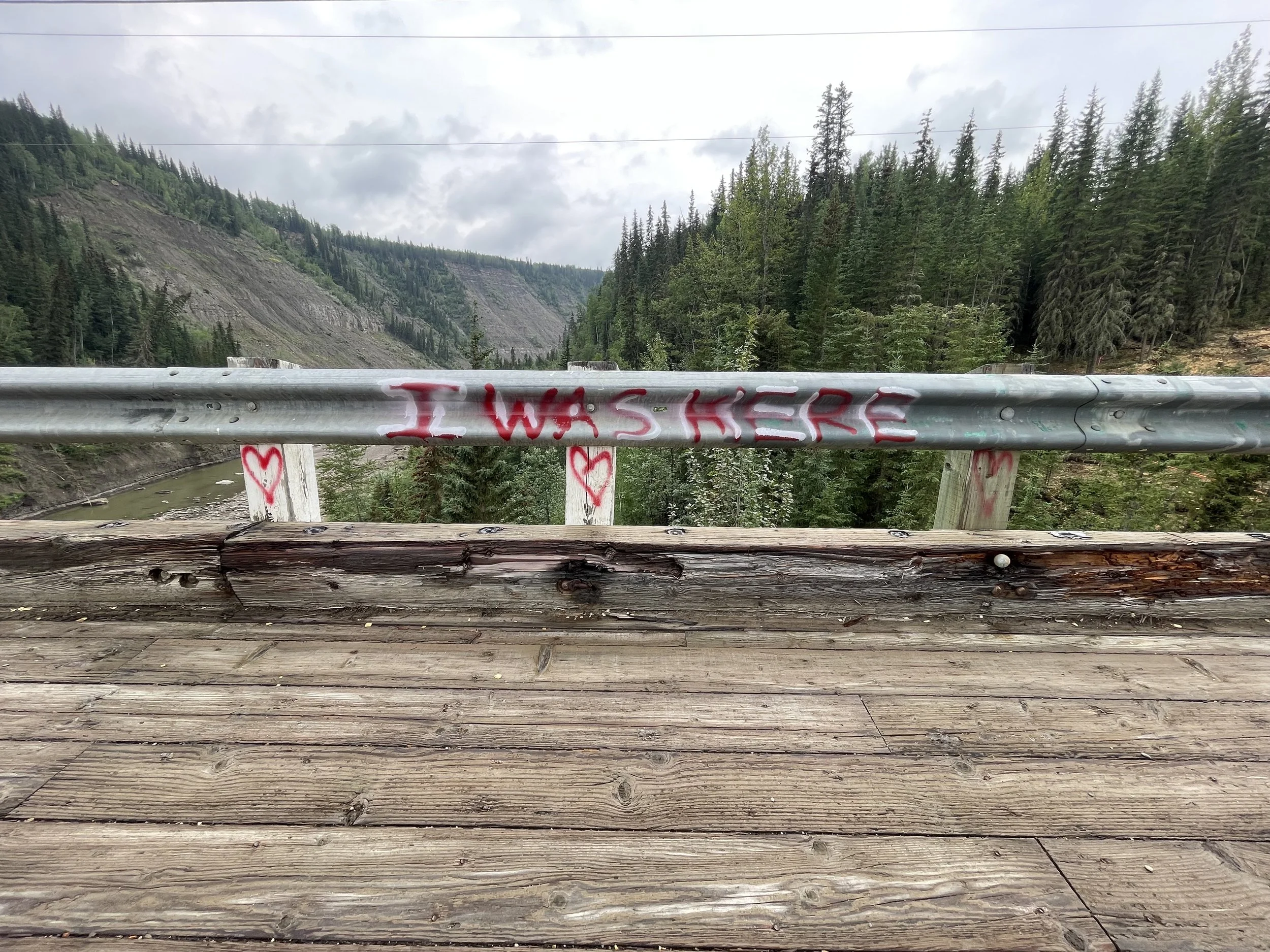
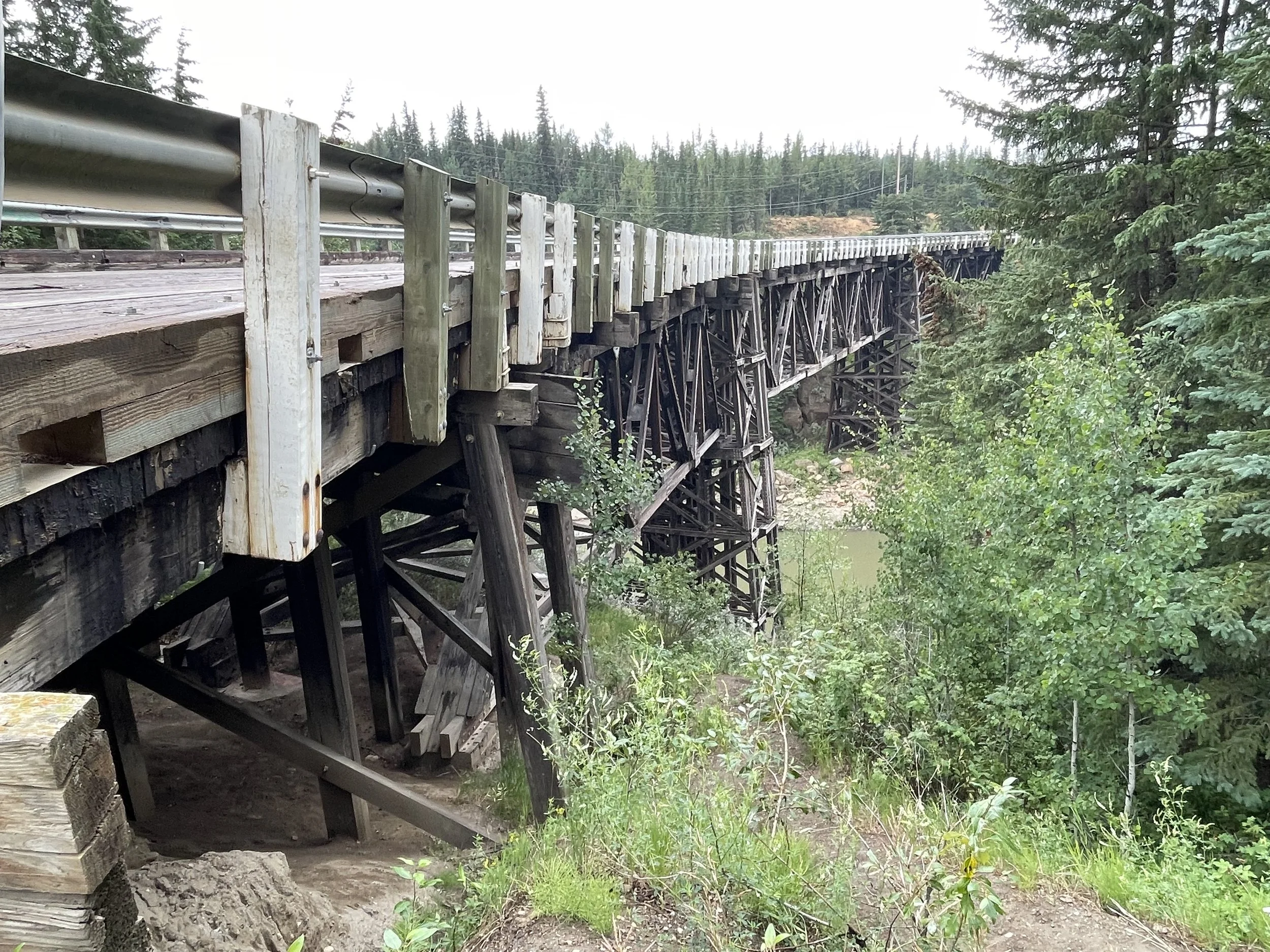
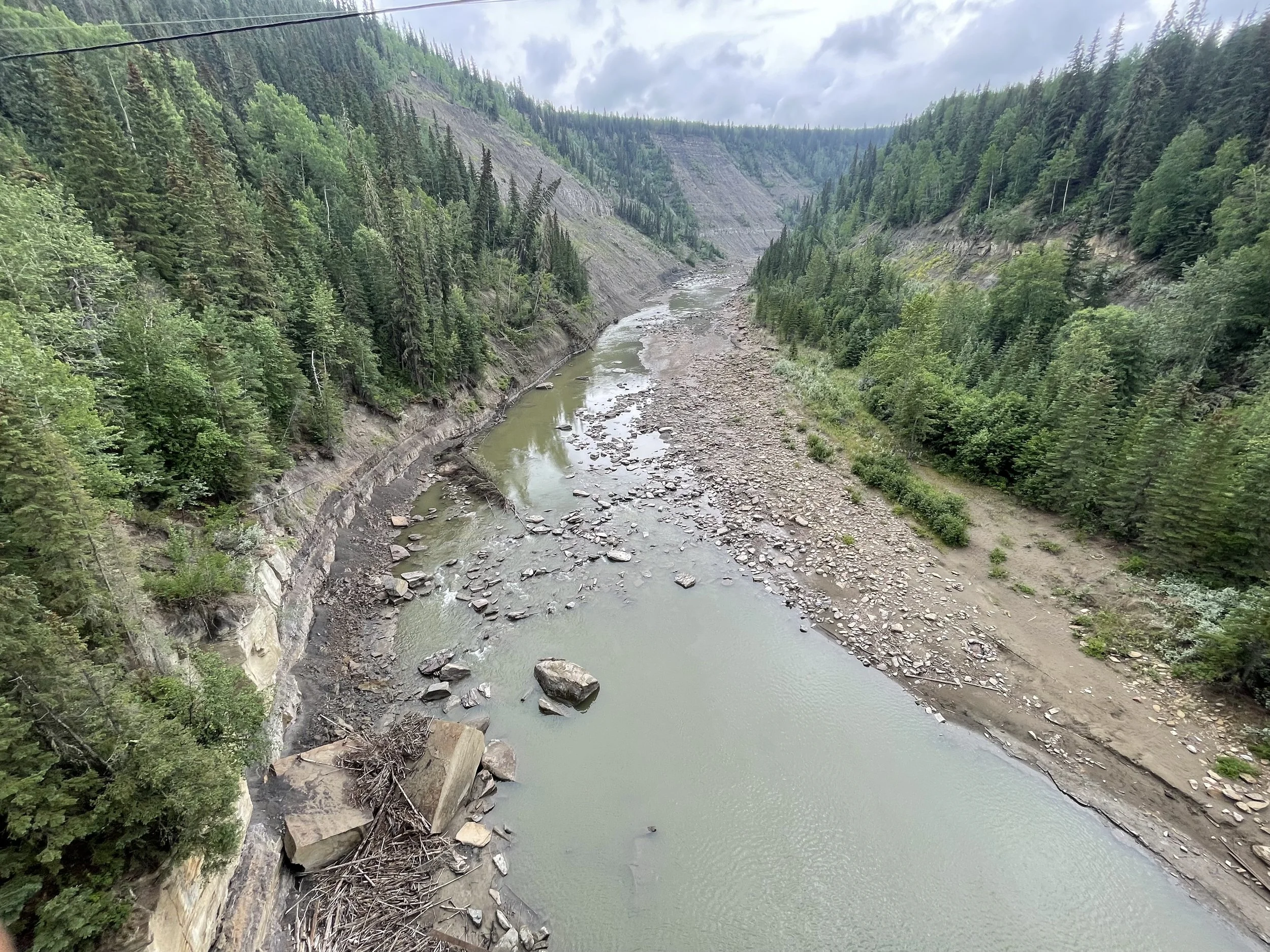
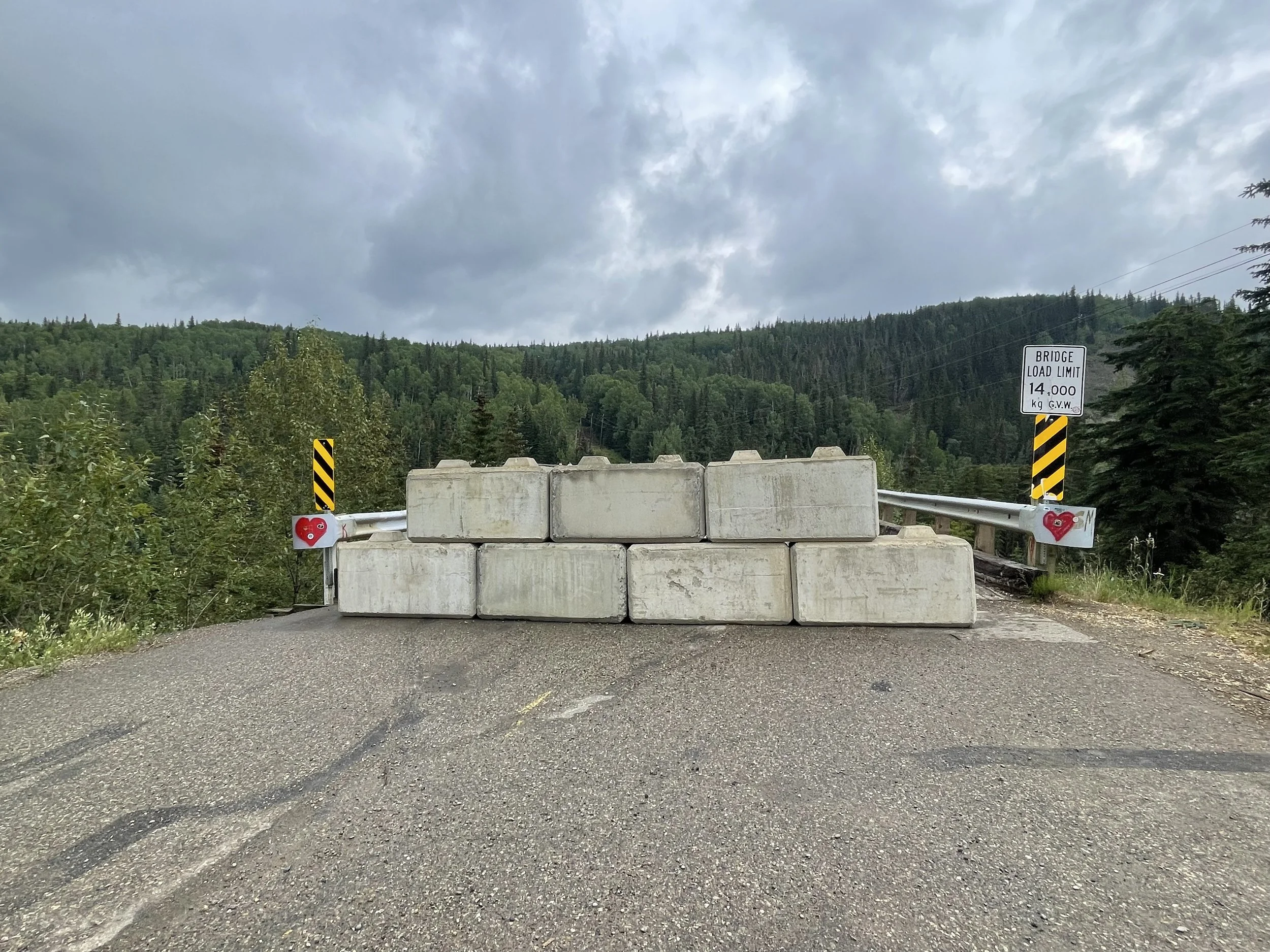
As I walked across, its warped timber trestles creaked under my weight. I took photographs to document the bridge’s aging material conditions. Bearing the distinction of Canada’s only surviving example of a curved timber trestle bridge, the Old Kiskatinaw Bridge continues to sit in a state of disrepair and deferred maintenance in 2026. Its slow deterioration reveals how intersecting climate and infrastructure crises are affecting historic sites in the province and across Canada.
What might its future hold? As a defunct artefact of the original ALCAN road, what role does this landmark bridge play? A monument to infrastructural neglect? Or a site of impending collapse or combustion? Given its wartime associations and civilian conversion, what does the Old Kiskatinaw Bridge signify? Is it a relic of US-Canada co-operation in a moment of strained bi-national relations? Perhaps the more urgent questions, though are, who should advocate for the preservation of this old timber structure and what retrofits might protect it from wildfires, landslides, floods and other hazards? After all, climate change may lead the cause for resuscitating this bridge—not for its historic importance but rather for the potential this bridge and other historic aligned road segments may play in emergency evacuation and disaster planning on the Alaska Highway in the years to come.
Citation:
Desiree Valadares, “Decommissioned Routes on the Alaska Highway: A New Life for an Old Bridge?” Platform, September 7, 2026.