After Writing Open Architecture
Our penultimate installment of the PLATFORM migration series is a conversation with Esra Akcan and co-editors, Arijit Sen, Min Kyung Lee and Sarah Lopez via email inspired by the new 2018 German edition of Open Architecture. The editorial interludes are in italics.
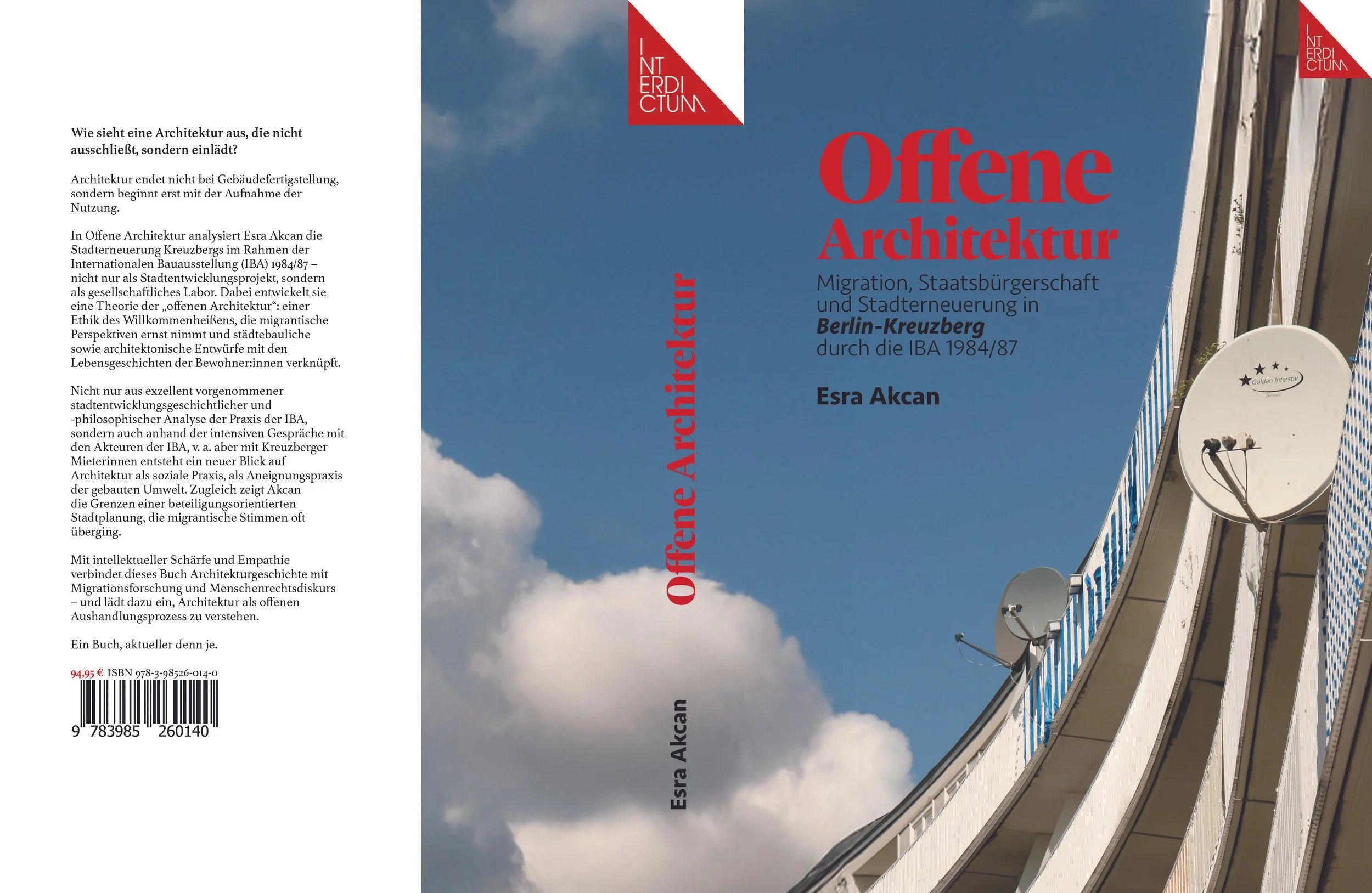
Editors: Open Architecture was published almost a decade ago. It was one of the first dedicated publications to address migrants as central characters in architectural production. Since then, the issues of migration and our built environments have only grown more urgent, complex, and dire - in Berlin, in Europe, and globally. Why did you write the book when you did?
Esra Akcan: I recently reflected on this question, while writing the introduction to the 2025 German translation of Open Architecture: Migration, Citizenship and the Urban Renewal of Berlin. The book was written a decade ago about the immigration policies of Germany in the 1980s, but its findings still remain relevant. Many agree that the twenty-first century is the age of migrations because of the global challenges of our time, including climate change, political unrest, social and economic inequality, and food insecurity. I started writing Open Architecture because I was agonized by a fact about which many seemed ignorant: Germany owes much of its post-war prosperity and cultural richness to immigrant labor and arts, yet it has hardly acknowledged itself as a country of immigrants. I wrote Open Architecture in wake of the world’s biggest refugee crisis since the Second World War due to the war in Syria that relocated millions to Türkiye, and the violations of academic freedom in Türkiye that pushed countless academics and journalists into exile in Germany. On the American front, the travel ban of 2017, the termination of DACA (Deferred Action for Childhood Arrivals) and family separation stormed the news. Shortly after the book came out, the Covid-19 pandemic exposed the hypocrisy of immigration policies: there was a public reckoning with the fact that undocumented people considered deportable are essential workers, who maintain our food supply chains. I wrote the introduction to the German translation in 2025 during another rise in anti-immigrant sentiments in Germany, and we are having this conversation during another deportation crisis in the U.S.
““Despite the inevitable rise in future migrations, current international laws that determine human rights fail to secure the dignity of migrants or support global and environmental justice.””
Editors: Today, we are witnessing multiple forms of migration and refugee movement, driven by a wide range of circumstances. What can help readers understand that migration is not a singular phenomenon, but an umbrella term encompassing very different forms of displacement, mobility, and forced movement?
EA: One way to look at the similarities between these cases would be to understand the relation between discrimination and the economically, politically and environmentally forced migrations. Migration and racist discrimination are indeed long-standing and intertwined phenomena that reproduce each other. Most climate refugees are the disenfranchised populations that are bearing the burden of the historical environmental harm inflicted by the first industrializing nations that accentuated the global apartheid and the social hierarchies in their own countries. These migrations require our attention because they are still present and expected in the future. Despite the inevitable rise in future migrations, current international laws that determine human rights fail to secure the dignity of migrants or support global and environmental justice. World authorities respond with anti-immigrant and nationalist policies. These issues were already at stake during Kreuzberg’s urban renewal throughout the 1980s.
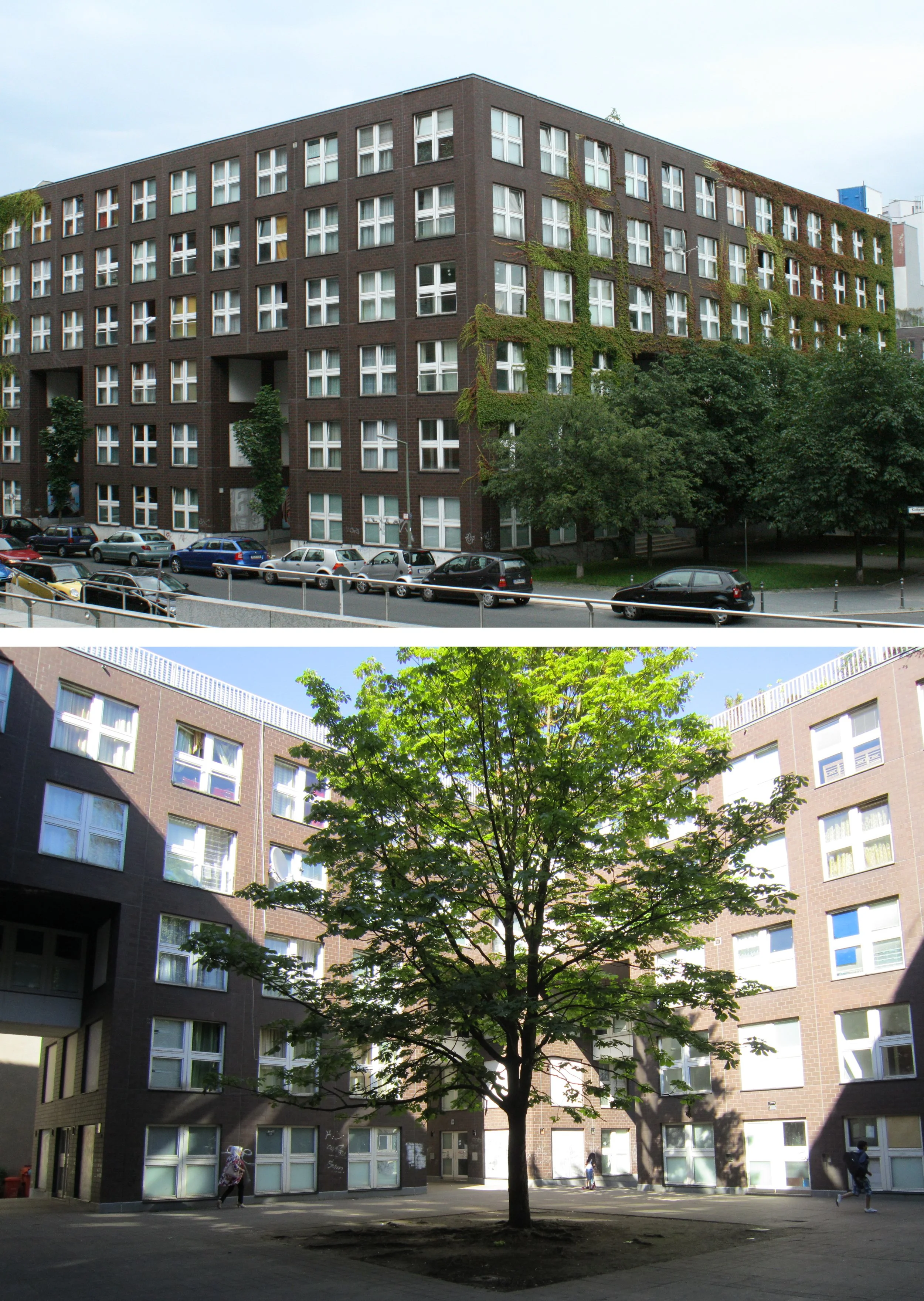
Figure 2: Views of Oswald Mathias Ungers’s building in Block 1 from the outside and inner courtyard, photographed by Esra Akcan, Berlin 2009.
The practice of architecture was and probably still is oblivious to the conditions and contexts of global migrations. An astonishingly large number (about 200) of cutting-edge and established architectural offices from Europe and the United States were invited to contribute to design public housing during Kreuzberg’s urban renewal (Internationale Bauausstellung (IBA) 1984/87). There has been no shortage of discourse surrounding this architectural project, which involved Aldo Rossi, Oswald Mathias Ungers, Rob Krier, Rem Koolhaas, Peter Eisenman, Zaha Hadid, among others. Its built examples have played a formative role in architectural education for successive generations of architects. Yet, there is no mention of the fact that these buildings were designed for an immigrant district in Berlin in the midst of discriminatory housing laws and regulations such as a ban on entry and settlement and moving and renting quotas; nor is there mention of the divide that ensued between the architectural professionals who participated in the dispossession and displacement of these immigrants and those who made sure they stayed in their apartments. Open Architecture discloses how policy-makers used architecture as a mechanism of social control and displacement, but at the same time discusses how architects responded with varying degrees of naivete, complicity, irony, or subversion to these discriminatory housing regulations.
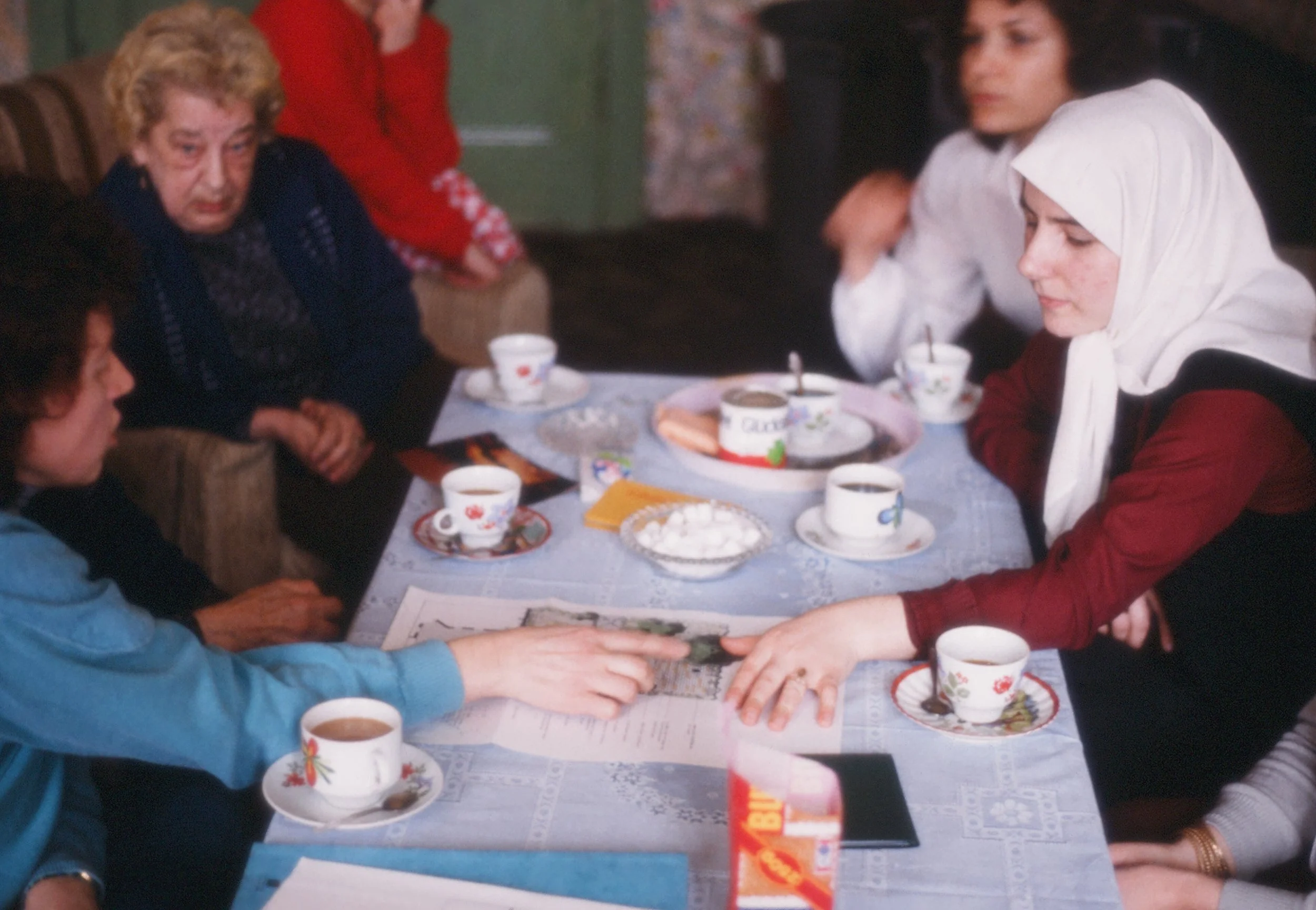
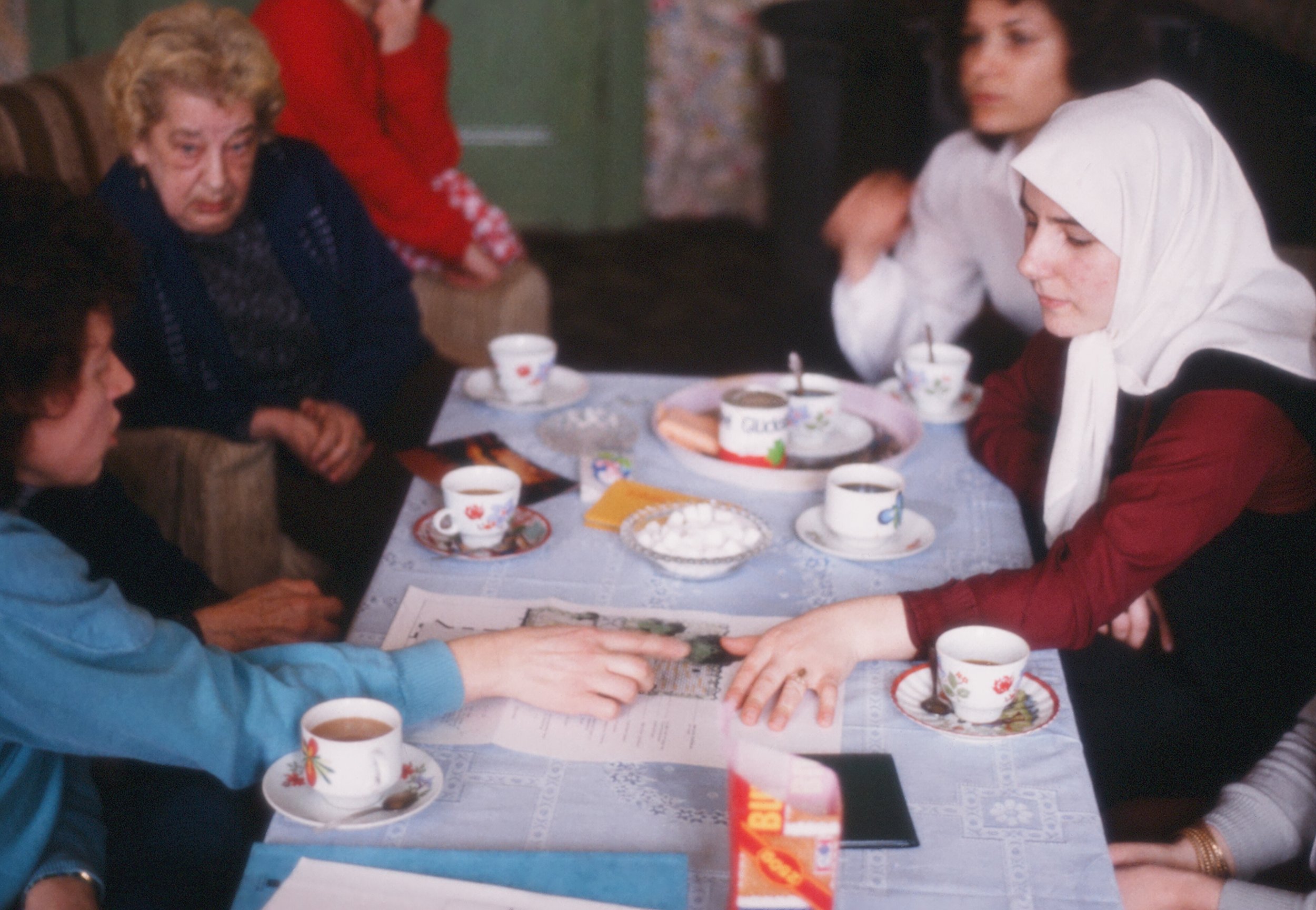
Figure 3: View from a tenant meeting for an IBA Altbau renovation, IBA-1984/87, photographed by Heide Moldenhauer, Berlin, 1980.
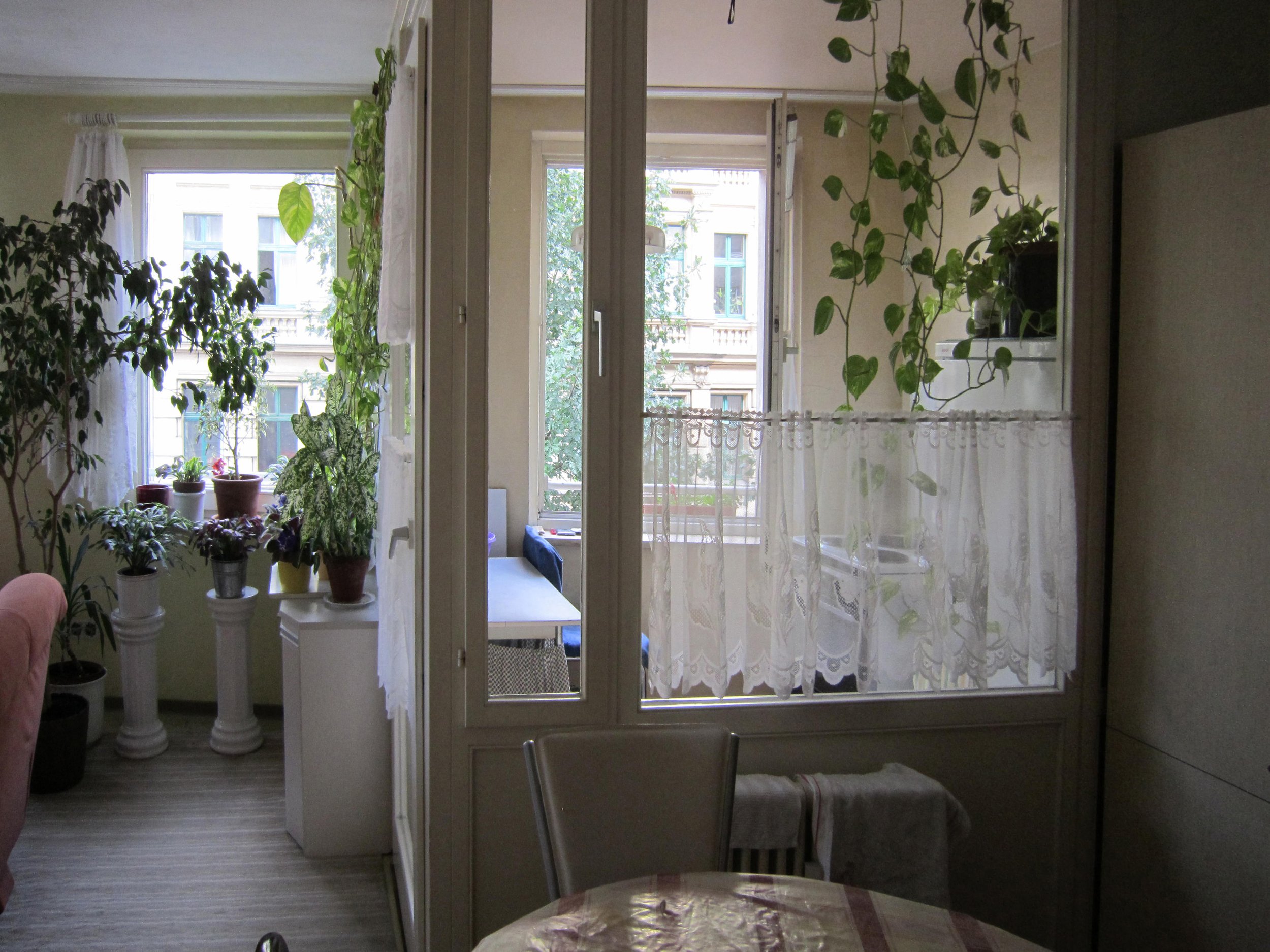
Figure 4: View of the void space appropriated as a kitchen in Karaçizmeli’s apartment in Álvaro Siza’s Bonjour Tristesse building in Block 121 for IBA-1984/87, photographed by Esra Akcan, Berlin, 2012
Method
Editors: To move the two different sets of literatures and audiences, architecture and migration, closer together you innovated methods. Can you elaborate upon the method you had of “ringing every bell in Berlin-Kreuzberg” between 2009 and 2017? What lessons might you share about this method to scholars embarking on interviewing as a method for the first time?
EA: As an architecture student and when I conducted research for my doctoral dissertation (published later as Architecture in Translation) I acquired a habit of ringing bells and anticipating that I may be invited to look inside. In Open Architecture, this turned into a more rigorous and self-reflective method. This book shows the agency of not only architects and policy makers through publications and archival documents, but also immigrant residents. Architectural history does not end when the building leaves the hand of the architect; the narrative is extended to a specific habitation. When I conducted my first recorded interview with a resident in Kreuzberg, I had not anticipated that this curiosity would turn into a book-length project and occupy me for a decade. Nor did I have the concept of open architecture in mind. By honoring the residents’ stories equally with those of the architects, we can admit that buildings continue to live after the professional architects leave the stage. That said, open architecture as design starts before habitation and makes room for, anticipates or encourages resident appropriation, participation and interpretation. Inspired by authors such as Howard Zinn and Linda Nochlin, I eventually called this method “people’s history of architecture” and decided to write it by integrating oral histories and on-site analyses, which also allowed me to write more women into architectural history.
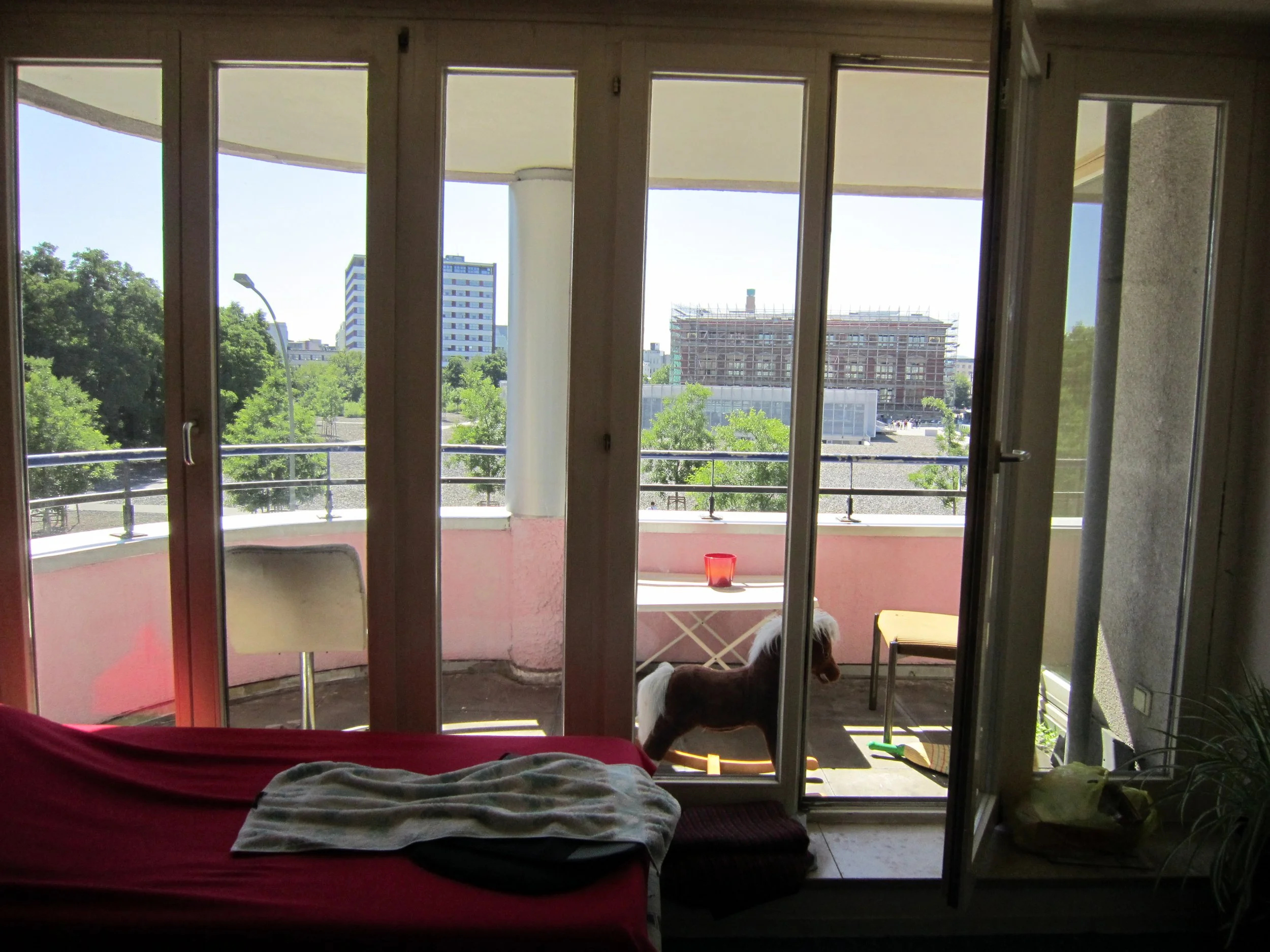
Because I was writing the history of an immigrant district, the decision to reach out to all migrants living in that area seemed fair. Of course, not everyone responded with the same enthusiasm. I came to identify and build trust with residents who were willing to tell their stories at length and over a few years. I started with a broad sweep, but the characters in focus are self-selected. The book is predicated on willingness of participation. When a colleague heard that I was ringing every bell in Kreuzberg, he likened it to something an artist would do. There is some truth in that, and there is something to be said about the flexibility and open-endedness of this approach when compared to more predefined and regimented methods of sociology, ethnography or other forms of environmental science. Oral history was my preferred method, because an oral historian refrains from representing an entire ethnicity or group, and adds the name of the underrepresented individual into history. Oral history differs from the social sciences that strive for generalizable, “objective,” non-episodic conclusions about a group, an ethnicity or humanity in general. Rather than saying “a migrant,” I therefore use the preferred name of the individual to give credit to their agency in making the cities that we live in. It is noteworthy that recently researchers in conflict zones also report a similar wish from refugees: “See Me”—as a human being, as an individual. This enables the writing of architectural history as storytelling, which, I believe, is how we understand the impact of political harm on individuals and the ways they used to partially overcome these pains.
““Architectural history does not end when the building leaves the hand of the architect; the narrative is extended to a specific habitation.””
Editors: We appreciate this section for many reasons. Most importantly, we think it offers an emerging architectural historian a compelling method for doing research. It proposes an open-ended, inductive approach. Questions and arguments develop through the research process itself incrementally and through sustained engagement with people. This raises important questions about the relationships between this method and the architectural history canon. The theoretical, methodological, and substantive foundations of architectural history have largely built upon previous scholarship. Scholarship that often emphasized authorship, materiality, chronology, and established forms of historical evidence—approaches that may sit uneasily with the way you are framing both research and architecture here. What advice might you share about this method?
EA: Oral history anthologies and scholars have noted: do not obsess over technical equipment, establish rapport, trust and intimacy, ask open-ended questions, do not interrupt, allow for pauses and silences, and be informal. However, the one that architects need to hear the most is: Remember, people are not boring. Let them lead the conversation; reflect on it and come back with new dialog starters. In Open Architecture, I relied on the multiplicity of voices as an antidote to singular narratives that might give us a limited perspective, and made use of architectural analyses as fact-checking methods that are not available to other oral historians. In most cases, the physical environment served as evidence for the narratives obtained in interviews, and helped confirm or doubt the orally-transmitted information.
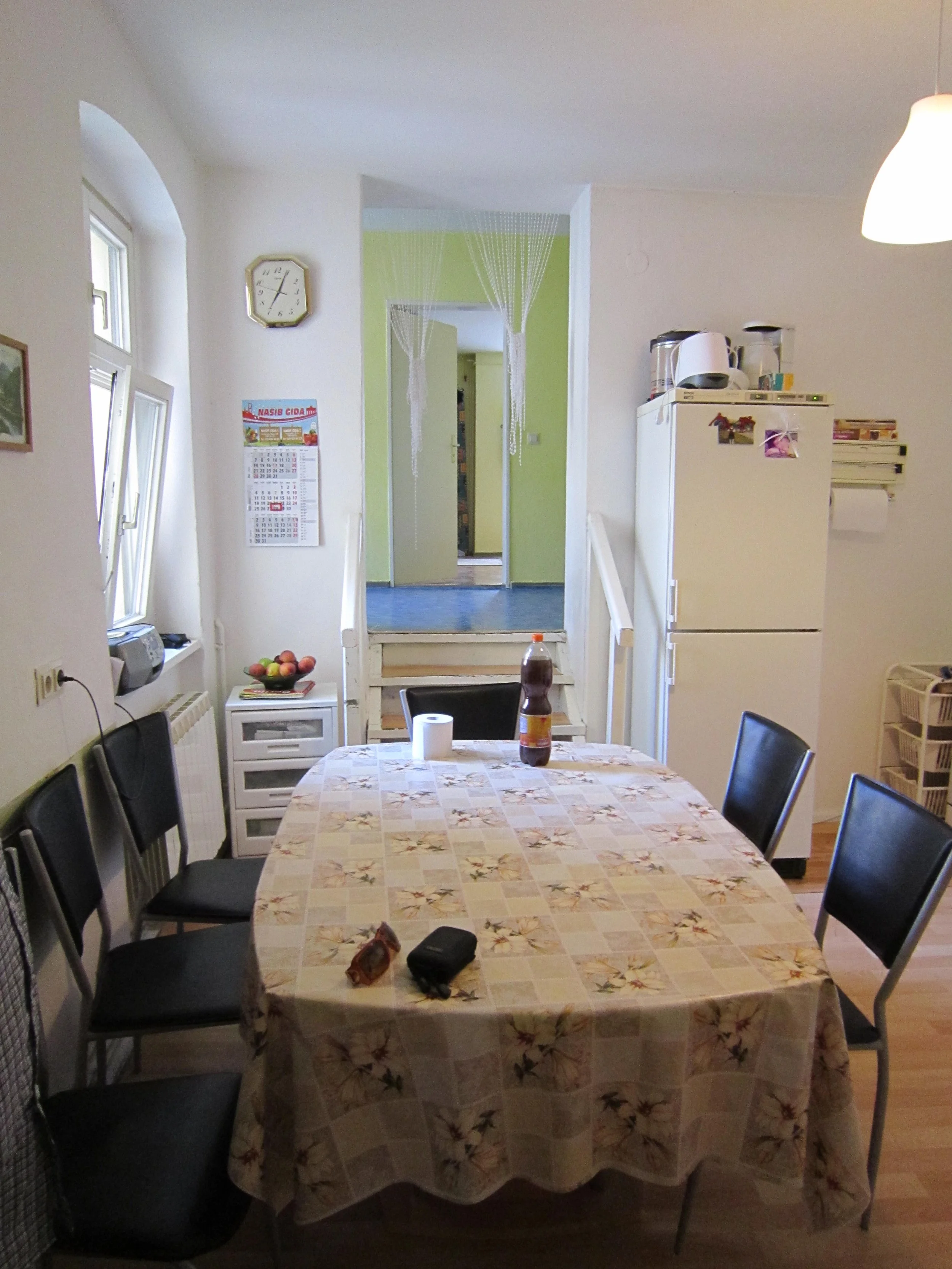
Figure 6: View of Güler family’s apartment in Block 76, incorporating space from the neighboring building and reached by stairs. Renovated by IBA Altbau (team-architect: Heide Moldenhauer), photographed by Esra Akcan, Berlin, 2012.
Editors: To add, one of the most important tensions, for us, concerns how we understand time and chronology. Architectural history, with its emphasis on style, authorship, patronage, and historical periodization, tends to organize time in particular ways. Oral history, by contrast, can reveal how people experience and construct time through memory in much more complex, layered, and nonlinear ways. How do you negotiate this tension in your own work?
EA: Oral history has limits, which need to be mitigated by the historian. Oral history is always inflected by individual memories; it is contingent and partial. And yet, oral history builds an archive in the absence of one; it extends the existing archives and produces documents, such as interviews themselves and both historical and contemporary photographs collected from the immigrants or taken during the interview. It reflects the reception of a building in a particular moment in time by an arbitrary user. It was equally important for me to resist the discrediting of oral history for this reason. Another related question is the distinction between history and memory. While many have commented on the necessarily porous content of history and memory, it is important to resist the conflation of the two to ensure the credibility of oral history. In our post-truth era where manipulation of information has become ubiquitous, it is crucial for oral historians to chase facts, to double-check, to diagnose devious declarations, false memories or honest misremembering. The book as a whole is a demonstration that individual memories can collectively write a history that changes the established narrative.
Editors: Talk a bit about “architectural analysis as fact-checking for oral history.” How did this work? What was said, and what was seen, and how did you triangulate sources of evidence to draw your own conclusions?
EA: In one case, there were a couple of stairs inside the living/kitchen area that led to another room. As an architect, I could tell the room from the next door building was added to this apartment later and stairs were built to negotiate the level difference between the two adjacent buildings. But the couple I was interviewing did not remember and argued with each other whether the room had existed in the original apartment or not. Our conversation refreshed their memory and they remembered how it was added during urban renewal.
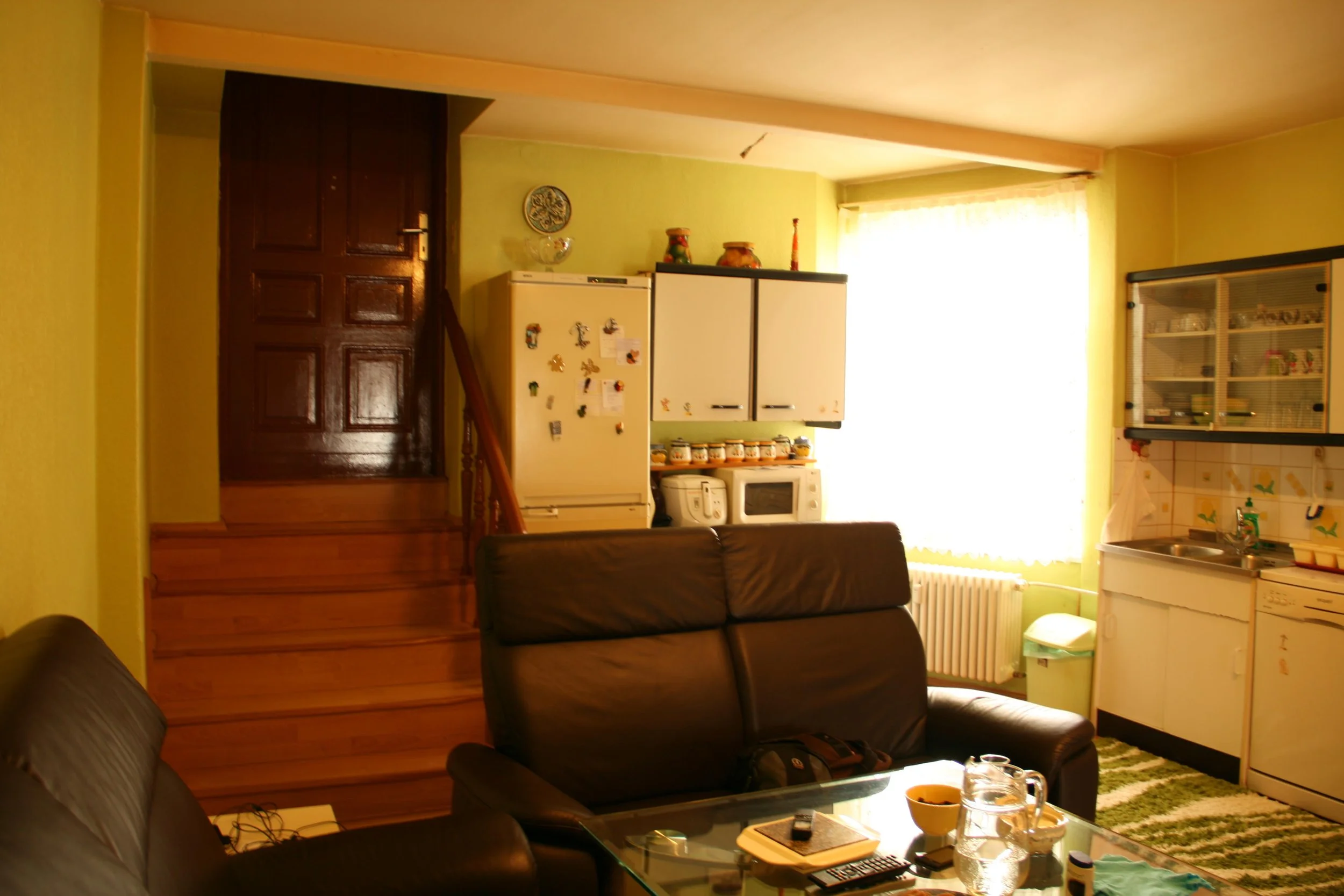
Figure 7: View of Nişancı family’s apartment in Block 81, incorporating space from the neighboring building and reached by stairs. Renovated by IBA Altbau (team-architect: Cihan Arın), photographed by Esra Akcan, Berlin, 2012.
Editors: Material landscapes can tell us something about what people do, while spoken accounts can tell us something about how people understand, remember, and narrate what they do. More broadly, I wonder if there is an important epistemological distinction between the questions posed by architectural history and those posed through oral history. When an architectural historian focuses on the material object—when it was built, who built it, why it was built, who lived there, and so forth—the nature of the evidence and the questions of historical truth are different from those involved in asking people how they remember a place, why they remember it in particular ways, how they experienced space, and what they took from those experiences. These are not simply two forms of evidence addressing the same questions; they may involve fundamentally different questions and epistemological objectives.
EA: During my archival and on-site research and in my interviews, I asked both of these types of questions. The book’s main intention is to weave them into each other, so that the distinctions become less divisive.
Speculative Argument:
Editors: In your book, you discuss how architects and landlords in Germany were sometimes complicit in creating or reproducing hostile environments for Turkish people including a failure to perform legally required maintenance, toilet decrees to explain how to handle human waste, segregation of Turkish kids into classes for ‘foreigners,’ and the ineligibility of Turkish residents to rent some apartments. Can you speculate on how some of these spatial hindrances and pedantic attitudes have impacted the urban development of Turkish neighborhoods and livelihoods in the last 30, 40 years? Have you seen rebellion, re-interpretation, reinvention, etc.?
EA: The book records the discriminatory housing regulations and practices due to citizenship laws of Germany during the 1980 and 1990s, which have changed since then. But oral history as a method extends the narrative by combining the time of the building’s design with the times of a specific habitation. It is an amalgam of several time periods, which is why the book also records the treatment of immigrants who were previously guest-workers or refugees after their citizenship status changed. As a matter of fact, it demonstrates how residents appropriated many apartments designed by high-end architects since the 1990s, whether the architect had anticipated, welcomed, or prohibited it, confirming the agency of immigrants in correcting hostile designs and shaping the urban area: bridges were repurposed as bedrooms, voids were converted into kitchens, unfunctional wintergardens were turned into playrooms, and additional rooms from buildings next door were integrated into apartments. Today, many immigrants rightfully take credit for Kreuzberg’s urban renewal and its symbolic significance in the global imagination by pointing out their own financial and cultural contributions in making the area a pleasant place to live. They criticize the lack of acknowledgment for their contribution. They have organized protests against the rent increases and gentrification. To turn all this into a compelling story, the book’s plot is not ordered chronologically, but goes back and forth in time without losing sight of the precise historical context.
In the meantime, new waves of migration brought academic and political refugees from Türkiye to Berlin, as well as workers from other countries of Asia and Africa. This brought ample new dynamics. On the one hand, I increasingly witnessed cases when some children of immigrants from Türkiye began discriminating against and speaking dismissively about new migrants, internalizing the role of the “white German.” On the other hand, a new momentum and critical discourse about “African” migrants in universities and institutions brought consciousness and positive change but trivialized or ignored the memory and harms of the Guest Worker Program.
““Architecture alone cannot revolutionize global or national norms, but architects can still design open architecture in a way that expands migrants’ rights and social citizenship.””
Conclusion:
Editors: Can you dream with us about what not only “open architecture as an ethic of hospitality” looks like but also the open city and landscape as an ethic of hospitality?
EA: Looking at migration and architecture together brought me to the realization of a fundamental and continuing paradox about human rights and nation-states. Above all, the book’s aim is to make its readers realize that it is the expansion of human rights and social citizenship that would achieve open architecture. This sentence might cause a reader to pause and ask what a flexible plan, for example, has to do with human rights. Kreuzberg’s urban renewal is a typical case as it exposes the insufficiencies of the current human and political rights when housing and urbanism is concerned. The collapsibility of race and non-citizenship conveniently served to exert discrimination under the pretext of law in this case. Architecture alone cannot revolutionize global or national norms, but architects can still design open architecture in a way that expands migrants’ rights and social citizenship. And some architects have indeed done so, even though our professional history is full of closed works. Open Architecture analyses Kreuzberg’s urban renewal from this perspective. Different ways of achieving open architecture include flexibility and adoptability, collective and collaborative design, habitant participation, and acknowledgment of multiplicity.
That said, when I dream about open city and land in the broader sense, guided by an ethic of welcoming rather than incarceration, I think of a borderless planet. Exposing the violability of non-citizens’ (human) rights also led me to question the global order of the nation-state. Any nation is constructed and limited, even though it is perceived as natural and given. A nation is by definition limited, because it is restricted to a certain number of people and bound by a territorial and conceptual border, beyond which another nation starts. In the modern world, the constructed idea of a nation has been naturalized and normalized to such an extent that nations are regarded as essential, unchanging, and fixed attributes of human beings that are supposedly attached to them from birth. But isn’t it also this premise of a nation-state that produces non-citizens and refugees, and that consequentially deprives humans from their human rights? In that dream of the open city and land, no existence in space would be considered illegal. The words immigration and emigration would have been abolished, because people would move freely. Leaders would take collective responsibility for healing the political and ecological harm inflected on the entire planet in the past century to ensure decent life for all across the globe. Humans would therefore have both the right to move and the right to stay home.
Citation:
Esra Akcan, “After Writing Open Architecture,” Platform, October 26, 2026.