Building a Village Away: Prosperity, Production, and Rural Hollowing in China
For much of China’s recent urbanization, the movement of people and capital has pointed in one direction: from the countryside toward the city. Working-age residents left villages for employment in expanding urban regions, leaving behind aging populations, children separated from migrant parents, and communities increasingly depleted of the generation that had sustained their economic and social life. By the late 2010s, however, the future of the countryside had become an explicit national concern. In 2017, China introduced its Rural Revitalization strategy within the report to the 19th National Congress of China, followed by policies intended to promote not only rural industries and incomes but also living environments, public services, and other dimensions of rural development. [1]
It was against this backdrop that I first encountered Dongfeng Village.
Situated in Jiangsu Province, Dongfeng Village was an otherwise ordinary agricultural settlement, with neither a scenic landscape nor the traditional architecture that might distinguish it from thousands of other villages across rural China. In the past two decades, it developed into a center of e-commerce furniture production and was recorded as one of China’s earliest “Taobao Villages.” Coined by Alibaba, the term refers to villages where e-commerce has reached a scale, with at least ten active online stores per hundred households, annual online sales exceeding 10 million Chinese yuan (equivalent to 1.5 million USD), and more than 20 percent of residents engaged in e-commerce. By 2022, according to AliResearch, more than 7,000 villages across China had received the designation. [2]
Dongfeng was among the early examples of what this new rural economy could make possible. Instead of leaving the countryside to find employment elsewhere, residents could participate in an expanding commercial network from within the village itself. Furniture was manufactured in family workshops, sold through online stores, then stored, packaged, and shipped from Dongfeng to customers across the country. Economic opportunity, which had long pulled rural residents toward cities, was now being brought back to the village. The prosperity this produced is tangible. Walking along Dongfeng’s main road, the Taobao Avenue, signs of newfound wealth are visible from the expensive cars parked outside family businesses to the constant movement of delivery trucks carrying furniture out of the village (Figures 1 and 2).
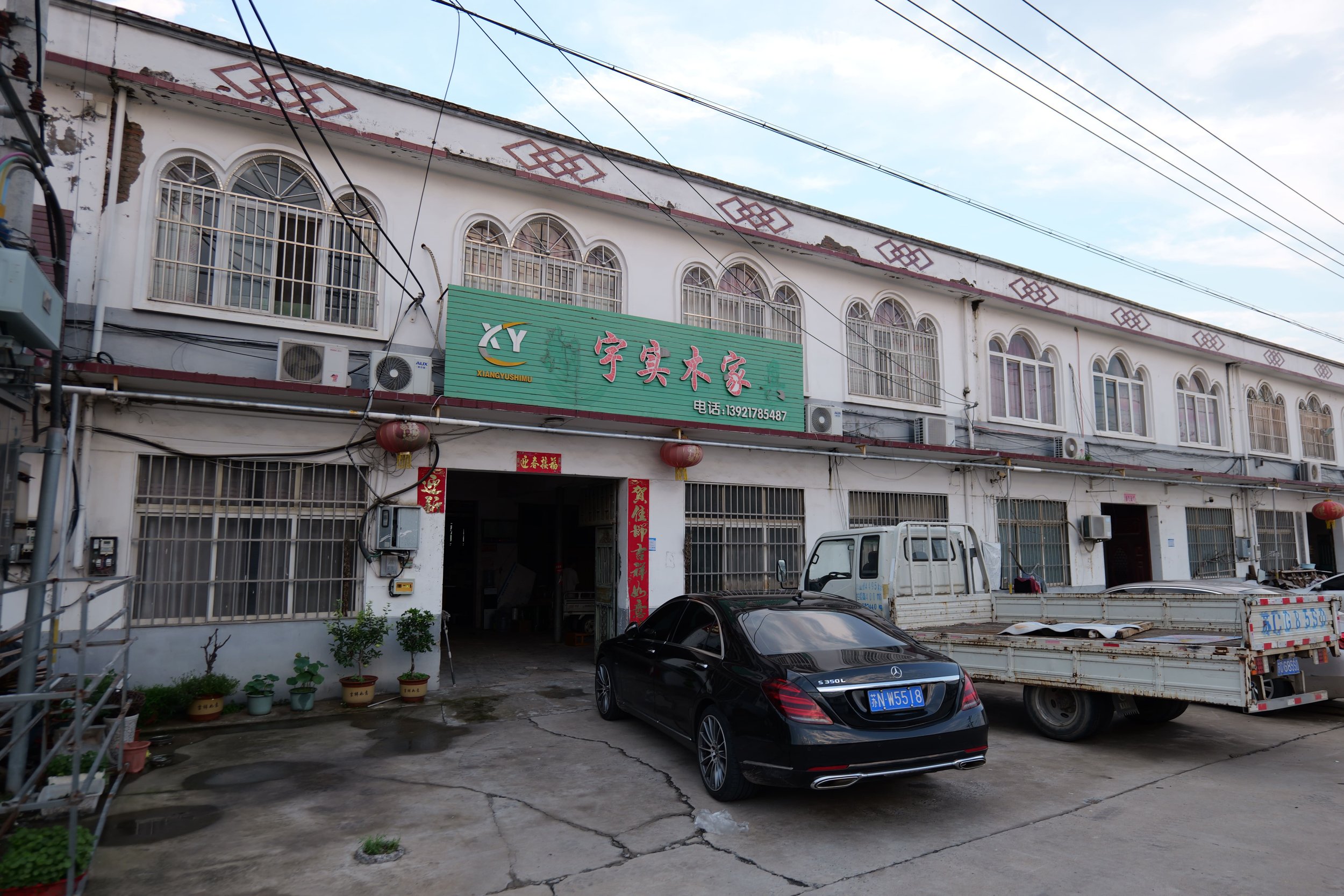
Figure 1: Taobao Avenue Storefront, 2025. Photograph by the author.
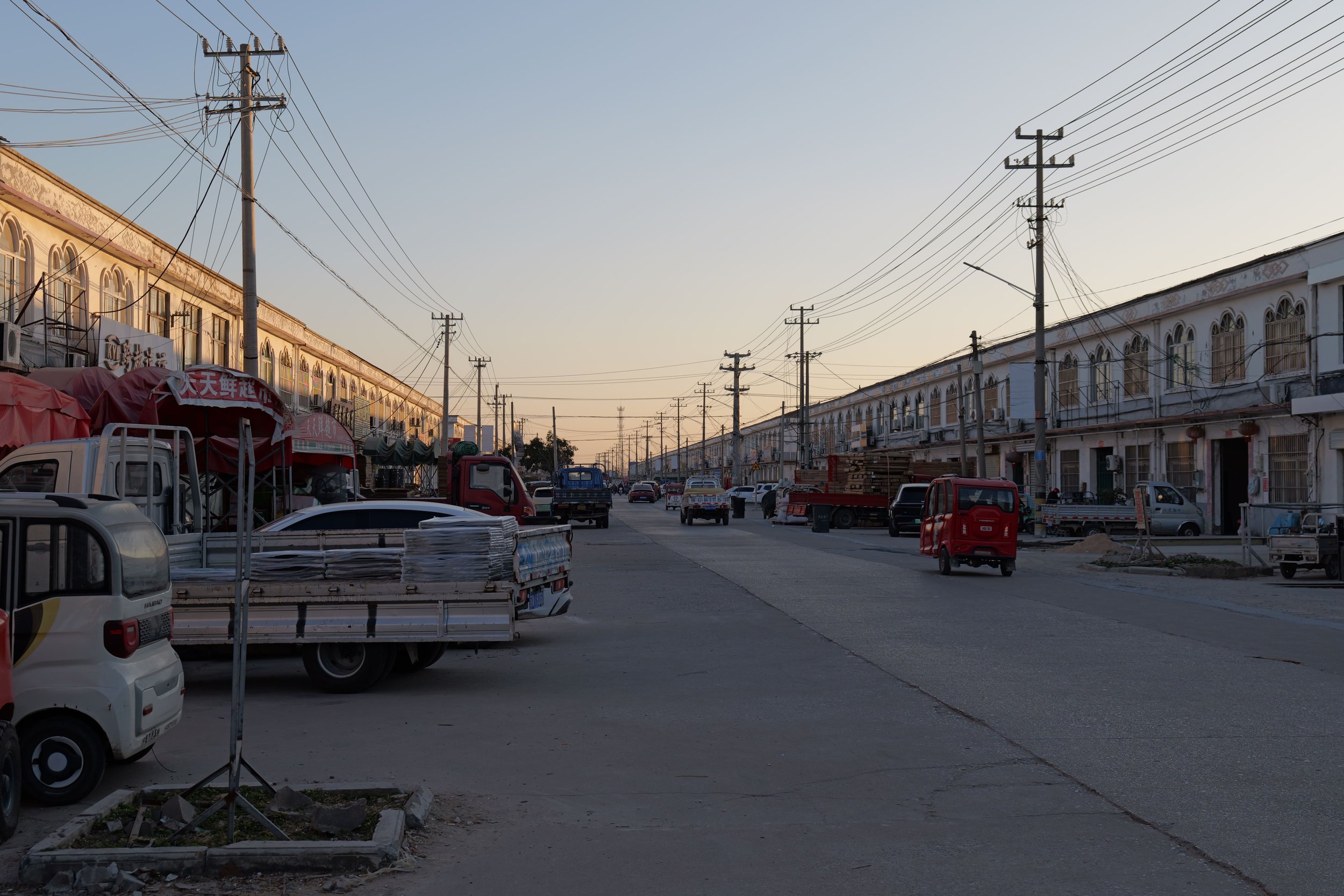
Figure 2: Taobao Avenue, 2025. Photograph by the author.
Dongfeng remained populated and economically productive at a time when rural decline had become increasingly severe elsewhere in China. Seen in these terms, Dongfeng appeared to set an example for rural revitalization and offer an answer to one of the central problems of rural development: if economic opportunity had historically pulled people out of the countryside, perhaps bringing it back could revitalize the village.
But what does it mean for a village to be revitalized?
When the Factory Comes Home
The transformation of Dongfeng began at its smallest scale: the household. In 2006, Sun Han, a college graduate who had previously worked in cities, returned to Dongfeng and opened the village’s first online shop. [3] After experimenting with miscellaneous goods, he eventually settled on kit-of-parts furniture as his main business. The business soon became successful. But his success did not remain his alone for long. In a society structured around close networks of relatives and friends, the model was quickly learned, emulated, and adapted. One online shop became several, then many. Dongfeng’s location in northern Jiangsu, near Suqian and regional transportation networks, facilitated the movement of raw materials and finished furniture. As production expanded, logistics companies increasingly clustered in and around the village, connecting household workshops to a nationwide market. E-commerce spread from household to household, gradually introducing a new economy into the spatial fabric of the village. And with it, the factory came home. [4]
Residential compounds that had been organized around domestic and agricultural life rapidly absorbed another program: manufacturing. Furniture production entered wherever space permitted. Backyards and side yards were roofed over and turned into workshops. Courtyards that had once been used to dry crops, store agricultural goods, and accommodate everyday gathering were filled with stacks of timber and wood panels waiting to be cut, unfinished furniture components, piles of cardboard packaging, finished products awaiting shipment, and scraps and material waste left over from production (Figure 3). As these spaces filled, the house itself began to change. Ground floors were converted into offices for managing online shops, positioned within easy reach of the workshops outside. Manufacturing, storage, management, and living were compressed into the same compound, and the space devoted exclusively to domestic life was gradually reduced, in some households to little more than bedrooms.
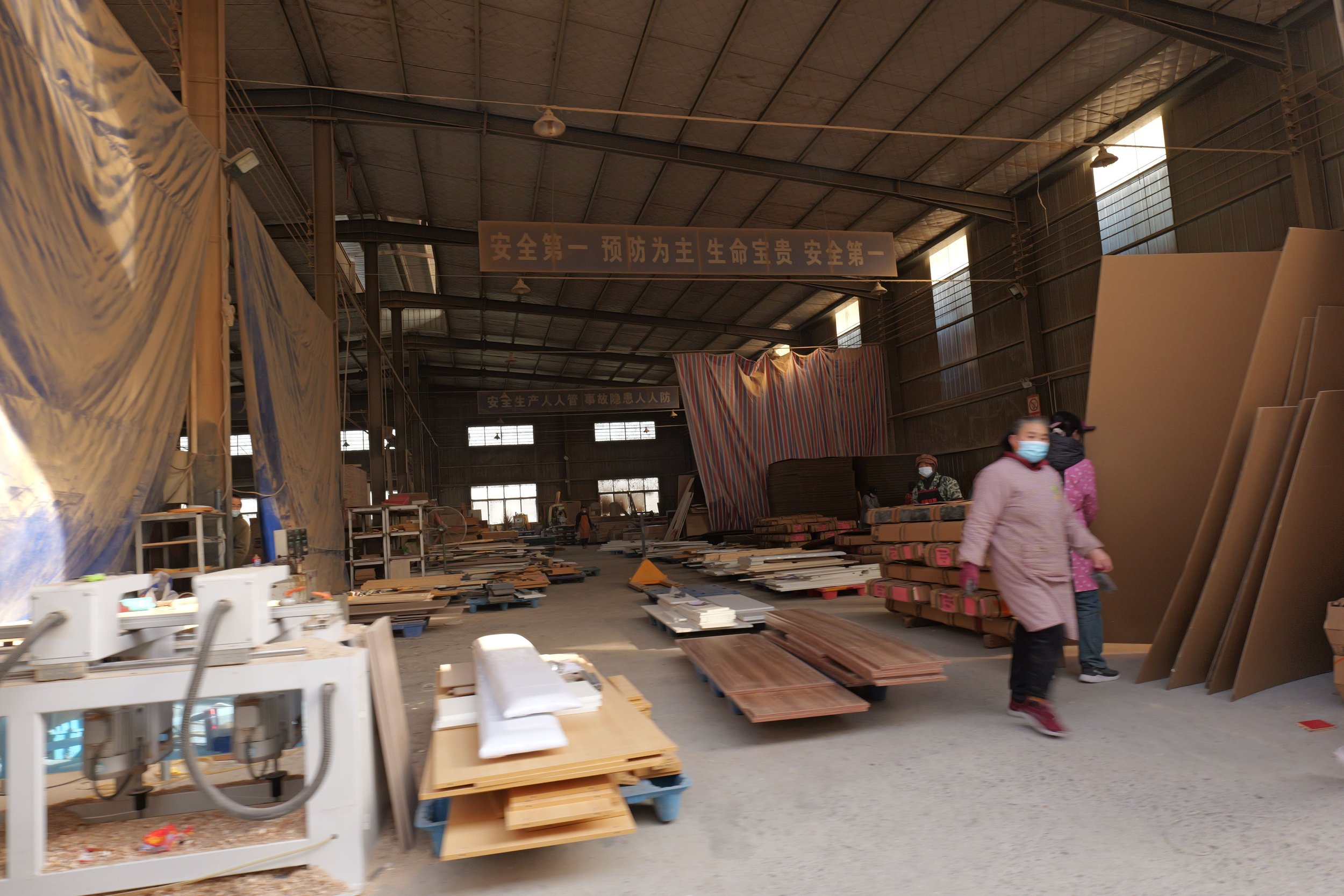
Figure 3: Workshop Interior, 2025. Photograph by the author.
The household was not transformed from an unproductive space into a productive one, however. It had long supported agricultural work alongside domestic and social life. What changed was the kind of production it accommodated and, increasingly, the priority around which its spaces were organized.
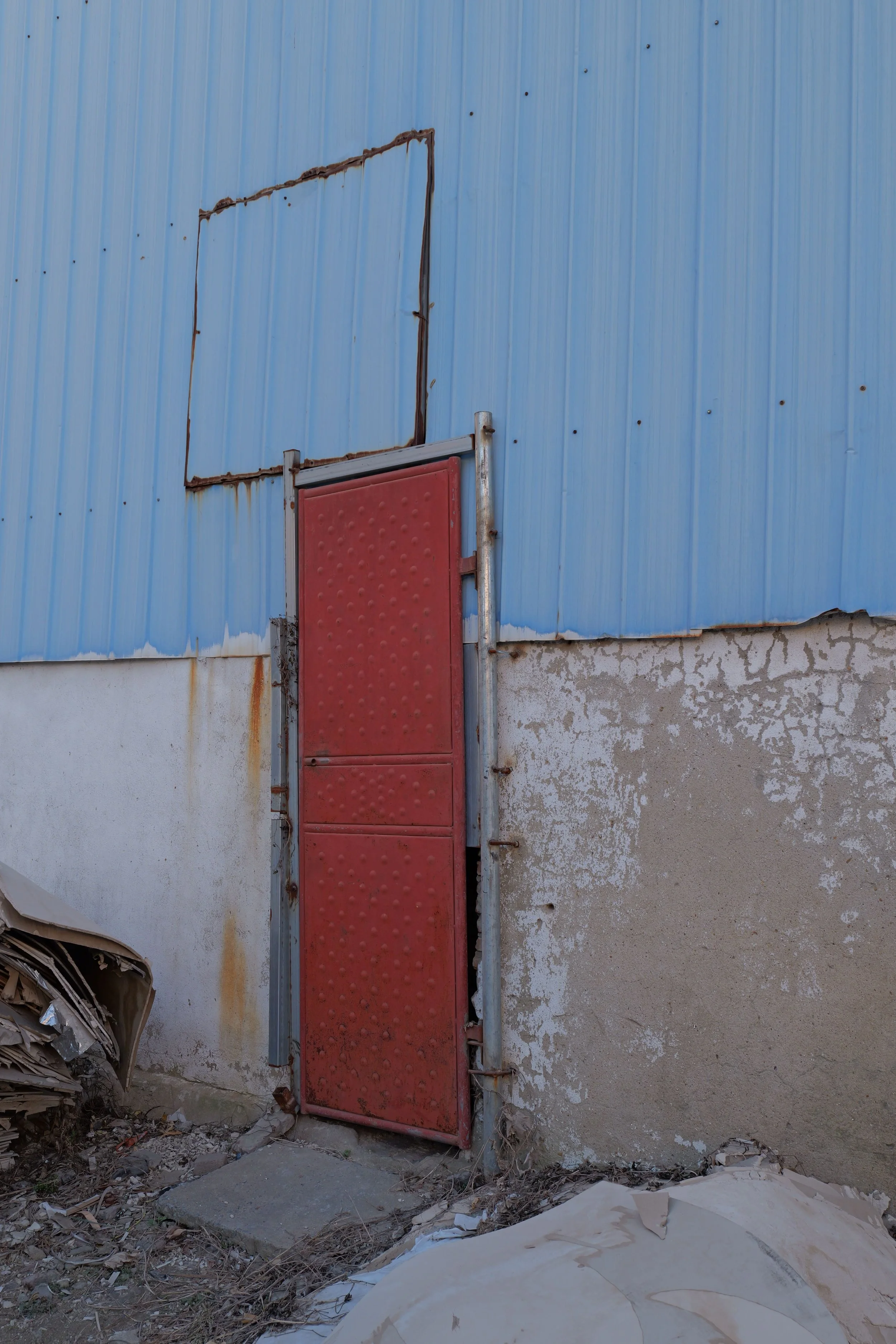
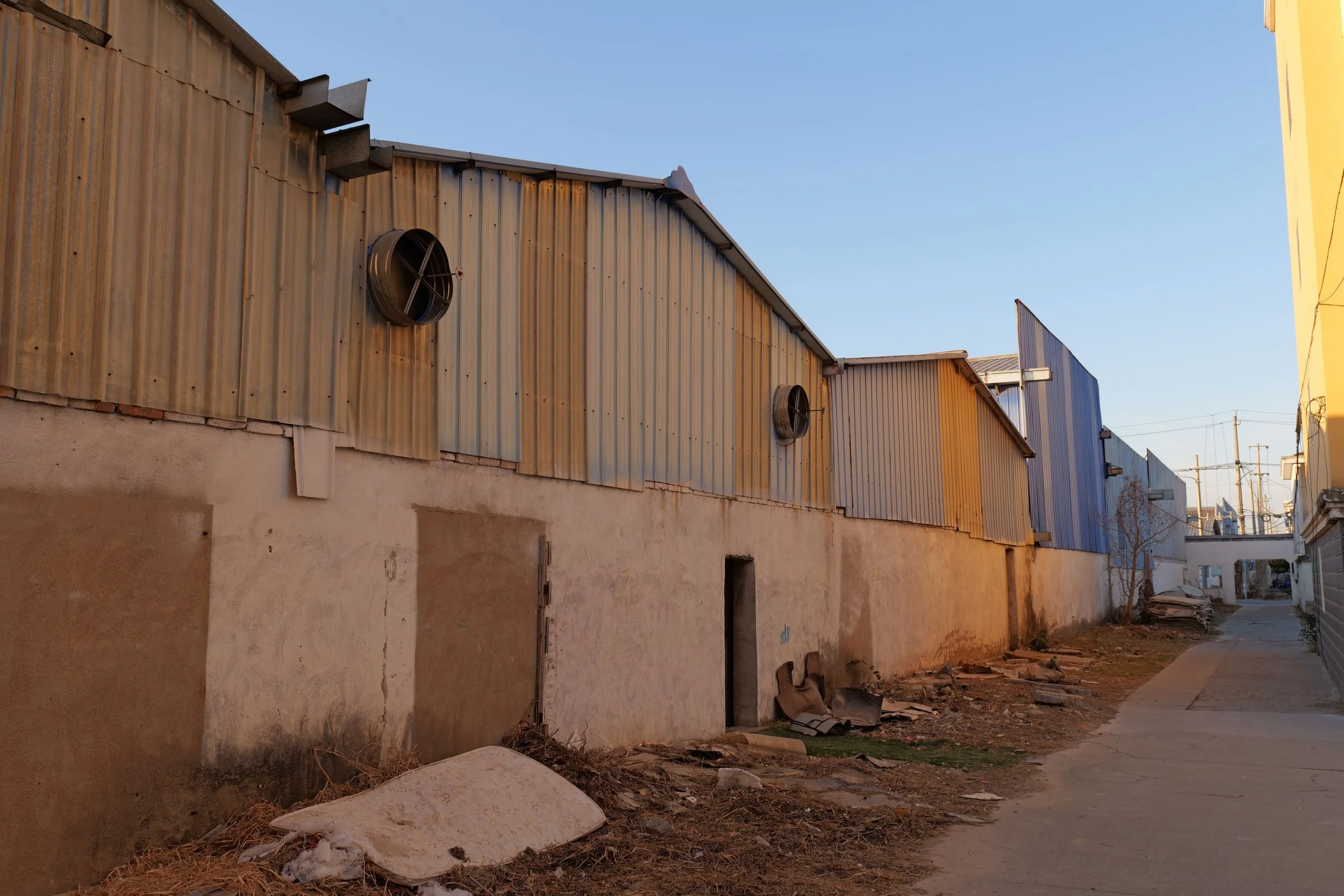
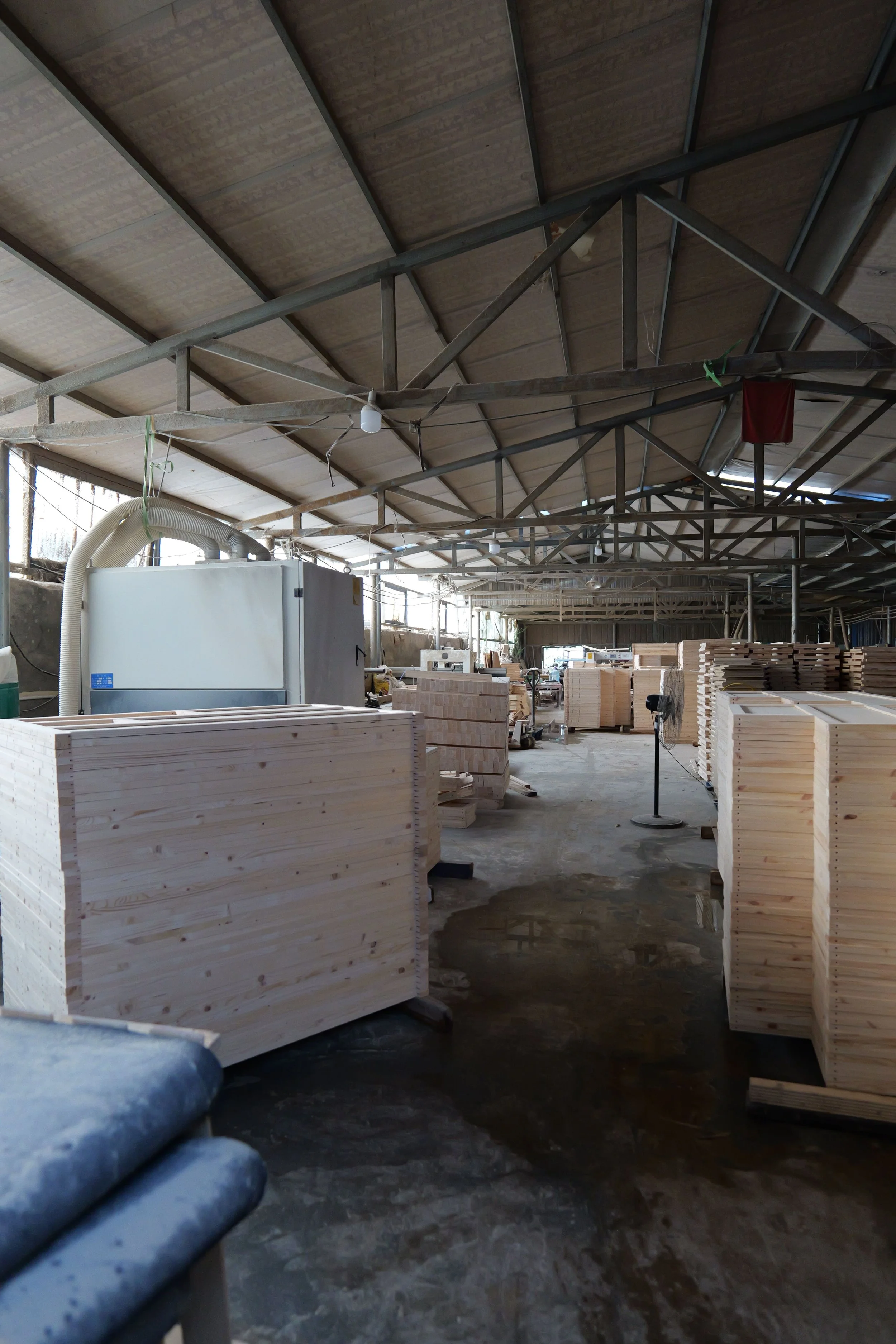
Every square meter given to a workshop, or office increased a household’s capacity to participate in the new economy of e-commerce. These rudimentary structures were cheap, quick to construct, and remarkably direct in their purpose. Lightweight frames supported corrugated roofs that sheltered furniture making machines, workers, stacks of wood lumbers, unfinished furniture, and cardboard boxes waiting to be packed and shipped (Figures 4, 5, 6). There was little architectural excess. These structures did what they needed to do: put a roof over production and create as much usable working and storage space as possible, as quickly and cheaply as possible. Their value lay less in architectural permanence than in the productive capacity they could provide. The houses and yards were being optimized as a wealth-producing machine. At the level of the individual household, these choices were entirely rational. Families were responding to an opportunity to earn more, improve their material circumstances, and create greater possibilities for themselves and their children. Yet reasonable economic choices were not spatially neutral. As more of the compound was evaluated according to its productive capacity, spaces whose value was less-easily measured economically, such as the courtyard as a place of gathering, became easier to surrender.
A Village Reorganized for Production
The reach of an individual household stopped at its property line. A family could roof over a courtyard or turn its ground floor into an online sales office. But there was a limit to how much production could be squeezed into a house. The growing furniture business in Dongfeng needed more room: larger workshops, factory compounds, loading areas, logistic center and roads wide enough for larger semi-trucks. And that required government intervention. Agricultural land could be redesignated for industrial development. Residential plots could be acquired, households relocated, and existing buildings demolished to assemble land for larger factory complexes and infrastructure (Figure 7). Roads could be widened, extended or newly cut through the existing fabric to accommodate the growing circulation of materials and finished furniture. Production no longer had to fit within the spaces the village already provided. The village itself could be remade to fit production.
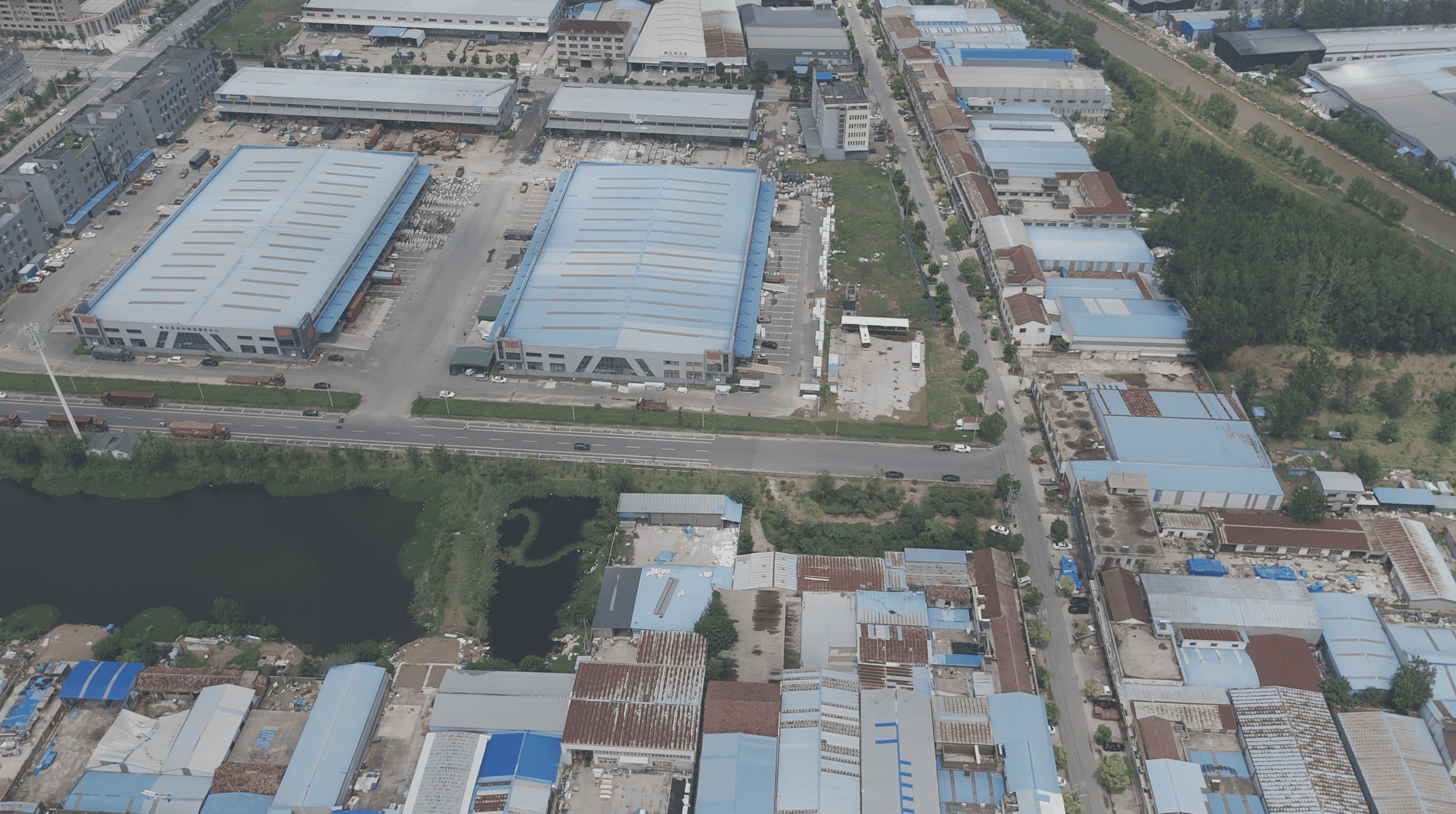
Figure 7: Dongfeng Village Aerial View, 2025. Photograph by the author.
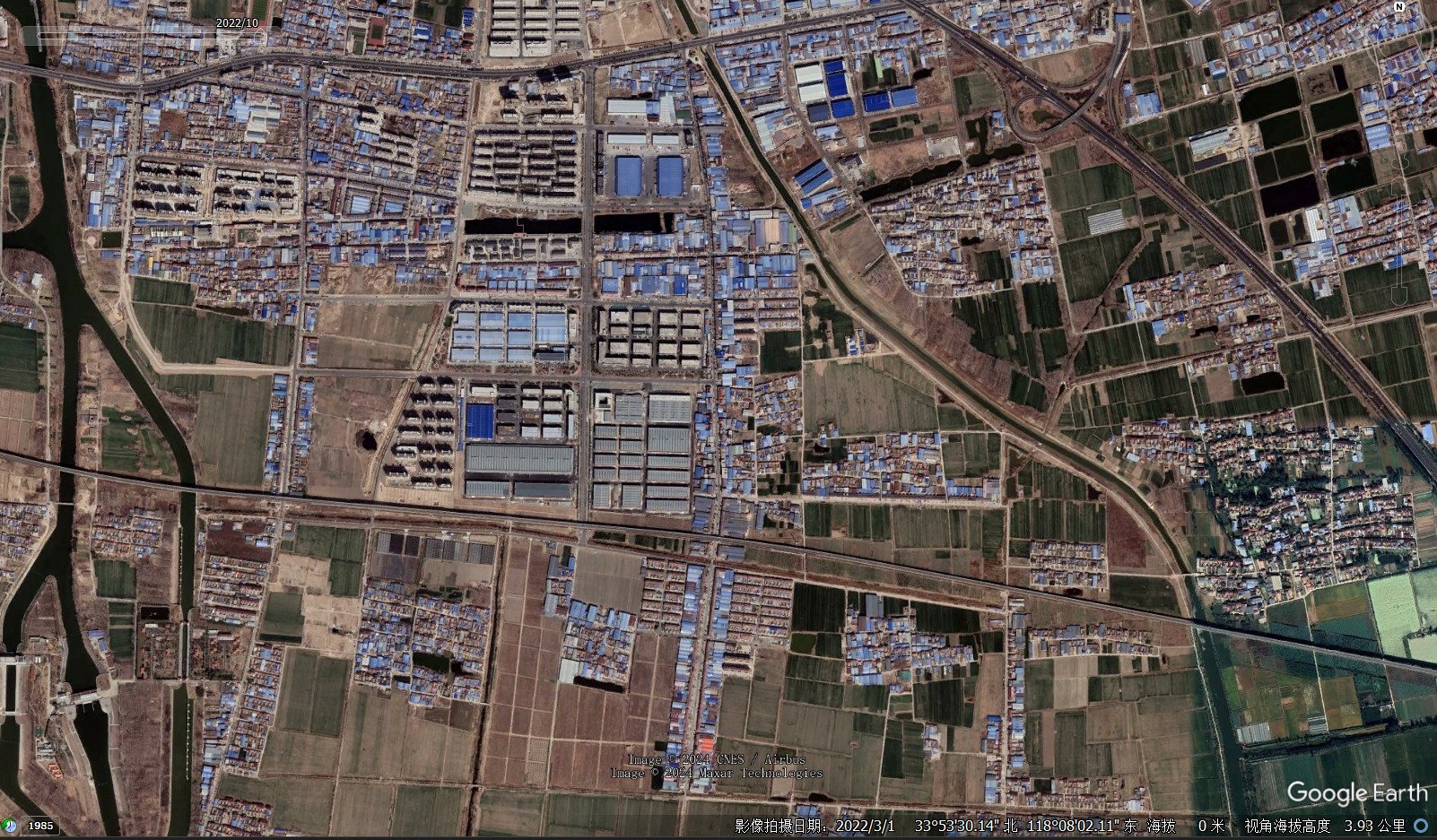
In satellite imagery from 2006, Dongfeng remains embedded in cultivated land. Houses sit among fields and are connected by relatively narrow village roads (Figure 8). By 2010, blue corrugated roofs began appearing within residential compounds, marking the incremental expansion of workshops by individual households (Figure 9). By 2014, the transformation had moved beyond the property line. Larger industrial buildings and infrastructure begin occupying agricultural land, no longer constrained by the dimensions of the residential compound (Figure 10). By 2022, much of that ground has been rewritten (Figure 11). Fields have become factory compounds and logistics centers. Larger building footprints occupy land once divided into smaller agricultural and residential plots. Roads have widened and hardened into more continuous routes capable of carrying trucks through the village. What began as blue roofs filling the gaps between houses had expanded into a reorganization of the territory itself.
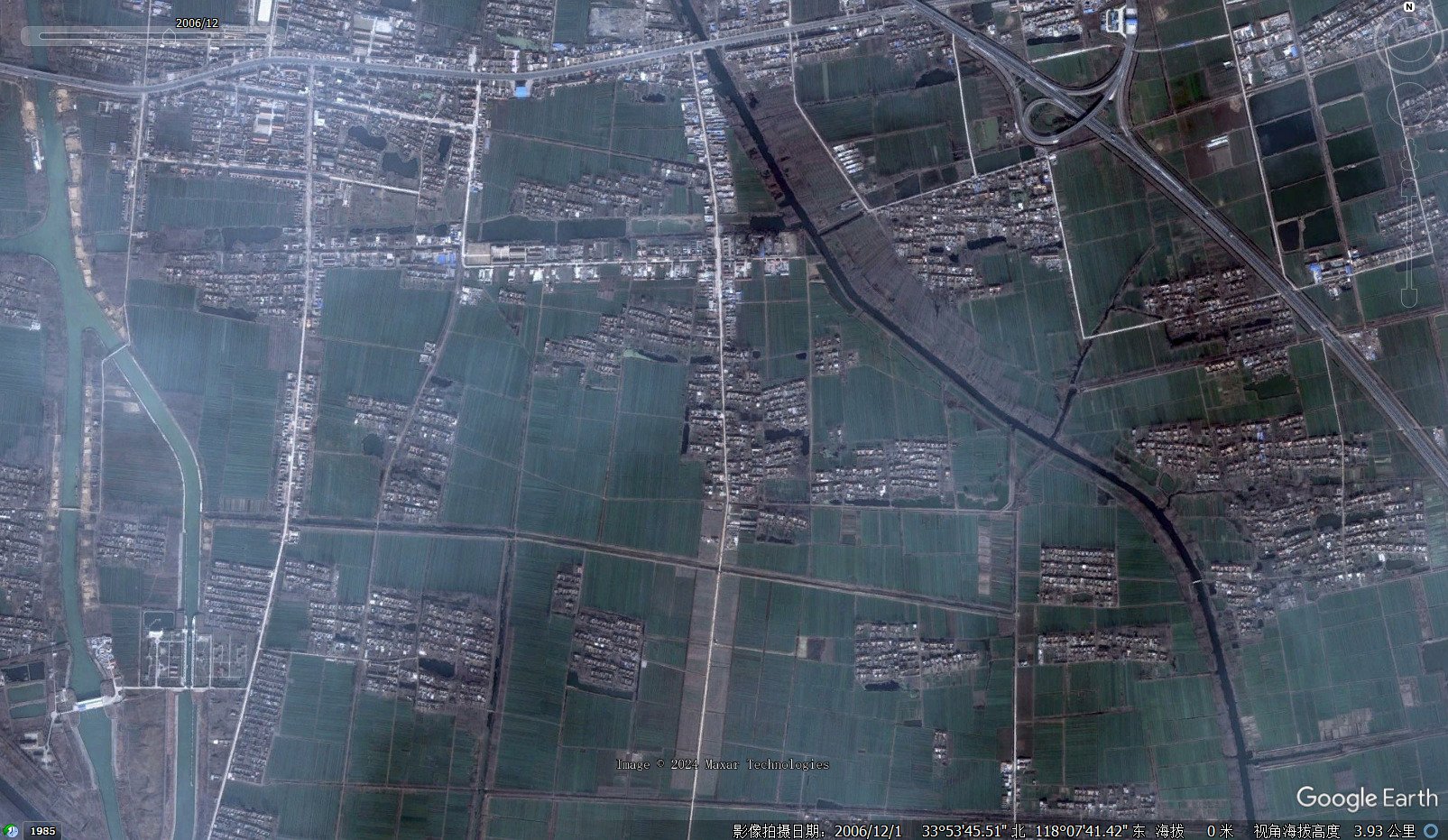
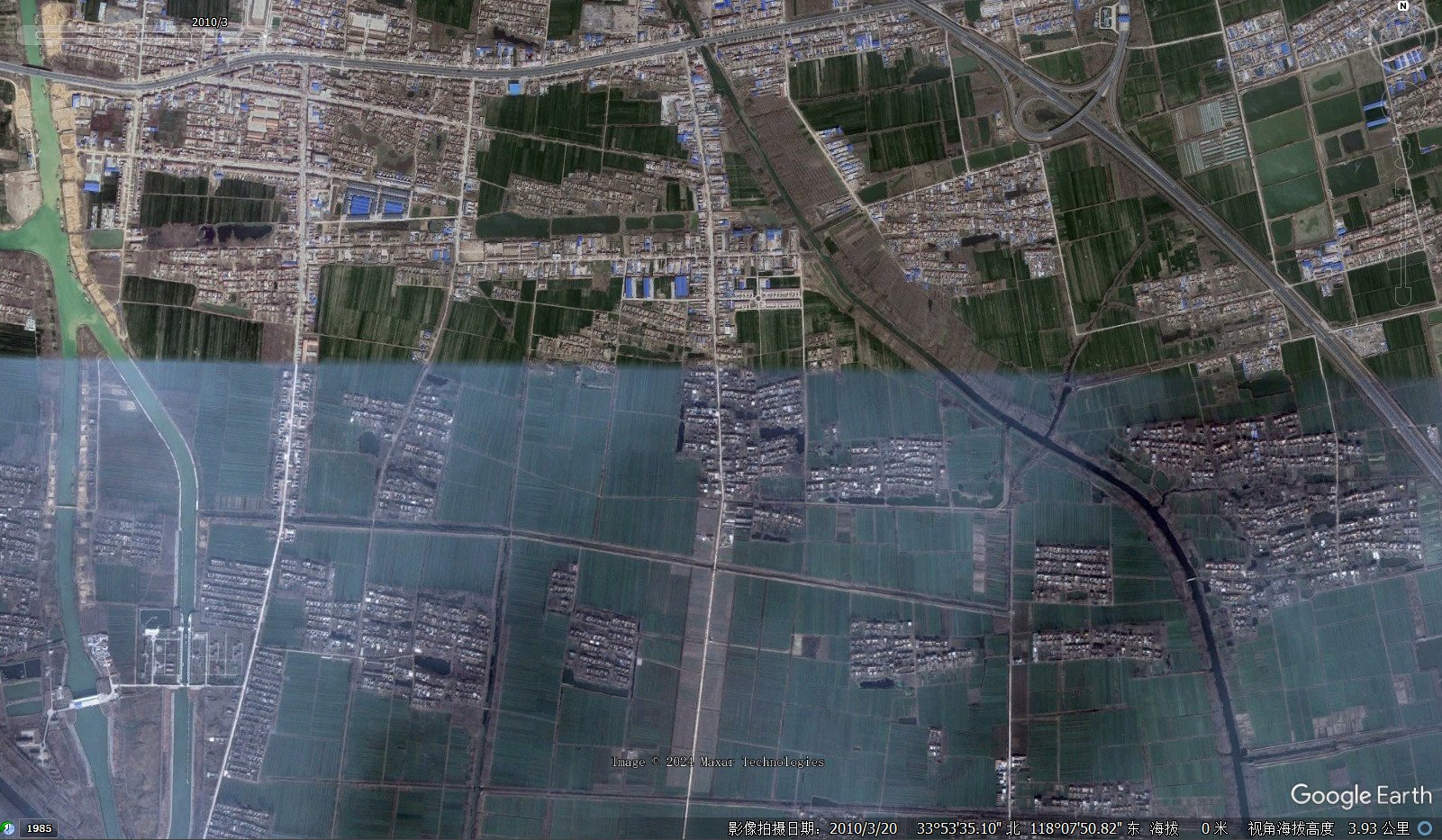
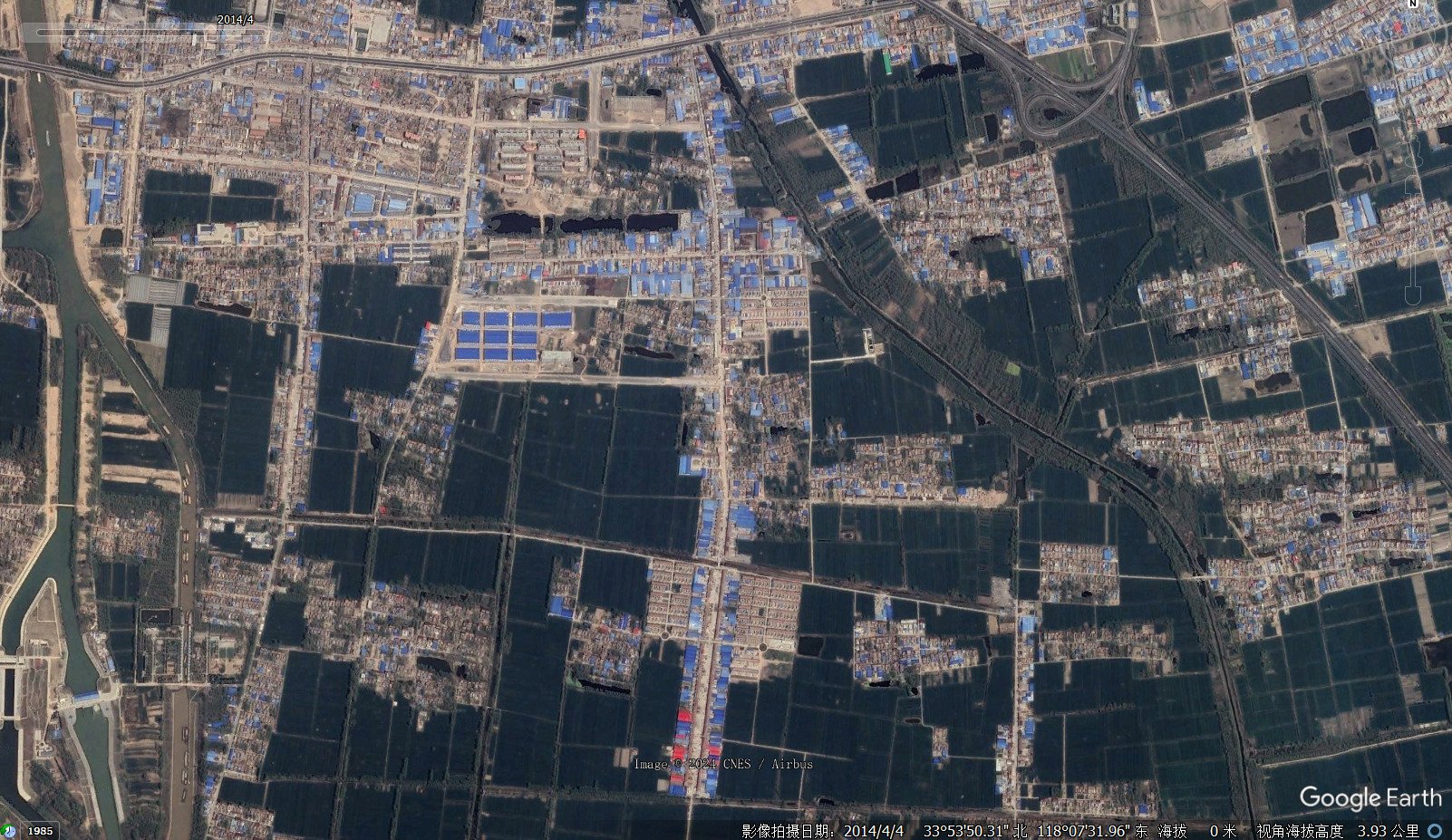
Please click for enlarged slide view.
The scale had changed, but a familiar priority remained. Rooms, courtyards, fields, and roads could all be reconsidered according to the productive capacity they offered. And the new landscape worked. Dongfeng was becoming an increasingly efficient apparatus for converting land, labor, and material into furniture, and furniture into wealth. Production was no longer simply taking place within the village; it was increasingly determining what the village itself was to become.
Prosperity Points Outward
If Dongfeng’s physical transformation drew production more tightly into the village, its social transformation moved in a different direction. E-commerce allowed much of the working-age population to remain geographically present by providing employment at home. Yet the prosperity generated through that work also expanded where residents could reach beyond Dongfeng.
For many families, greater income widened the geography of everyday life. Children could be sent to schools in nearby cities of Xuzhou or Suqian, where parents believed educational opportunities were better. Greater mobility also made shopping, entertainment, and services in these cities increasingly accessible. During my fieldwork, this relationship surfaced in a conversation with a middle-aged resident who operated an online furniture shop from Dongfeng and whose child had attended school in Suqian since elementary school. When I asked what he imagined for Dongfeng’s future, he answered in a flat, matter-of-fact tone: “It will all be factories.” Later, when I asked what people do for entertainment in the village, his answer was equally straightforward. “There was not much to do in Dongfeng,” he explained, “for entertainment, we simply drive to the city.”
Placed together, his two answers describe an emerging division of roles. Dongfeng remains as the place where people work, process orders, manufacture goods, and generate income, while education, leisure, consumption, and aspiration extends to the nearby cities.
This complicates the conventional understanding of rural hollowing. Conventionally, a hollowed village is recognized through the absence of people: working-age residents leave for cities, houses empty, populations age, and economic activity diminishes. Dongfeng does not fit this image. Its workshops are active. Its roads are busy. Its houses remain occupied. Yet Dongfeng suggests that hollowing can take another form. The population does not leave the village itself; what disappears is the life that once made the village a complete social world.
““Dongfeng did not overcome the problem of rural hollowing, it changed what hollowing looked like.””
What has been revitalized?
The national government’s Rural Revitalization strategy envisions economic development, but it also emphasizes improvements to living environments, governance, social and cultural life. [5] This broader vision raises a question that Dongfeng's economic achievements alone cannot answer: what does it mean for a village to be revitalized? The strategy does not offer a definitive model of what a revitalized village should be; rather, it establishes that the future of the countryside remains a question worth asking. Rural decline and hollowing need not be understood as the inevitable price of urbanization in China.
If revitalization means achieving economic wealth, then Dongfeng is difficult to describe as anything other than a success. E-commerce created employment within the village, generated wealth, and allowed much of its working-age population to remain rather than leave in search of work. An agricultural settlement became a productive center connected to markets far beyond it. The economic opportunity that had drawn generations of rural residents toward cities was, in Dongfeng, brought back home.
Bringing the economy back to the village came at a cost. The spatial reorganization of Dongfeng around production did not strengthen its capacity to sustain other dimensions of village life. Instead, it increasingly separated the village's role as a place of work from its role as a place of social and everyday life.
This outward orientation was rooted in a broader geography in which many of the opportunities, public services, and amenities available in cities remained limited or absent in villages like Dongfeng. Chinese development documents themselves continue to identify significant urban-rural gaps in education, healthcare, infrastructure, and other public services, even as current policy seeks to narrow them. [6] Prosperity did not create the attraction of the city. It made the city more reachable. The same income that allowed residents to remain in Dongfeng for work also gave them greater ability to seek elsewhere what the village could not provide. This makes the object of revitalization less obvious.
Dongfeng suggests that revitalizing an economy located in a village is not necessarily the same as revitalizing the village itself. A village is more than the geographic location of employment. It is also a place in which domestic life, education, leisure, social relationships, collective life, and relationships to land are formed and sustained. Economic development can support these dimensions, but it can also rearrange them. In Dongfeng, prosperity did not strengthen residents’ attachment to the village, it did the opposite. Dongfeng did not overcome the problem of rural hollowing, it changed what hollowing looked like.
Building the Village Away
Dongfeng is full: full of workshops, houses, workers, trucks, packages, roads, trees, landscaped ponds, and new infrastructure. By the conventional visual signs of rural decline, it appears to be almost the opposite of a hollowed village. But fullness and vitality are not the same thing.
As farmland gave way to factories, warehouses, and transportation infrastructure, the agricultural labor which Dongfeng had once been organized around was increasingly replaced by manufacturing, packaging, and logistics. What disappeared was not only cultivated land, but also the everyday practices, seasonal rhythms, and forms of knowledge associated with farming. The village's relationship to the land was fundamentally altered. Land that had once sustained agricultural production and rural livelihoods was increasingly valued for its capacity to accommodate industrial production and circulation.
Dongfeng’s hollowing occurred not through the disappearance of people or buildings, but through the gradual narrowing of the function of the village. It remained indispensable as a place of employment, production, storage, and circulation, while becoming less encompassing as the setting for education, leisure, aspiration, and family futures. The village could become more built up while becoming less encompassing. It can acquire more infrastructure while supporting a narrower range of everyday life. It can remain populated while hollowing from inside out.
This is the central paradox Dongfeng reveals about contemporary rural development in China: a village can become economically prosperous while functioning increasingly as an instrument for generating prosperity rather than as a social and spatial environment in which that prosperity is collectively invested and lived. Dongfeng did not escape the forces that have long pulled life toward the city; it encountered them differently. E-commerce brought employment back to the village, allowing working-age residents to remain, but it did not erase the broader urban-rural imbalance in education, services, amenities, and opportunities. Instead, the wealth generated in Dongfeng gave residents greater means to reach what the village could not provide. Prosperity did not create the pull of the city; it made that pull easier to follow.
The people stayed. Work stayed. The village remained full. Yet more and more of life was lived elsewhere.
Dongfeng was not simply built up. In some sense, it was built away.
Citation:
Yicheng (Alan) Wang, “Building a Village Away: Prosperity, Production, and Rural Hollowing in China,” Platform, November 9, 2026.
Notes:
[1] Central Committee of the Communist Party of China, 2017, 31-32.
[2] Zhengdong Luo and Cheming Zu, AliResearch, 2022.
[3] People’s Daily Online, 2015.
[4] Chen Jing, Economic Daily, 2019.
[5] Zheng Yibing, “China's Rural Revitalization: Policies in No. 1 Central Document focus on rural revitalization,” CGTN, 2018.
[6] National Development and Reform Commission, 2023.